

Making Sense of Florida Homeowners Insurance Roof Requirements

The envelope is plain and the contents are one of two things. Either your carrier is not renewing you, or they will renew you on the condition that you do something about the roof by a stated date. Neither is a conversation you asked to have, and both come with a deadline attached.
It is worth understanding that this is not about your house in particular. Florida carriers have spent more than a decade being taken apart by roof losses, and the roof is the one major component an underwriter can evaluate from a permit record and an aerial photo without ever leaving the office. Age and material are the two variables they can see, so those are the two they price on.
What follows is what the rules actually say about roof age, what a wind mitigation inspection measures and why it moves real money, and what your options are when the letter tells you the roof has to go.
The short version
- Carriers underwrite roof age hard because roof losses are what put several Florida insurers out of business
- A roof past 15 years is not automatically uninsurable, but the burden shifts to you and an inspection
- Roof age is measured from the last full replacement, not from your most recent repair
- A wind mitigation inspection documents seven specific features and each one maps to a premium credit
- Every non-renewal letter has two dates on it, and your options narrow sharply once they pass
Why the roof is the only thing your carrier really argues about
Consider what a homeowners policy in Broward or Miami-Dade is genuinely insuring against. Not fire, mostly. Wind, water, and the way the two combine, and every one of those events reaches your house through the roof before it reaches anything else. A carrier writing here is functionally in the roof business whether it wants to be or not.
Then add the economics. A roof replacement is a five-figure claim in most cases, and after a wide-area storm a carrier is not paying one of them, it is paying thousands of them at once into a labor and materials market that spikes at exactly the wrong moment. That aggregate number is what decides whether a company survives a season, and it is why the underwriting is not subtle.
Finally, add what an underwriter can actually observe. They cannot see your wiring or your supply lines from a desk. They can see roof age from a permit record, roof shape and covering from aerial imagery, and mitigation features from a standardized inspection form. Underwriting concentrates where the data is. That is why a perfectly serviceable 18-year-old roof generates a letter and a six-year-old roof on the same street does not.
What the roof age rules actually say
The most common misunderstanding is that Florida has a hard legal age limit for roofs. It does not. What it has is a set of rules about when a carrier is allowed to use age as its stated reason.
Since the 2022 property insurance legislation, an insurer generally may not refuse to write or renew a residential policy solely because of roof age if the roof is less than 15 years old. If the roof is 15 or older, the carrier has to let you obtain an inspection, at your expense, from an authorized inspector before it can require replacement as a condition of coverage. If that inspection finds at least five years of remaining useful life, age alone is not supposed to be the basis for a refusal.
Citizens, the state-backed carrier, publishes its own thresholds and those are the ones most homeowners actually run into. Roofs older than 25 years with a soft covering such as shingle, and older than 50 years with a hard covering such as tile, slate, concrete or metal, need an inspection documenting at least five years of remaining useful life. When that inspection carries the day, the extension it buys is capped at five years, and then you are back in the same conversation. Private carriers set their own guidelines and many are stricter, so ask yours directly rather than assuming.
- Under 15 years: roof age alone should not be the stated reason a carrier refuses to write or renew you.
- 15 years and older: you have the right to an inspection before replacement can be imposed as a condition of coverage. You pay for it.
- Five years of remaining useful life is the standard that inspection is measured against.
- Citizens thresholds: 25 years for soft roof coverings, 50 years for hard ones. Find out which category yours falls in.
- Everything beyond that is carrier appetite. A private insurer can decline you for reasons that have nothing to do with your roof at all, and regularly does.
Roof age is generally measured from the last date the entire roof surface was built or replaced, not from your most recent repair. Redoing one slope after a storm does not make the roof new in an underwriting file.
What a wind mitigation inspection actually measures
A wind mitigation inspection is not a roof inspection and it does not grade condition. It documents specific construction features that reduce wind loss, recorded on a standardized state form, the Uniform Mitigation Verification Inspection Form, which every Florida carrier reads the same way. The inspector is confirming facts, and each fact maps to a credit. Home inspectors with the required training, licensed contractors, engineers and architects are among those who can perform it.
Seven items appear on that form: the building code the structure was permitted under, the roof covering and its approval, how the roof deck is fastened to the trusses, how the roof structure is attached to the walls, the roof geometry, whether a secondary water barrier exists, and whether the openings are protected.
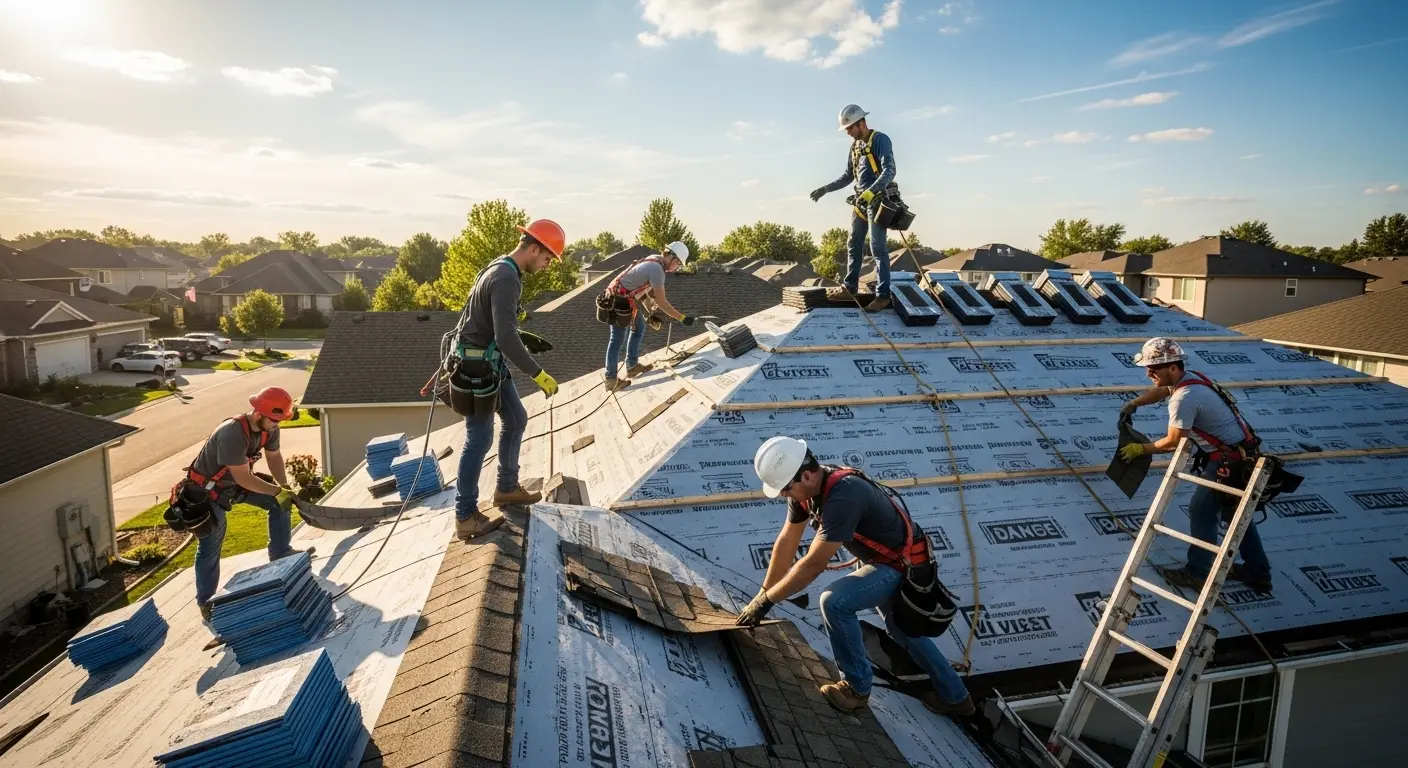
The credits are not decorative. Roof-to-wall attachment and opening protection tend to be the two largest movers on a Florida wind premium, and the form stays valid for years, so a single inspection fee can pay back repeatedly. It also explains why premiums often drop noticeably after a re-roof: a new roof built to current High Velocity Hurricane Zone requirements typically improves the deck attachment line, the covering line and, with a fully self-adhered underlayment, the secondary water resistance line all at once.
- Roof covering: material, product approval and the installation date shown on the permit.
- Roof deck attachment: the size and spacing of the fasteners holding the sheathing to the trusses.
- Roof-to-wall attachment: toe nails, clips, single wraps or double wraps. Usually the single biggest credit on the form.
- Roof geometry: hip roofs score better than gable roofs because they shed wind from every direction.
- Secondary water resistance: a sealed deck beneath the covering, which keeps water out of the house when the covering itself goes.
- Opening protection: impact rated windows and doors or approved shutters on every opening, garage included.
The letter arrived. What to do this week
Read it twice and find two dates: the effective date of the non-renewal or cancellation, and the deadline for whatever they are asking you to produce. The rest of the letter is boilerplate. Those two dates control every option you have, and they are tighter than they look once you account for getting estimates, pulling a permit and getting on a crew schedule in the middle of hurricane season.
Then call your agent rather than the carrier service line. An independent agent can usually tell you in one conversation whether this is an underwriting decision about your specific roof, a change in appetite for your ZIP code, or a book the company is shedding entirely. That distinction determines whether fixing the roof solves anything.
If the letter is a condition rather than an outright non-renewal, repair these items or provide a roof inspection, get it documented properly and get it back to them in writing before the deadline. Carriers close the file on the date, not on your intention. Ask for written confirmation that what you sent satisfies them, and keep it.
- Put both dates in your calendar with a two-week warning ahead of each.
- Ask exactly what would satisfy them. A roof condition inspection? A documented repair with a closed permit? A full replacement? Get the answer in writing.
- Get a real inspection with photographs of every plane and every penetration, plus the roof age, material and condition documented.
- Shop the market in parallel. Do not assume your fix will be accepted. Have another quote and a Citizens option in hand before the date.
- Do not let coverage lapse. If you carry a mortgage, a lapse triggers force-placed insurance, which costs more and protects you less.
Repair, replace, or shop carriers
If the roof has a genuine, localized problem, fixing it is almost always cheaper than the alternative, and a documented roof repair with a closed permit is something an underwriter can actually file. If the roof is at the end of its service life, no amount of shopping fixes that. You are only looking for the carrier who has not noticed yet, and they will notice at renewal.
Material matters more here than most homeowners realize. In this climate an architectural shingle roof is the shortest lived of the common options and the first to attract an underwriting letter, while concrete and clay tile and standing seam metal reach those age thresholds far later. That changes the arithmetic on a replacement. Our shingle work starts at $6.00 per square foot, tile at $10.25 and metal at $10.75, permits and permit fees included in the number, and the more expensive material often buys two or three additional insurance cycles before this conversation repeats.
If money is the obstacle, say so at the estimate rather than at the end. We do $0 down, 100% financing with no credit check, secured and unsecured, in 10, 20 and 30-year terms with no pre-payment penalty, from $65 a month, and you can read the terms on our financing page. We are also a My Safe Florida Home approved contractor and a PACE approved contractor. Grant funding and application windows for the state program change with the legislature, so confirm what is open before you plan around it.
- Repair when the problem is localized, the roof has real life left, and you can get the permit closed before the deadline in the letter.
- Replace when the roof is at or past the typical service life of its material, or when repairs keep returning to the same slopes.
- Shop carriers when the roof is genuinely sound and the letter is about appetite rather than condition.
- Consider a longer-lived material if you plan to stay. A roof replacement in tile or metal pushes your next underwriting conversation years further out.
- Order the wind mitigation inspection after the work, not before. The credits only exist once the features do.
- Get a free measurement and written estimate before you decide anything. Call 954-893-2550. No commissioned salespeople, and the price we write down is the price you pay.
Frequently asked
How old can a roof be in Florida before insurance becomes a problem?
There is no single legal cutoff, but the friction usually starts around 15 years on shingle. Under the 2022 reforms a carrier generally cannot refuse to write or renew based on roof age alone if the roof is under 15 years old, and for older roofs you have the right to an inspection first. Citizens uses 25 years for soft coverings and 50 for hard ones. Private carriers are routinely stricter.
Will a new roof lower my homeowners insurance premium?
Usually, though how much varies a great deal by carrier. A new roof resets the age an underwriter sees, and if it is built to current High Velocity Hurricane Zone requirements it typically improves several lines on the wind mitigation form at the same time. Have an updated wind mitigation inspection done once the work is finished and send it to your agent, or the credits will not be applied.
What is a roof deductible, and is it the same as my hurricane deductible?
They are separate. A hurricane deductible applies to hurricane losses and is often a percentage of your dwelling limit. Some Florida policies also offer a separate roof deductible, capped at the lesser of 2 percent of Coverage A or 50 percent of the roof replacement cost, in exchange for a premium credit. It does not apply to hurricane losses, total losses, or repairs covering less than half the roof.
My carrier says the roof needs replacing but my roofer says it is fine. Who decides?
Get the disagreement in writing from both sides. Ask the carrier precisely which conditions they are citing, and have your contractor document the roof with photographs of every plane plus a statement of remaining useful life from a Florida-licensed inspector. If properly documented evidence still gets rejected, that is the point to talk to a licensed public adjuster or an attorney. We do not adjust claims.
Is a wind mitigation inspection worth paying for?
For most South Florida homes, yes. You pay for the inspection once and any credits you qualify for repeat every year the form stays valid, which is usually several years. Because the form is standardized, every carrier reads it the same way, so it also travels with you if you switch. Ask your agent what their current expiration rule is, since practice varies.