

What a Roof Leak Repair Actually Costs in South Florida
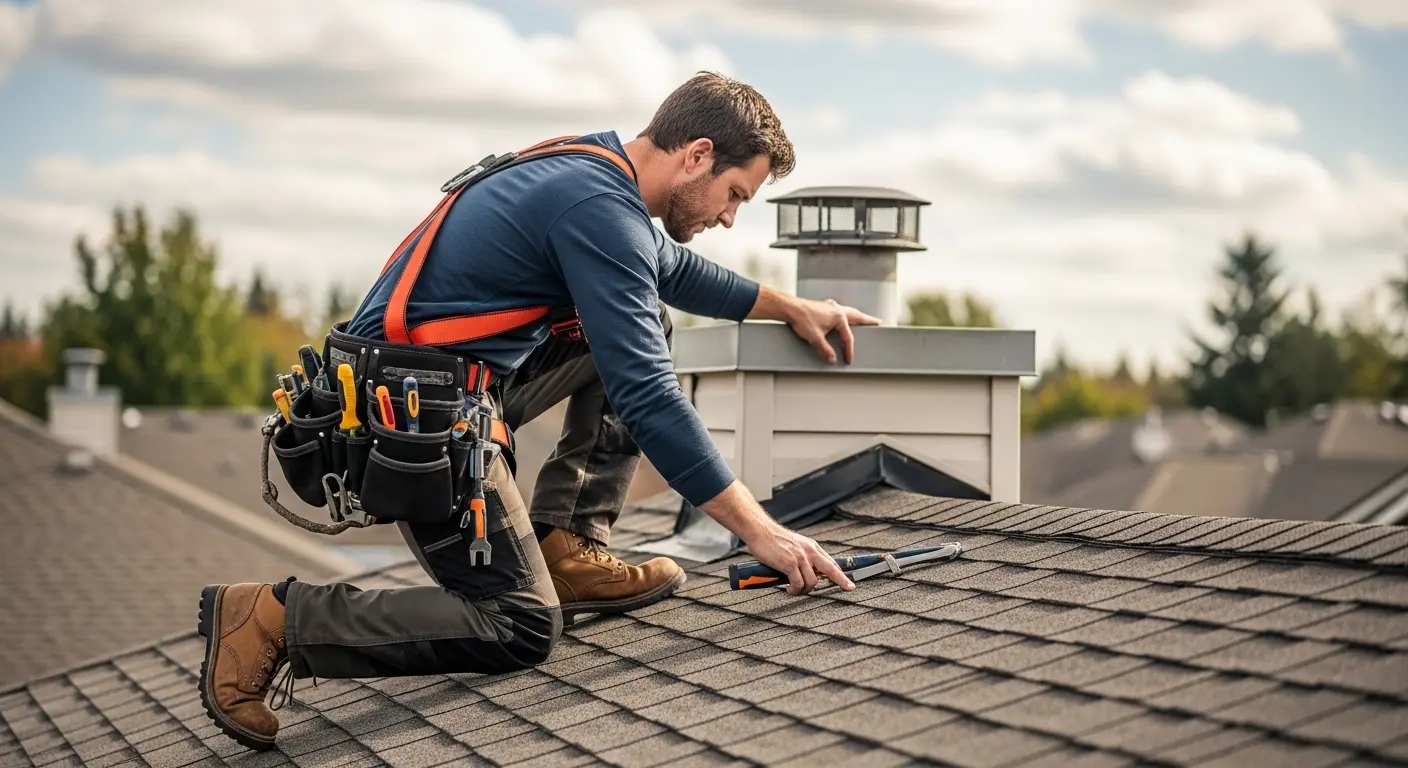
Three contractors look at the same ceiling stain and you get three numbers: $385, $1,900, and a recommendation to replace the whole roof. It is tempting to read that as two people trying to rob you and one honest one, and sometimes it is. More often it is three different scopes of work being priced, and nobody wrote down what they were actually proposing to do. The cheap one is replacing a rubber pipe boot. The middle one is opening the wall flashing and rebuilding the termination. The third one looked at a 22-year-old shingle roof and decided that neither of the first two would still be dry in November.
A repair does not price the way a replacement does. A replacement is a known quantity: measured planes, a material, a fastening schedule, a dumpster and a permit. A repair is a diagnosis followed by a small amount of highly detailed hand work, and the diagnosis is the part that decides everything. A roofer who has not found the leak cannot price the fix, and a roofer who guesses wrong charges you twice, once for the repair that did not work and again for the one that did.
So here is how the money actually breaks down: what a diagnostic visit costs and why it exists, what the common repairs run in this market, why tile and shingle repairs are not the same price, why nobody can quote a repair per square, and what an honest written scope of work looks like when it lands in your email. The ranges below are what we see on ordinary houses in Broward and Miami-Dade rather than quotes, because your roof has a pitch, a height and an access problem that nobody can price from a phone call.
The short version
- A diagnostic or trip charge in the range of $150 to $400 is normal here, and reputable shops credit it toward the work
- Material is the smallest line on most repair invoices; you are buying access, diagnosis and detail labor
- Repairs are not priced per square the way a replacement is, because there is no square in a two-foot repair
- Tile repair costs more than shingle repair mostly because reaching the leak breaks more tile on the way
- On a roof at the end of its service life, a $1,500 repair often buys months rather than years
Nobody can price a leak they have not found yet
The first line item on a repair is finding the thing. A free inspection ahead of a roof replacement is a different exercise from a leak diagnosis: one is a measurement and a condition assessment, the other is detective work on a specific path water is taking through your house. Plenty of contractors, us included, will walk your roof and give you a written estimate on roof repair at no charge. Isolating an intermittent leak that only shows up in a driving rain from the southeast is a billable hour or three, and a shop that pretends otherwise is either loading the cost somewhere else or is planning to guess.
What that hour buys is a sequence. Attic first, on a dry day, looking for daylight, rust trails on nails, staining on the underside of the deck and the direction the insulation is discoloured. Then the roof, penetration by penetration. Then, if it is still not obvious, a controlled water test, which means a hose run for twenty minutes at one detail at a time from the low point upward while somebody sits in the attic watching. It is slow on purpose. Wetting the whole roof at once tells you nothing.
That is why the diagnostic fee exists and why it is worth paying. It typically runs somewhere in the $150 to $400 range in Broward and Miami-Dade, it is usually credited against the repair if you hire the shop that found it, and it is the single best money you spend on a leak. If you want to know what the technician is actually walking toward, the short list of places roof leaks actually start is worth reading before the visit.
- Trip or diagnostic charge. Commonly $150 to $400 depending on distance, height and whether an attic entry is involved. Ask up front whether it is credited toward the repair.
- Water testing is billed by time. Two people, a hose and a systematic sequence. Budget an hour or two if the leak is intermittent or nobody can reproduce it.
- Attic access matters more than you think. A finished ceiling with no scuttle, a packed storage attic or spray foam on the underside of the deck all make the diagnosis slower and therefore dearer.
- Photographs should come back with the estimate. If you are paying for a diagnosis you should receive the evidence, not a sentence.
- A free estimate is not a free diagnosis. We will inspect, measure and write you a no-charge estimate when the problem is visible. A hunt for a hidden leak is labor, and we say so before we start.
What the common repairs actually run
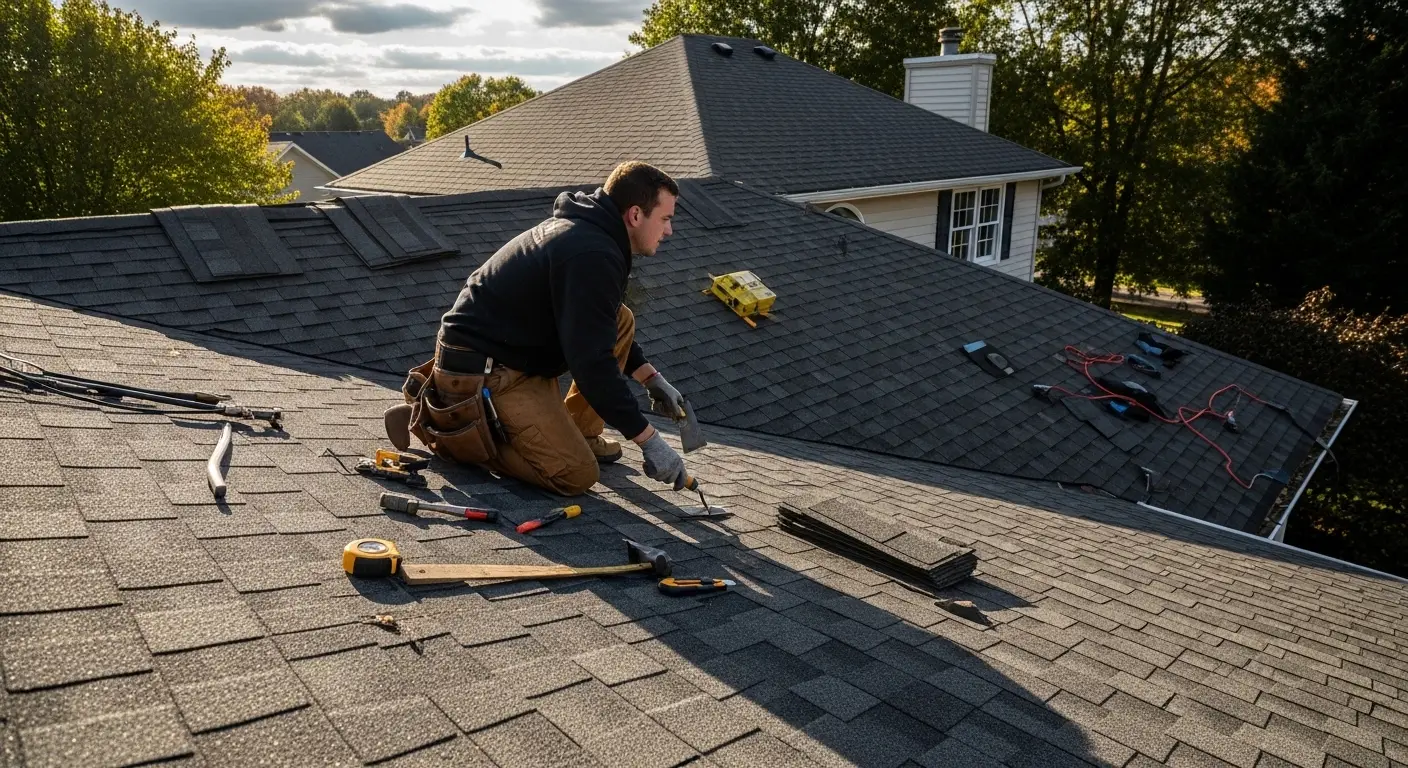
Once the leak is found, most residential repairs fall into a handful of shapes and the pricing follows the shape rather than the size. The numbers below are the ranges we see in this market on ordinary single-family homes. Treat them as orientation, not as a quote. Two stories, a steep pitch, a pool cage under the eave, a tile roof or a plane you can only reach by walking three other planes will all move them, and so will whether the municipality wants a permit on the work.
The pattern worth noticing is that the first repair on a visit carries most of the cost and each additional one on the same trip is cheap. Getting a crew, a truck and a ladder to your house is a fixed cost that does not care whether they fix one pipe boot or four. If your technician tells you three other boots on the same slope are cracked, bundling them into one repair visit is usually a fraction of what coming back for them costs.
Deck work is the one line nobody can price in advance. Rotten sheathing is invisible until the covering comes off, so an honest estimate names a per-sheet price and tells you how it will be documented rather than pretending the number is zero. Ask for the price per sheet of replacement plywood in writing before work starts, and ask for a photograph of anything that gets replaced.
- Pipe boot replacement. The most common repair in South Florida. Commonly $300 to $650 for the first one on an accessible shingle roof, with additional boots on the same visit considerably less each.
- Small flashing repair at a wall or chimney. Reworking counterflashing or step flashing typically runs in the $500 to $1,500 range, higher on stucco where the reglet has to be cut and sealed properly rather than caulked.
- Valley metal section. Opening a valley, replacing the metal and weaving the covering back in is real work. Commonly $1,200 to $3,000 or more depending on length and material.
- Skylight re-flash. Rebuilding the curb flashing on an existing unit is often $700 to $2,000. If the unit itself is failed and the glass seal is gone, you are buying a skylight, not a repair.
- Sheathing replacement. Priced per 4x8 sheet, commonly $75 to $200 per sheet for the plywood and labor, plus reinstating the underlayment and covering above it.
- Emergency tarp. Frequently $400 to $1,500 installed properly, and it is mitigation rather than repair. What that money does and does not buy is covered in the first 24 hours of a roof emergency.
Why tile repair and shingle repair are not the same price
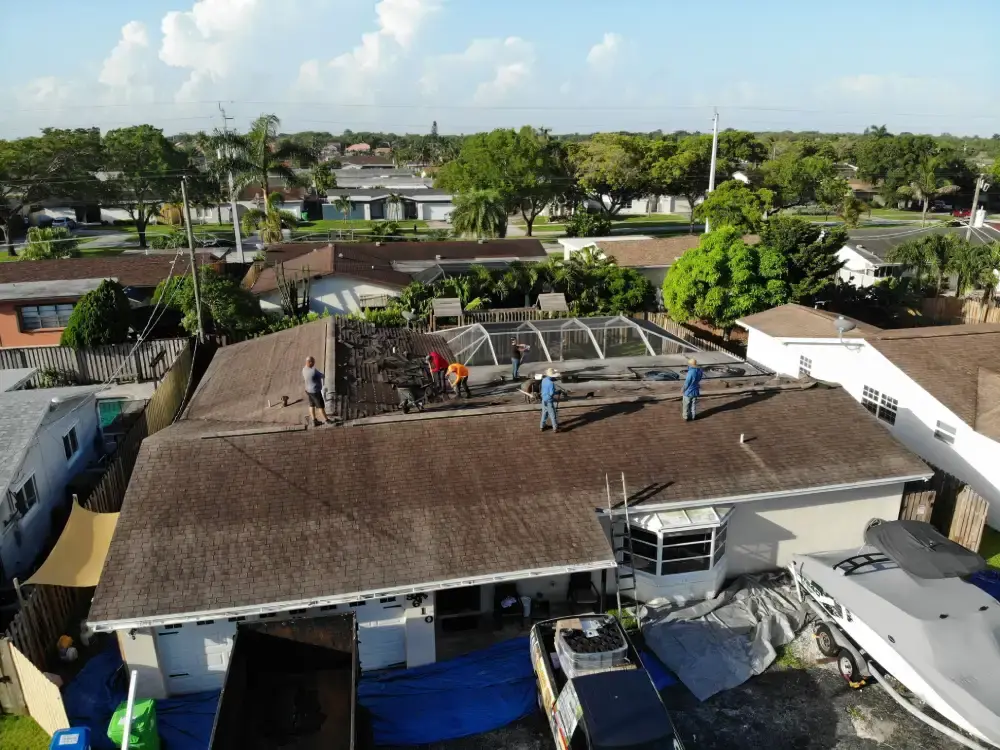
On a shingle roof the technician walks to the leak. On a tile roof, walking to the leak is itself a destructive act. Concrete and clay tile carry a person only where they are supported, and the crews who do this daily step on the lower third of the tile over the head lap, or lay foam pads, or work off a plank. Even done correctly, tile breaks. Budget for the tiles that break getting there as part of the repair, because a shop that does not budget for them either eats the cost or comes back to you with a change order.
Then there is the part underneath. Lifting tile means breaking the mortar or the polyurethane foam adhesive holding it, cutting or pulling the fastener, working on the underlayment beneath, and setting the tile back so the water course still runs correctly. On hips and ridges you are rebuilding a mortar bed or a mechanically fastened ridge system rather than sliding a piece back into a slot. All of that is careful hand labor, and it is the reason a tile repair with the same footprint as a shingle repair regularly costs 50 to 100 percent more.
Matching is the last multiplier. Profiles get discontinued, colours fade, and a perfect structural repair with four bright new tiles in the middle of a weathered field looks like a scar from the street. Sourcing salvage or blending from an inconspicuous slope takes time somebody has to pay for. If you own a tile roof, the mechanics of all this are worth understanding before you get a quote, and cracked and slipped tile has its own post in this series. Our tile roofing page covers the material side.
- Breakage is a real line item. Reaching a leak in the middle of a tile field costs tiles. A good estimate says how breakage is handled instead of leaving it to a conversation later.
- Mortar and foam add labor. Tiles set in mortar or foam adhesive have to be freed, cleaned and re-set, not just lifted and dropped.
- Hip and ridge work is priced per linear foot. Re-pointing or rebuilding a mortared hip commonly lands in the range of $12 to $30 per linear foot, and a full hip is a lot of linear feet.
- Matching costs time. Discontinued profiles mean salvage yards, and a colour match on a 20-year-old roof is never exact on a tile straight off a pallet.
- Shingle repairs have their own trap. A discontinued shingle colour in a visible plane can push a small repair toward re-doing a whole slope for appearance reasons alone.
- Metal is its own animal. On a standing seam panel you cannot simply lift one piece out of the middle, so repairs concentrate at penetrations, terminations and fastener washers.
Why nobody can quote a repair per square
A square in roofing is 100 square feet, and that unit is how replacements are priced because a replacement covers hundreds of them. Our published replacement numbers work that way: architectural shingle from $6.00 per square foot, tile from $10.25 and metal from $10.75, permits and permit fees inside the price. Multiply by measured roof area and you have a real number, because at that scale the fixed costs disappear into the total.
A repair is the opposite. The measurable area might be four square feet, and applying a square-foot rate to it produces a number that would not cover the drive to the house. What you are actually paying for is a stack of fixed and semi-fixed costs: getting a licensed crew and a truck to the property, setting up safely, the diagnosis, a permit if the municipality requires one for the scope, the hand detail itself, and a warranty somebody has to stand behind. Material is usually the smallest number on the page. A pipe boot is a few dollars. A tube of the right polyurethane sealant is a few more.
This is also why repair prices have a floor. Most shops carry a minimum charge, frequently somewhere between $350 and $750 in Fort Lauderdale and the surrounding cities, because a truck roll costs what it costs. If a quote comes in dramatically under that floor, ask what is being left out. Usually it is the permit, the diagnosis, or the part of the repair that is not visible from the ladder.
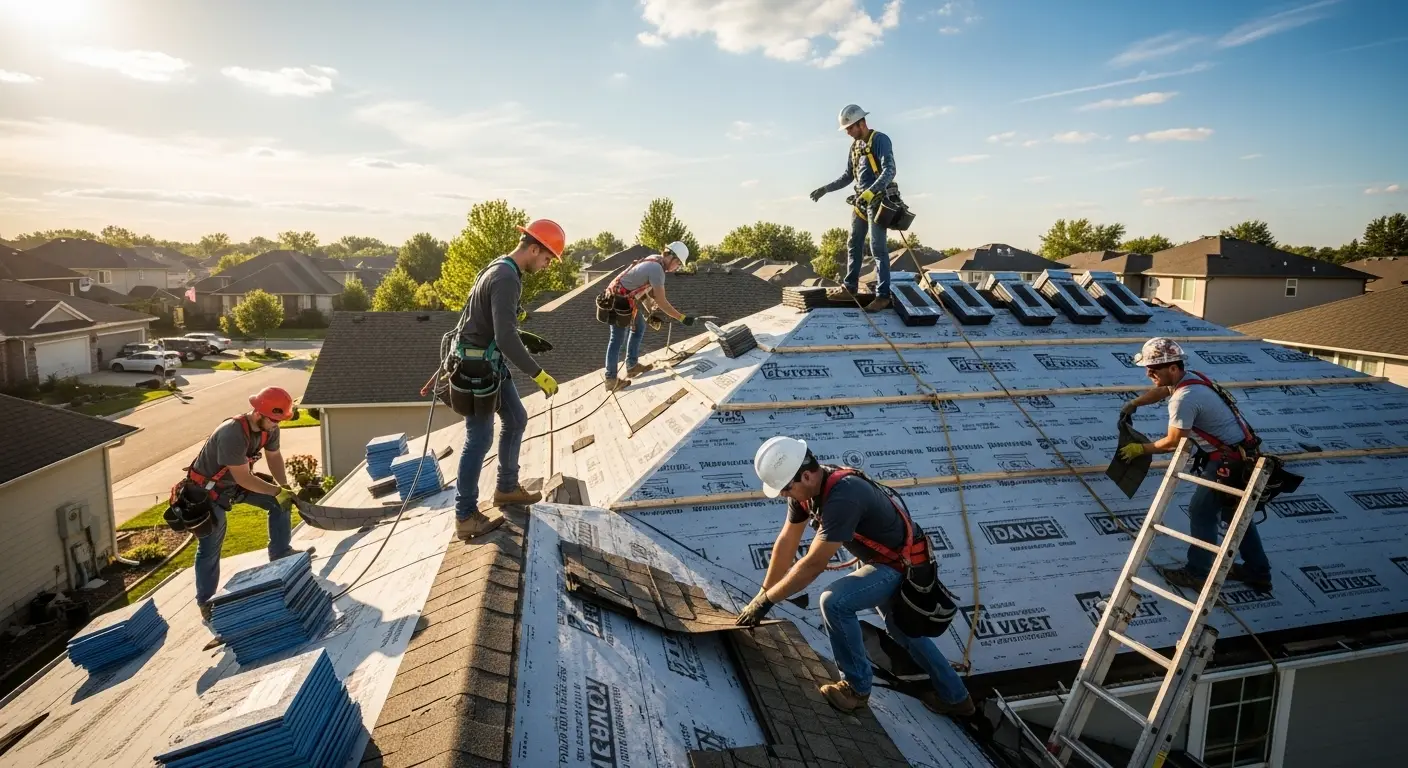
Per-square-foot pricing describes a replacement, where fixed costs are spread across thousands of feet. On a repair those same fixed costs land on a few. That is not a markup, it is arithmetic, and any contractor who quotes you a repair per square is quoting something else.
What an honest scope of work looks like, and the repairs not worth doing
The document is how you compare quotes, and most of the time the reason two prices differ by a factor of five is that one document describes five times as much work. A scope you can actually evaluate names the location, the cause, the fix, the materials by product name, whether a permit is being pulled, what happens if hidden damage appears, and what warranty attaches to the work and for how long. If the estimate is one line that says "repair leak," you do not have a scope, you have a number. Ask for the rest before you compare it to anything.
Then there is the harder conversation. Some repairs are not worth buying. If your shingle roof is 20 years old, the seal strips are broken across a whole plane and this is the third leak in two years on three different slopes, a $1,500 repair is not solving a problem, it is renting time at a bad rate. The same applies to a tile roof where the underlayment has gone brittle everywhere: you can chase leaks tile by tile for years and spend more than a re-lay would have cost. The honest question is what the repair buys you in months, and whether those months are worth the money against what a replacement would run on your house.
On the other side, plenty of repairs are obviously correct and we say so. A single cracked boot on a nine-year-old roof, a length of valley metal, a chimney termination that was never done right in the first place. Those are localized problems with real life left around them, and a properly scoped repair with a closed permit is cheaper than anything else you could do. If you are stuck between the two answers, the repair-or-replace question deserves its own read, and the warranty and permit side of a repair is what makes the decision stick with your carrier later.
- Location and cause, in writing. "Failed lead pipe boot, north slope, third penetration from the west gable" is a scope. "Roof leak" is not.
- Named materials. Which underlayment, which sealant, which flashing metal and gauge. In the High Velocity Hurricane Zone the product approval matters, so it should be nameable.
- Permit stated explicitly. Whether one is being pulled, who pulls it, and whether the fee is in the price. Ours are included in the number we write down.
- A hidden-damage clause with a unit price. Per sheet for decking, per linear foot for rotten fascia, so a surprise is a calculation rather than a negotiation.
- The warranty term on the work itself, separate from any manufacturer coverage on the materials, and what would void it.
- A second opinion when the number is large. We will inspect and write you a free estimate on the same leak. Call 954-893-2550 or set up the visit. Regular roof maintenance is what keeps this list short in the first place.
Frequently asked
How much does it cost to fix a roof leak in South Florida?
Most single-issue residential repairs land somewhere between $400 and $2,500, with the common pipe boot replacement near the bottom of that and valley or wall flashing work near the top. Tile adds cost because reaching the leak breaks tile. Anything involving replaced sheathing or a skylight goes higher. The honest answer is that the price follows the diagnosis, so nobody can give you a real number over the phone.
Why do two roof repair quotes differ by thousands of dollars?
Almost always because they describe different work. One may be sealing a boot while the other is rebuilding a wall termination and replacing decking underneath. Permits, warranty terms and whether hidden damage is priced also move the number. Put both scopes side by side line for line before you decide anything. If one of them is a single line with a price, ask for the detail.
Should I have to pay for a roof leak inspection?
For a visible problem, no. A measurement, a condition assessment and a written estimate should be free, and ours are. For a hidden or intermittent leak that needs attic work and a controlled water test, a diagnostic fee in the $150 to $400 range is normal and fair. Ask whether it is credited toward the repair if you hire the shop, because most reputable ones credit it.
Does homeowners insurance pay for a roof repair?
It depends on the cause. Sudden accidental damage from a storm is generally covered and wear, age and deferred maintenance generally are not, which is the line every adjuster is looking for. A $600 boot replacement is also usually well under a Florida deductible, so it is often not worth filing even when the cause qualifies. Read your declarations page before you call anyone.
Is it cheaper to repair one slope or do the whole roof?
Repairing one slope is cheaper today and that is genuinely the right call when the rest of the roof has life left. It stops being the right call when repairs keep returning on different planes, when the covering is at the end of its service life, or when Florida Building Code limits on how much of a roof section can be repaired in a twelve-month period pull the whole section into current requirements anyway. Your permit history often decides which situation you are in.