

Emergency Roof Tarping: What to Do in the First 24 Hours
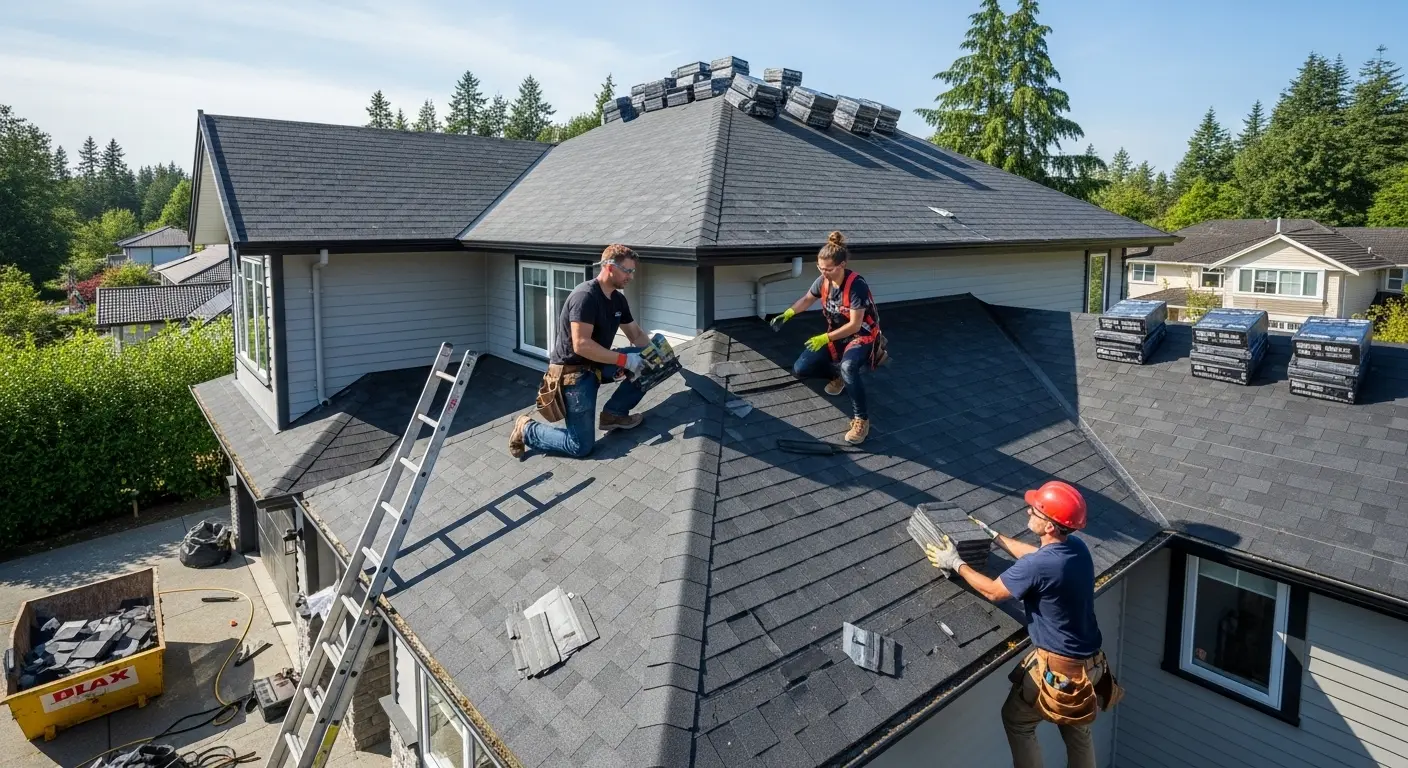
The band came through at four in the afternoon and by six there is water coming through the hallway ceiling. Everything about the situation pushes you toward the ladder in the garage, and almost nothing about the situation makes that a good idea. The roof is wet, the wind is still gusting, the sun is going down, and the fall you are one step away from is far more expensive than the drywall you are trying to save. More people are hurt on roofs in the days after a Florida storm than during it, and they are almost all homeowners rather than roofers.
What a tarp actually does is buy time. It keeps the next band out of your attic while you wait on a claim number, an adjuster, a permit or a crew, and in a busy week after a named storm that wait can be real. What it does not do is repair anything, dry anything out, or make your roof watertight. It is mitigation, and mitigation is a category your homeowners policy has opinions about, which is why doing it properly and documenting it properly are worth as much as the tarp itself.
The order of operations for the inside of your house, the documentation an adjuster wants and the storm-chaser knocking on your door the next morning are all covered in our post on what to do about a roof leak after a storm. This one stays on the roof: who should go up and when, what a real tarp installation looks like, what the bad version costs you, and how long the blue plastic is honestly good for in this sun. And what your homeowners policy quietly expects you to have done about it in the meantime.
The short version
- Nothing on a roof is urgent enough to justify climbing a wet one in the dark or in wind
- A correct tarp runs over the ridge and is fastened with wood battens screwed through into the deck
- A tarp weighted with blocks or sandbags will be gone by the next squall and will scour granules on the way
- Hardware store poly goes brittle in Florida sun in weeks; reinforced tarp installed properly may hold a few months
- Most policies require you to take reasonable steps to prevent further damage, and reasonable mitigation spending is often reimbursable
Who gets on the roof, and when
The honest rule is that a wet roof at night in gusting wind has no business under anybody who is not equipped for it. If the weather has fully passed, the sun is up, the surface is dry, the roof is single-storey shingle with a walkable pitch and you are genuinely steady on a ladder, a homeowner tarp is a defensible thing to attempt. Change any one of those variables and the answer flips. Tile is the clearest case: it is slick when wet, it breaks under a misplaced foot, and every tile you crack getting up there is another repair somebody has to pay for later.
Two storeys is not a harder version of one storey, it is a different category of consequence. Steep pitch is the same. So is a roof with a pool cage, a screen enclosure or a paver deck below the eave, because there is nothing forgiving to land on. And a metal roof after rain is effectively a slide. If you own any of those, the correct move is to protect the interior, put buckets and fans to work, and get a crew scheduled for the emergency roof repair rather than trying to solve it yourself at dusk.
Availability is the honest complication. After a widespread event every roofer in Pompano Beach, Fort Lauderdale and Hollywood is triaging, and tarps go to the worst damage first. Call early, be specific about how much water is entering and where, and ask for a realistic time window rather than a promise. If a shop tells you tomorrow morning when the whole county is under water, be a little skeptical. We would rather tell you Thursday and show up Thursday.
- Wait for the weather to actually pass. Not the lull between bands. The gust that puts you off a roof does not need to be strong, only unexpected.
- Dry surface only. Wet shingle granules act like ball bearings, wet tile is worse, and wet standing seam metal is not walkable at all.
- Never alone. Someone at the base of the ladder, footing it, with a phone. That is the difference between a fall and a fatality.
- Not on tile, not two storeys, not steep. These are the three conditions that send homeowners to the emergency room, and none of them is worth a tarp.
- Nothing on the roof is urgent at night. Relieve a bulging ceiling, get water into buckets, cut power to wet fixtures, and deal with the roof in daylight.
What a proper tarp installation looks like
A correct tarp does the same thing a roof does: it sheds water downhill and gives it nowhere to get underneath. That means it runs from above the damage all the way over the ridge and a few feet down the far slope, so no upslope edge is left facing uphill for water to run into. A tarp that stops short of the ridge and is sealed at the top with tape is a funnel, and it will pour water into the deck at exactly the point you were trying to protect.
Fastening is where the real technique lives. The batten method is the standard: the uphill edge of the tarp is rolled around a length of furring strip or 1x3, that roll is laid on the roof and a second strip is placed on top, and the sandwich is screwed through the tarp into the sheathing with roofing screws and cap fasteners. Wind then cannot get a grip on any loose edge, because there is no loose edge. The downhill and side edges get the same treatment. Yes, this puts new holes in your roof on purpose. That is the trade: a dozen deliberate, sealable screw holes against several hundred gallons of water. A good crew notes where every batten went so those holes get properly closed during the permanent repair.
Sizing matters more than people expect. The tarp needs to be big enough to cover the damage plus a wide margin on all sides, and to reach the ridge, which frequently means a 20x30 rather than the 8x10 in the garage. Overlapping two tarps is acceptable if the upper one laps over the lower one by a couple of feet, exactly like shingle courses. Lapping them the other way is the same funnel mistake in a different costume. If you do not know which detail on your roof is actually leaking, the usual entry points will tell you where to aim the coverage.
- Over the ridge, always. The uphill edge belongs on the opposite slope, not taped to the middle of the damaged one.
- Battens, screwed through. Furring strips rolled into the tarp edge and fastened into the deck. Cap nails or screws with washers, not staples.
- Wide margins. Cover the damaged area plus several feet in every direction. Wind-driven rain does not respect the edge of a hole.
- Lap upper over lower. If two tarps are needed, they course like roofing. The uphill piece goes on top.
- Reinforced poly, not the cheapest one. Look for a heavier weave and reinforced grommets. The price difference is small and the life difference is not.
The bad tarp, and what it costs you
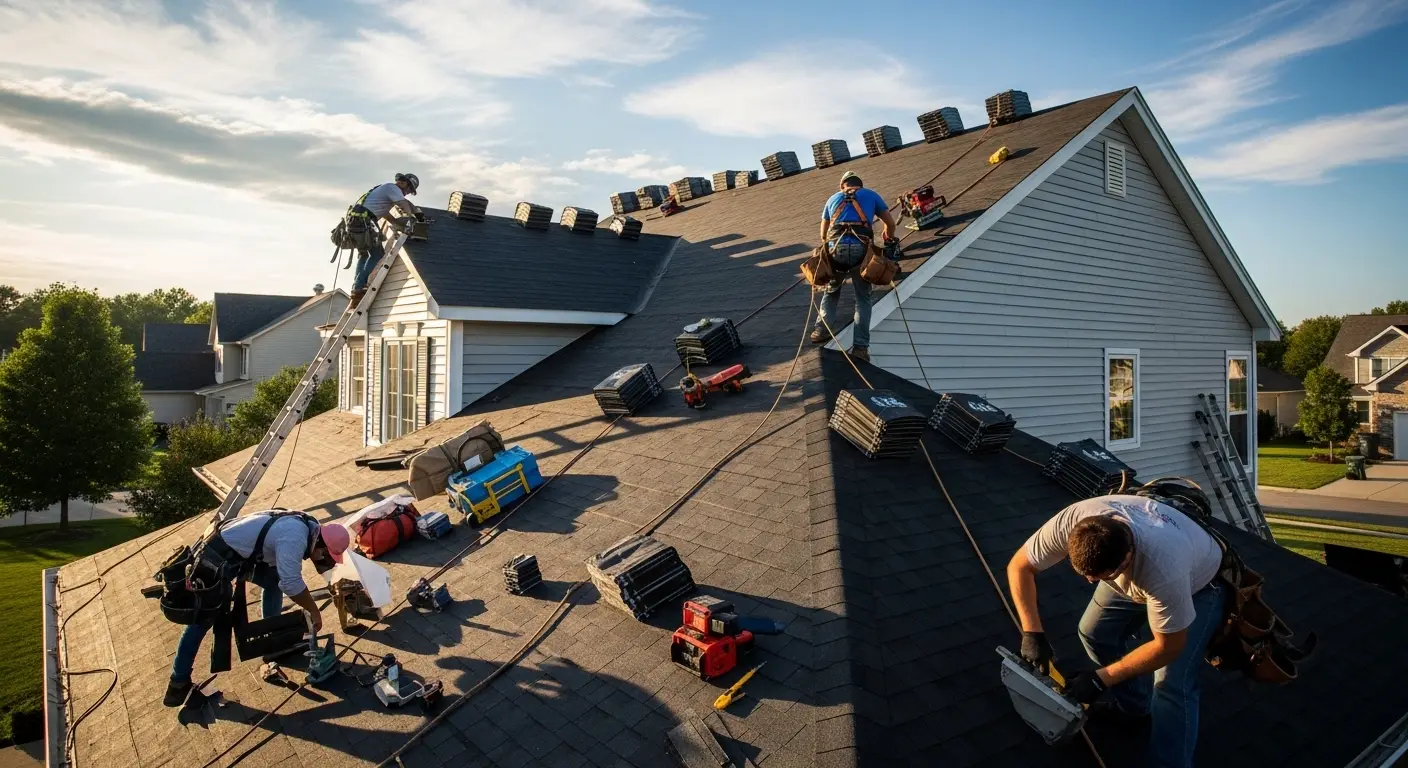
The most common failure is the weighted tarp: plastic laid flat over the damage with cinder blocks, bricks or sandbags holding the corners. It looks reasonable from the ground and it fails in the first real gust, because a tarp is a sail and the weight is not attached to anything. Then it flogs across the roof for an hour before it leaves, and while it does that it drags the blocks over the covering. On shingle, that scours granules off and takes years of life away. On tile, it breaks tile. You have paid for damage in exchange for a night of dubious protection.
The second failure is a tarp fastened to the wrong things. Stapled to the fascia, tied to a gutter, screwed into the rake edge or knotted around a vent stack. Gutters tear off, fascia splits, and a vent pipe used as an anchor point becomes a new leak. A tarp that traps water is the third failure: laid flat across a low-slope section with a dip in it, it holds a pond that eventually finds a seam, and the weight of standing water is not trivial. On a genuinely low-slope roof a tarp is often the wrong tool entirely, and the right answer is a proper flat roofing patch in the membrane.
The fourth is subtler and matters later. A tarp installed carelessly on tile can crack twenty or thirty tiles, and if your profile is discontinued that becomes a sourcing problem long after the storm is forgotten. Whoever tarps a tile roof needs to know where to stand and how to distribute weight, which is the same skill described in our post on cracked and broken tile. It is a real reason to let a crew do it even when you could physically manage the tarp yourself.
- Blocks and sandbags. Not a fastening system. They hold a tarp until the wind decides otherwise, then they become the damage.
- Anchoring to gutters, fascia or vents. None of those are structural. Two of them become new leaks and one of them ends up in the yard.
- Ponding on a flat section. Water sitting on a tarp finds a seam and adds serious weight. Low slope needs a membrane repair, not plastic.
- Tape as a top edge. Adhesive on a wet, dirty, hot roof surface has no future. Only a mechanical fastening survives a Florida afternoon.
- Walking tile without pads or planks. Every cracked tile is a cost, and on a discontinued profile it is a scarcity problem too.
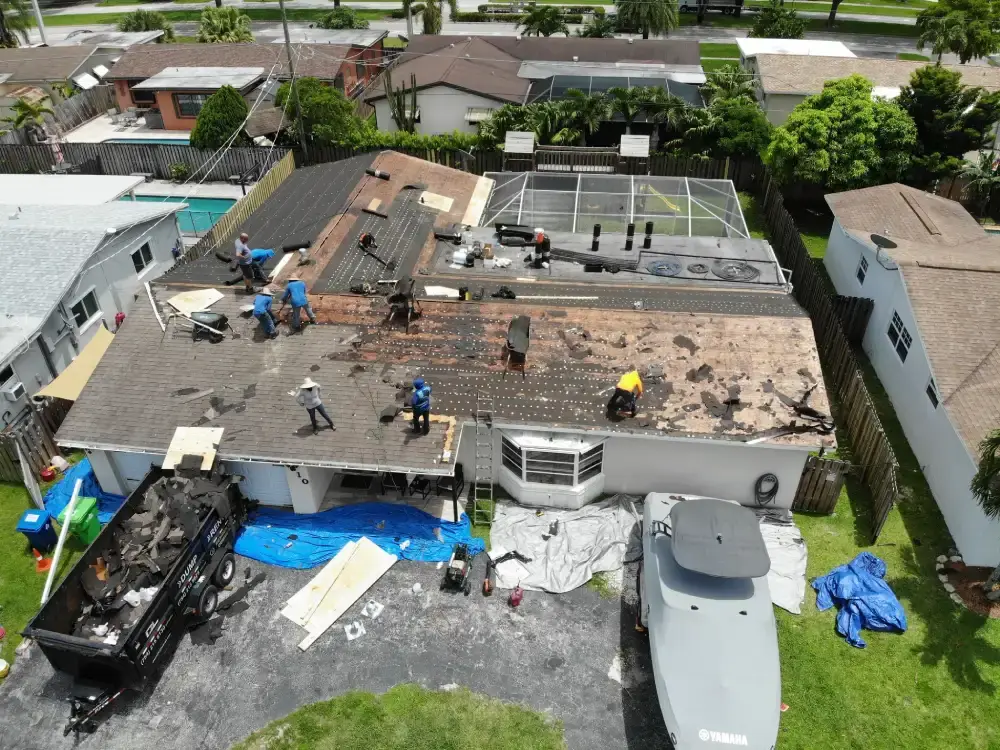
Screwing battens into your deck is the only fastening method that survives wind here, so a proper tarp always means new penetrations. That is the correct trade, and it is why the permanent repair should include closing every one of those holes properly rather than leaving them under new covering.
Mitigation duty: what your policy expects of you
Nearly every homeowners policy contains a duty on you, usually written as protecting the property from further damage and making reasonable and necessary repairs to do so. In plain terms: once you know water is coming in, standing by and letting it keep coming in becomes your problem rather than the insurer's. A roof left open for a week because you were waiting for permission can turn a covered roof claim into an argument about how much of the interior damage you caused by waiting. Do the mitigation, and do it before you have every answer.
The flip side is that reasonable emergency spending is frequently reimbursable, and carriers commonly authorise a limited amount of emergency mitigation without pre-approval. What qualifies and how much varies by carrier and by policy form, so call the claim line, get a claim number, ask what they will cover for emergency services and write down who told you. Then keep every receipt: the tarp, the screws, the fans, the dehumidifier rental, the hotel night if the house is not habitable. Reimbursement runs on paperwork, not on how bad the week was.
One thing not to do is repair past mitigation before the damage has been documented. Photograph the damage before the tarp goes over it, because once it is covered the evidence is under plastic and the adjuster is looking at your description of it. Keep any material that came off the roof. And understand the wider context of how carriers here treat roofs before you decide whether to file at all, which our post on Florida homeowners insurance roof requirements lays out. What the repair paperwork needs to look like afterward is covered in the warranty and permit side of a repair.
- Report it promptly. Get a claim number the same day if you can. Your policy requires prompt notice regardless of any outside statutory deadline.
- Ask what emergency services are authorised and up to what amount, and note the name and date of whoever answered.
- Photograph the damage before covering it. Wide, then close, then the tarp going on. Video with narration is even better.
- Keep receipts for everything. Tarps, fasteners, fans, dehumidifier rental, temporary lodging. Reasonable mitigation costs are frequently reimbursable.
- Get a licensed contractor to write it up. A documented scope with photographs from a licensed roofer, ours are CCC1337306 and CBC1266379, reads very differently from a hand-written note.
How long a tarp really lasts, and when it is enough
Blue polyethylene tarp from a big-box store is not an outdoor material in this climate. Ultraviolet light attacks it directly and it goes chalky and brittle fast, often in a matter of weeks of full sun, and once brittle it tears at the fasteners and stops holding water out while continuing to look fine from the ground. A heavier reinforced tarp installed with proper battens does considerably better and can hold for a few months, and the shrink-wrap systems some crews use after major events do better still. None of them is a roof, and none of them should be a plan.
The realistic question is what the tarp is buying time for. Sometimes it is genuinely enough on its own for a while, because the underlying problem is small and localised: a single failed boot, a length of valley, a few tiles off a hip. Get it covered, get the roof repair done in the next couple of weeks, and the tarp was a bridge that worked exactly as intended. What each of those repairs costs is broken down in our repair pricing post, and none of them is a big number.
Other times a tarp is a countdown on a roof that was already finished. If the covering is at the end of its service life, if repairs keep reappearing on different slopes, or if a wide area of shingle lost its seal in the same storm, the tarp is holding off a roof replacement rather than solving anything. That is worth naming honestly rather than tarping through a second season, and if it is where you have landed, the repair-or-replace question is the next thing to read.
- Big-box poly: weeks in full Florida sun before it goes brittle. Fine for an immediate emergency, not a season.
- Reinforced tarp, battened properly: a few months is a realistic expectation, not a year.
- Inspect it after every storm. A tarp that has lifted at one edge is worse than no tarp, because you have stopped watching the ceiling.
- Do not let a tarp become the roof. Blue plastic on a house for a year affects your insurability and, in some communities, gets you a code letter.
- Get the permanent fix scheduled. We inspect, photograph and write a free estimate with permits and permit fees included, and offer $0 down financing with no credit check if the timing is bad. Call 954-893-2550 or book the visit and we will price the repair against the alternative honestly.
Frequently asked
How much does an emergency roof tarp cost in South Florida?
Commonly $400 to $1,500 installed by a licensed contractor, driven mostly by the size of the area, the height and pitch of the roof and how quickly you need it. Tile and two-storey work sit at the top of that range. Materials alone are a small fraction of it. Reasonable emergency mitigation is frequently reimbursable under a homeowners policy, so keep the invoice.
How long will a tarp last on a roof in Florida?
A hardware store blue tarp degrades in weeks under full Florida sun and can look intact while no longer keeping water out. A heavier reinforced tarp fastened with wood battens screwed into the deck can realistically hold for a few months. Treat any of them as a bridge to a permanent repair, and inspect the tarp after every storm rather than assuming it is still working.
Will insurance pay for an emergency tarp?
Often, yes, as emergency mitigation, though what qualifies and how much is authorised varies by carrier and policy form. Most policies also place a duty on you to prevent further damage, so tarping is usually expected rather than optional. Call the claim line, ask what emergency services they will cover and up to what amount, note who told you, and keep every receipt.
Should I tarp my own roof or call someone?
If the weather has fully passed, the surface is dry and it is a single-storey walkable shingle roof, a properly battened homeowner tarp is reasonable. If it is tile, metal, steep or two storeys, call a crew. Tile cracks under a misplaced foot and wet metal is not walkable. Meanwhile, protect the interior, relieve any bulging ceiling and get fans running.
Do the tarp screw holes damage my roof?
They are deliberate, and they are the trade you make for a tarp that stays put. Battens screwed into the sheathing are the only fastening that survives wind here, and a dozen small penetrations are far less costly than the water they keep out. What matters is that whoever does the permanent repair knows where the battens were and properly closes and covers each hole.