

Repair or Replace? A Straight Framework for Florida Roofs
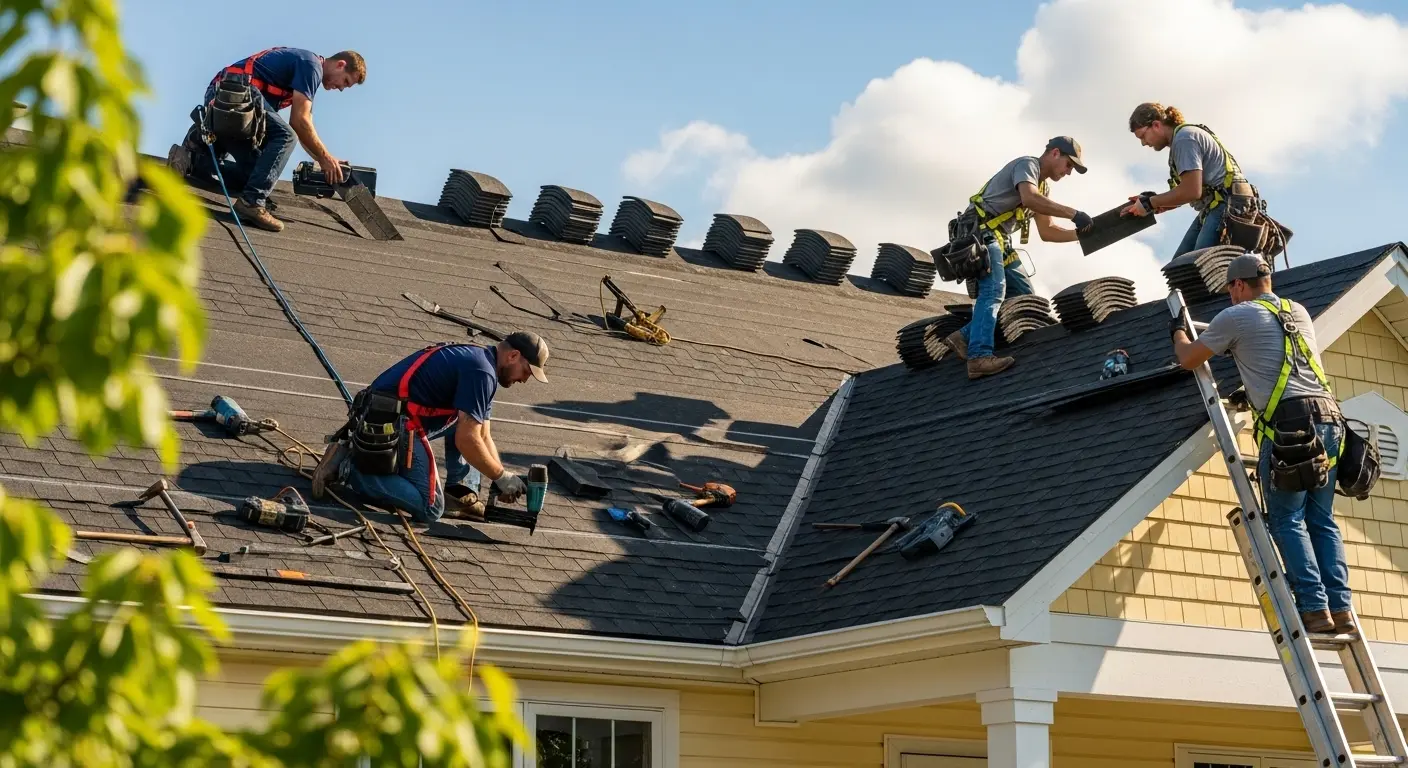
Two contractors look at the same roof and one says repair and the other says replace. That happens constantly, and it is not always because one of them is selling. The two answers come from weighing the same facts differently, and the fact that matters most is not the leak in front of you. It is how many years the rest of the roof has left. A perfect repair on a roof with three years in it is a purchase with a very short life, and a replacement on a roof with twelve good years left is money spent a decade early.
So the question worth asking is not whether this can be fixed. Almost anything can be fixed. The question is what the fix buys you, in years, and what those years cost per year compared with the alternative. That reframing turns an emotional decision into arithmetic you can do at the kitchen table with two numbers and an honest estimate of remaining service life. It also makes it much easier to tell when a contractor is guiding you toward the more expensive answer for the wrong reasons.
This post lays out that framework: how to establish remaining service life, the rule of thumb most of the trade uses and where it fails, a separate rule in the building code that quietly turns large repairs into replacements, what a repair does to warranty and matching, and the specific situations where repairing is clearly the right call. We do both kinds of work, and we tell people to repair regularly.
The short version
- The right measure is cost per remaining year, not the raw price of the repair
- A common rule of thumb: if a repair approaches 25 to 30 percent of replacement cost, replacement is usually the better buy
- Current code generally requires that a roof section repaired beyond about a quarter of its area in a year be brought up to current requirements
- Matching a discontinued shingle blend or tile profile is frequently impossible, and a patch that does not match affects resale
- Soft decking, failing underlayment or leaks on multiple slopes end the repair conversation regardless of price
Start with remaining service life, not with the leak
Before anyone prices anything, you need a defensible answer to one question: how many more years does this roof have. In this climate architectural shingle commonly gives 15 to 25 years, concrete and clay tile can run 40 to 50 or more with the underlayment replaced somewhere in the middle, and standing seam metal commonly reaches 40 to 50 or beyond. Those are ranges rather than promises. Sun exposure, attic ventilation, the quality of the original installation and how close you sit to salt water all move a specific roof several years in either direction.
A number in years is something a competent inspection can actually produce, and you should insist on getting it in writing along with photographs of every plane and every penetration. It is also the same standard Florida insurers use, since carriers evaluating an older roof want documentation of remaining useful life rather than an opinion. If you have not gone through the condition side of this yet, the honest list of signs a Florida roof is finished covers what the inspection is looking at and what you can check yourself.
Three findings override everything else in this post. Decking that is soft underfoot means new fasteners have nothing sound to bite into. Underlayment that has gone brittle or torn under the tile means the waterproofing layer has failed even though the tile above it looks fine. Leaks appearing at unrelated points on different slopes means the assembly aged out together rather than failing at one detail. Any of those three and you are past the point where a roof repair is buying anything durable, and the conversation moves to a roof replacement whatever the estimate says.
- Get remaining life in years, in writing. Backed by photographs of every plane. An opinion given from the driveway is not an assessment.
- Know your material clock. Shingle commonly 15 to 25 years here, tile 40 to 50 with a mid-life underlayment replacement, standing seam metal 40 to 50 or more.
- Soft decking ends it. A structural finding, not a covering finding, and it is the same answer regardless of what the repair would have cost.
- Failed underlayment under tile ends it. The tile is not the waterproofing. Intact tile over dead underlayment is a roof that leaks on schedule.
- Multiple slopes, multiple failures. One detail failing is a repair. Unrelated details failing in the same season is a service life running out.
The 25 to 30 percent rule, and where it breaks down
The rule of thumb most of the trade uses is straightforward: if the repair costs more than roughly a quarter to a third of what a replacement costs, replacing is usually the better buy. It is a decent screen and it is incomplete, because it only looks at one of the two variables. A repair at 30 percent of replacement is an easy yes on a roof with fifteen years left and an obvious no on a roof with three.
Run it as cost per remaining year instead. Take a 2,200 square foot shingle roof, which at our $6.00 starting point puts a replacement around $13,200 with permits included. A $2,600 repair is about 20 percent of that, comfortably under the rule, so the rule says repair. Now add age. If the roof is eight years old and the repair genuinely restores a detail, you are spending $2,600 to protect ten or more remaining years and the answer is clearly repair. If the roof is nineteen years old and that repair realistically buys three more years, you are paying roughly $870 a year for those three, while a new roof spread over twenty years runs about $660 a year. The cheaper invoice is the more expensive decision.
Two adjustments make the arithmetic honest. First, be conservative about what a repair on an old roof buys; on a covering near the end of its life, the next failure is usually somewhere else on the same roof. Second, count the money you have already spent. Three service calls in two years belong in the total, because they are what this roof costs to keep. If the running total is heading toward a meaningful share of replacing the whole roof, you already have your answer. The full breakdown of how a replacement number is built, including the parts nobody can price in advance, is in what a roof replacement costs in South Florida, and repair pricing works differently, as we covered in what a roof leak repair costs here.
- The screen: repair cost above roughly 25 to 30 percent of replacement cost points toward replacement.
- The better measure: repair cost divided by years it realistically buys, against replacement cost divided by the new roof service life.
- Be conservative on old roofs. A repair at year nineteen protects the detail it touched, not the twelve other details the same age.
- Add up the last three years. Prior repairs are part of what this roof has cost you, and they belong in the comparison.
- Factor the interior. Repeated ceiling repairs, wet insulation and paint work are real money that never appears on a roofing invoice.
- Do not forget the timing. A planned replacement in a quiet month prices better than an emergency one after a named storm.
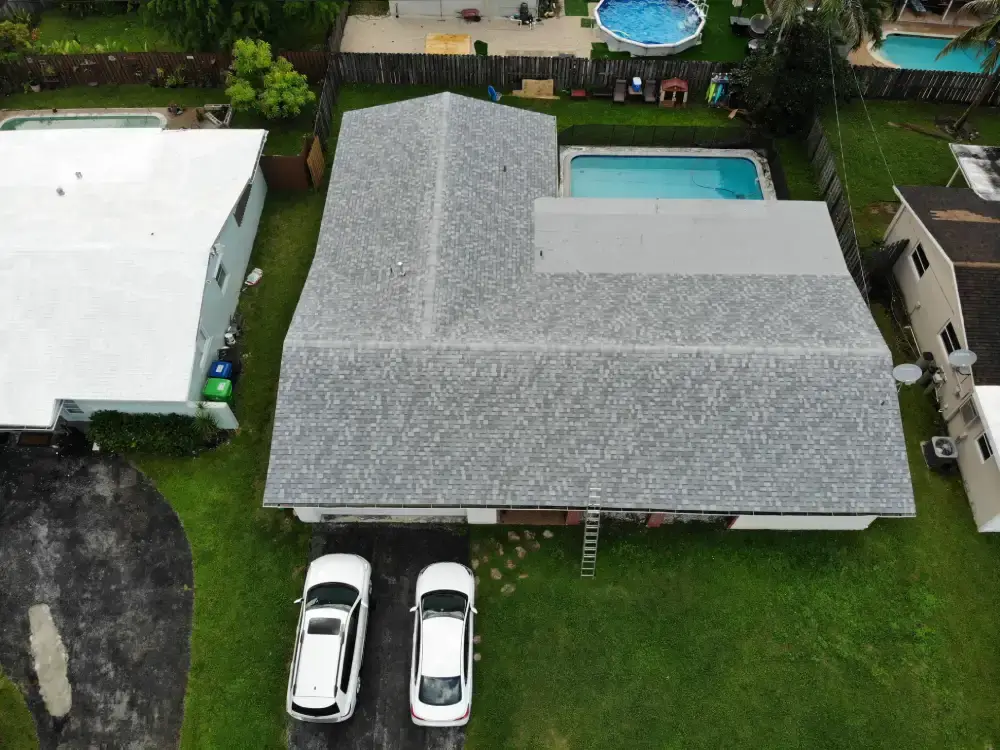
Ask any contractor recommending a repair for two things in writing: what the repair costs, and how many years of service life the roof has left afterward. Divide the first by the second. Then ask for the replacement price and divide it by the service life of the new system. Whichever number is smaller is usually the right call, and it takes about a minute.
The other 25 percent rule, the one in the building code
There is a second 25 percent in this conversation and it is easy to confuse with the first. The rule of thumb above is about money. This one is about code, and it exists whether or not anyone mentions it to you. Current Florida Building Code generally requires that when more than about a quarter of a roof section is repaired, replaced or recovered within a twelve-month period, that entire section be brought up to current requirements rather than restored to whatever standard it was originally built to. There are limited exemptions, and the details are administered by your local building department, but the effect is consistent: past a certain size, a repair stops being a repair.
This matters because it changes the real cost of large repairs. Fixing one slope of a hip roof after storm damage can cross that threshold, and once it does, the work has to meet the current fastening schedule, the current underlayment requirements and the current product approval rules for your zone. That is a better roof, and it is also a bigger number than the patch you were quoted. Homeowners frequently discover this after the permit is submitted, which is exactly the wrong time to find out. Ask about it before you sign, because a contractor who does not raise it either does not know or is not planning to pull a permit. How the permit and inspection sequence works is in roof permits and inspections in Broward and Miami-Dade.
The practical consequence is that the middle of the range mostly disappears. Small, well-defined repairs are genuinely small. Very large repairs tend to price close enough to a full replacement that the replacement wins on service life alone, since you get a new deck fastening, new underlayment across the whole roof and a warranty that covers all of it rather than one plane. If the numbers are landing close together, take the replacement.
- Two different 25 percents. One is a cost rule of thumb, the other is a code requirement about how much of a roof section you touch in a year.
- Twelve-month window. Repairs are counted cumulatively, so a second repair on the same section within the year can trigger it.
- Section by section. The rule applies to a roof section rather than to the whole house, which is why the geometry of your roof matters.
- Limited exemptions exist. Your local building department administers them. Ask specifically rather than assuming.
- It removes the middle ground. Once a large repair has to meet current requirements, it prices close enough to a replacement that the replacement usually wins.
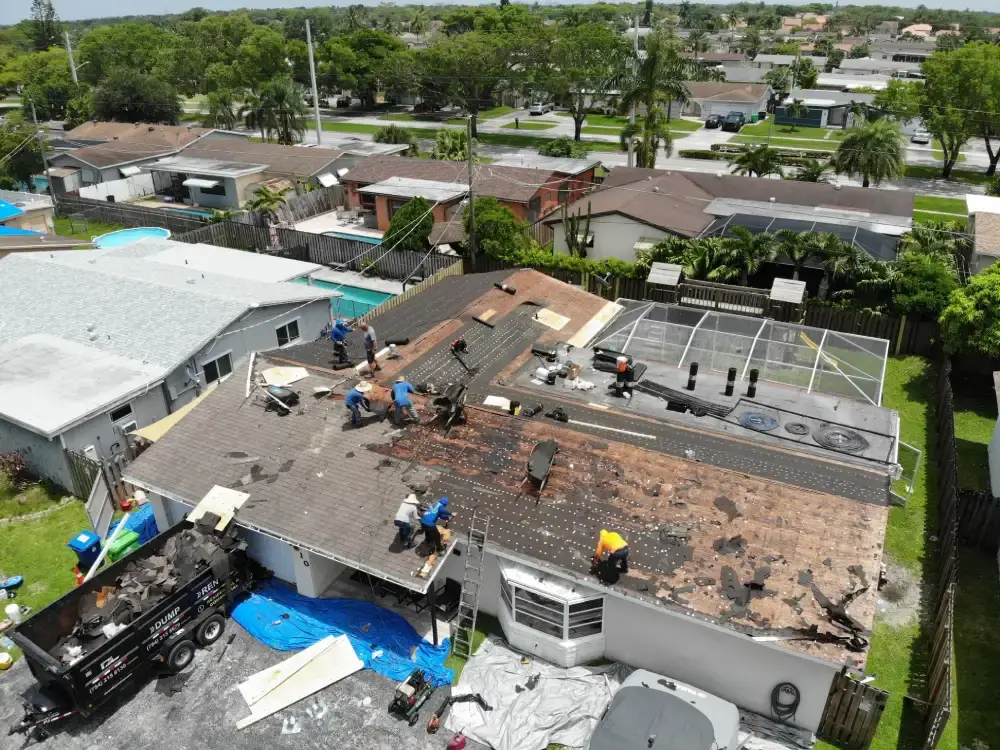
Warranty, matching, and what your insurer will and will not do
A repair on a roof still inside a manufacturer system warranty needs care, because those warranties assume the assembly stays as it was approved and installed. Cutting into it with different products, or having it repaired by a contractor who is not eligible under that program, can complicate a later claim on the material. The workmanship warranty from the original installer is separate and usually shorter, and it commonly does not survive somebody else working on the same area. Neither of these is a reason to leave a leak alone. They are reasons to ask, before the work, which warranties are in force and what the repair does to them.
Matching is the practical problem nobody warns you about. Shingle blends get discontinued and are reformulated over the years, and even the same product name weathers on a roof for a decade, so a new patch beside a fifteen-year-old field will read as a patch from the street no matter how well it is installed. Tile is worse, because profiles get discontinued outright, which is why experienced crews salvage undamaged tile from an inconspicuous slope to repair a visible one and then use the closest available match where nobody looks. It works, and it is worth knowing that is what is happening. On a house you plan to sell soon, a visibly mismatched slope is a negotiating point for the buyer.
On the insurance side, keep expectations honest. Carriers pay to repair the damage they cover, and whether that extends to matching undamaged areas depends on your policy language, the extent of the damage and how the claim is handled. Nobody can promise you a full replacement from a partial loss. What you can do is document thoroughly, understand how your policy settles claims, and know that roof age and permit history drive most of what happens next, which is the subject of Florida homeowners insurance roof requirements. We build roofs and we do not adjust claims, and any contractor who tells you at the kitchen table how your claim will be decided is telling you something they cannot know.
- Ask what warranties are in force before the repair. Manufacturer system coverage and installer workmanship coverage are two different documents with different terms.
- A repair by a different contractor commonly ends the original workmanship coverage on the area touched. That may be perfectly acceptable, but know it going in.
- Shingle blends get discontinued. Expect a visible difference between a new patch and a weathered field, even under the same product name.
- Tile profiles get discontinued too. Salvaging tile from a hidden slope to repair a visible one is standard practice and worth asking about.
- Matching is a policy question. Whether a carrier pays to blend undamaged areas depends on your language and your loss. Do not plan around it.
- Document everything either way. Photographs, dated, before any repair, plus the permit record. It is the only evidence that survives the roof.
When repairing is clearly the right call
Plenty of the time it is, and we say so at the estimate. A roof in the first half of its service life with a single failed detail should be repaired: a cracked pipe boot, a vent flange that has corroded through, a section of wall or chimney flashing that was never built correctly, displaced valley metal, a run of ridge closure that came loose. Those are point failures on a sound assembly, and replacing an otherwise healthy roof because one detail gave out is throwing away years you already paid for. The same goes for storm damage confined to one slope on a young roof, and for a handful of cracked field tiles on a roof whose underlayment still checks out.
There are also legitimate reasons to repair a roof that is genuinely near the end. If you are eighteen months from a planned replacement and want to get through one more wet season, a well-executed repair is a reasonable purchase as long as everybody is honest that you are buying time rather than fixing the roof. Same if you are waiting on an insurance decision, a permit on a larger project, or the money. What is not reasonable is a sequence of ever-larger repairs on a dying roof with nobody willing to say what is actually happening. That is how homeowners in Davie and everywhere else end up spending replacement money in installments and still needing the replacement.
The way to get a straight answer is to ask for both numbers at the same visit: a written repair price, a written replacement price, remaining service life in years, and the photographs behind all three. Any contractor should hand that over without a deposit. Our inspection, measurement and roof report are free, we quote the repair and the replacement side by side, and if the honest answer is a $600 boot replacement we will say so. If money is the obstacle, there is $0 down financing with no credit check on our financing page, and how to pay for a new roof in Florida covers the rest. Call 954-893-2550 or request the inspection, and if it turns into a full replacement, what the work involves is written up in full.
- Repair: a single failed detail on a roof in the first half of its life. Boots, flashing, valley metal, ridge closure, a few cracked tiles.
- Repair: storm damage confined to one slope of a young roof, with the rest of the assembly documented as sound.
- Repair, with eyes open: buying one more season while you finish a planned project, settle a claim or arrange the money.
- Replace: soft decking, failing underlayment, or leaks arriving at unrelated points on different slopes.
- Replace: when the repair, the code requirements it triggers and the last three years of receipts add up near the replacement number.
- Either way, get both prices in writing. Repair, replacement, remaining service life in years, and the photographs behind all three.
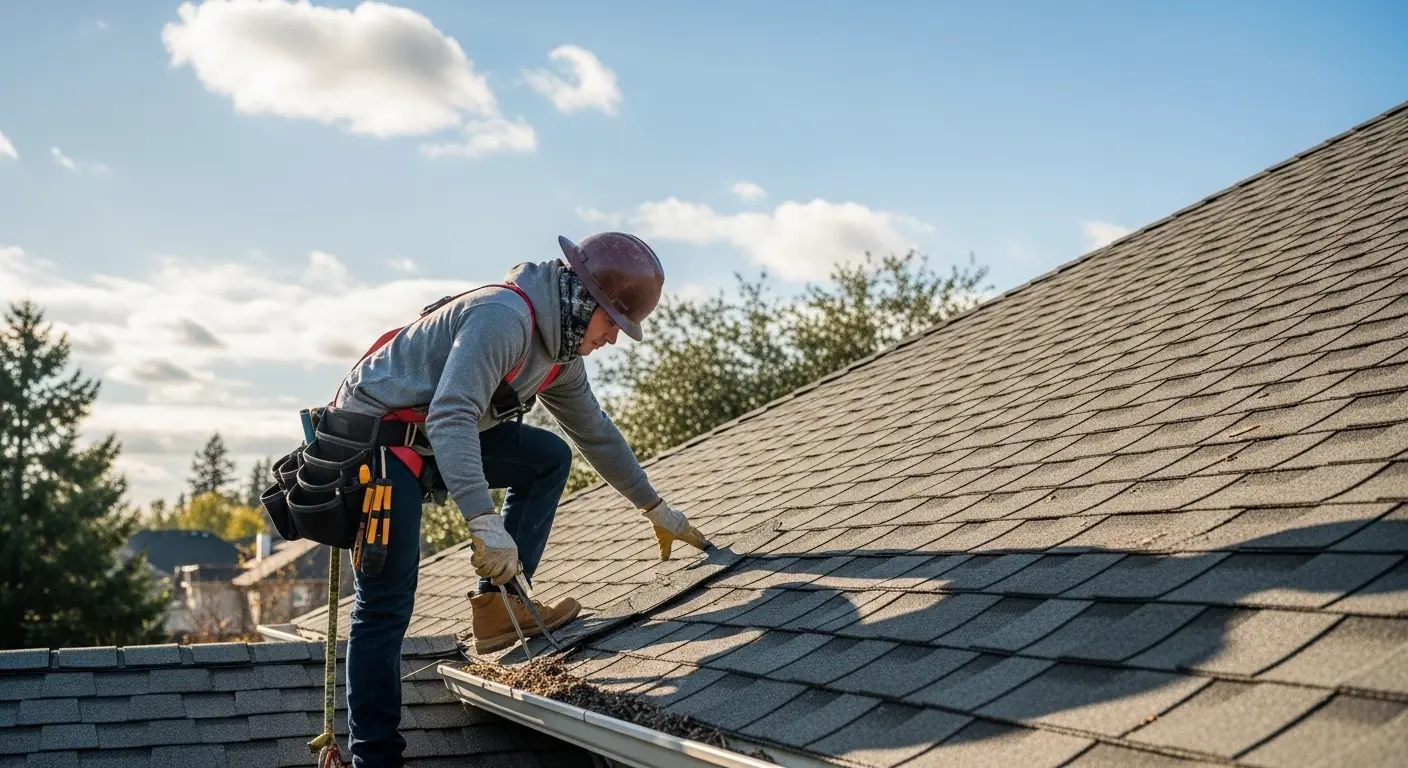
Frequently asked
Is it cheaper to repair or replace a roof?
A repair is always the smaller invoice and not always the cheaper decision. Divide the repair price by the years it realistically buys, then divide the replacement price by the service life of the new system, and compare. A $2,600 repair that buys three years costs about $870 a year, while a $13,200 replacement over twenty years costs about $660. On a young roof the repair wins easily. On an old one it usually does not.
What is the 25 percent roof rule in Florida?
There are two things people mean by it. One is a cost rule of thumb: if the repair approaches a quarter to a third of a replacement, replacing is generally the better buy. The other is a building code requirement that when more than about a quarter of a roof section is repaired or replaced within twelve months, that section must be brought up to current requirements, with limited exemptions administered locally.
Will repairing part of my roof void the warranty?
It can complicate it. Manufacturer system warranties assume the assembly stays as approved and installed, so introducing different products or using a contractor outside the program can affect a later material claim. The installer workmanship warranty is separate and commonly does not survive another company working the same area. Ask which warranties are in force and what the repair does to each before the work, not after.
Can a new section of roof be matched to the old one?
Rarely well. Shingle blends are reformulated and discontinued over time, and a decade of Florida sun changes the color of what is already up there, so a new patch usually reads as a patch. Tile profiles get discontinued outright, which is why crews salvage tile from an inconspicuous slope to repair a visible one. If you are selling soon, factor a visible mismatch into the conversation.
My roof is 18 years old and has one leak. What should I do?
Get the leak diagnosed and get remaining service life in writing at the same visit. At 18 years a shingle roof is inside the window where carriers start asking questions, so the insurance clock may decide it before the leak does. If the deck and underlayment check out, a targeted repair is a reasonable bridge. If the repair is large or the deck is soft, spending that money on a replacement is the better use of it.