

Roof Financing in Florida: Six Ways to Pay for a New Roof

Nobody budgets for a roof. It shows up as a leak, a non-renewal letter or a storm, and the number attached to it lands in a month that already had other plans. By the time most homeowners start thinking seriously about how to pay, they are also working against a deadline, which is the worst possible condition under which to make a financial decision.
There are six realistic routes in South Florida, and they are less competitors than pieces that get combined. Insurance proceeds cover part of a storm loss. Savings cover the deductible. Financing covers the balance or the upgrade. A state grant covers a specific piece of the hardening work. Most of the projects we run involve more than one of them.
What follows is a plain description of each route and what it costs you, including the parts that never appear on a monthly payment. We build and install roofs. We are not lenders and we are not financial advisors, and none of this is advice about your particular finances. It is the map. Comparing the offers is your job, and this is written to make that easier.
The short version
- Insurance on a roof usually pays in two parts, and the second part only arrives after the work is finished
- No credit check means the decision is not gated on a credit pull. It does not mean the money is free
- Term length moves the monthly payment far more than most homeowners expect, and total cost with it
- A PACE assessment attaches to the property and rides on your tax bill, which can complicate a sale or refinance
- My Safe Florida Home funds specific wind mitigation improvements, not a whole new roof covering
The six ways a roof actually gets paid for here
Before the detail, the shape of it. These are the six sources of money that show up on real projects across Broward, Miami-Dade and Palm Beach, roughly in the order homeowners think of them.
Very few roofs get paid for out of one of these alone. A common combination right now is an insurance settlement covering part of a storm-damaged roof, a deductible out of savings, and financing for the depreciated portion or for the upgrade the homeowner wants while the crew is already there. Another is a state grant for the mitigation work paired with financing for the covering itself. A full roof replacement is a big enough number that stacking sources is normal rather than unusual.
Two questions decide most of it. How fast does the work have to happen, and how long do you plan to own the house. A leak and a carrier deadline compress your options down to whatever can close this month. A twenty-year time horizon changes which trade-offs are worth making at all.
- Insurance proceeds. Only for sudden, covered damage, whether that turns out to be a repair or a replacement. Not for a roof that has simply reached the end of its life.
- Cash or savings. Cheapest by a distance. The only route with no paperwork, no lien and no term attached to it.
- Home equity. A home equity loan, a line of credit, or a cash-out refinance. Secured by the house and underwritten on your credit and your equity.
- Contractor financing. Arranged through the company doing the work. Fastest to close, and the terms vary enormously between contractors, which is exactly why you read them.
- PACE. A Florida program repaid as an assessment on your property tax bill. Attaches to the property rather than to you personally.
- My Safe Florida Home. A state grant program for specific wind mitigation improvements, with a free wind mitigation inspection attached to it.
The money that is already yours: insurance, savings and equity
If the roof was damaged in a covered event, understand how the payment arrives, because the structure catches people out. Many Florida policies are written on a replacement cost basis for the roof, which means the carrier pays actual cash value first, being the replacement cost minus depreciation, and holds back the depreciated portion until the work is done and invoiced. That held-back money is called recoverable depreciation. It is real money you are entitled to, but it arrives in arrears. So the first check is smaller than the estimate, and a homeowner who budgets off the first check comes up short. Some policies pay actual cash value only, in which case the depreciation is never recovered at all. Your declarations page says which one you have.
If you carry a mortgage, expect your lender's name printed on the claim check alongside yours. Servicers generally require the check to be endorsed by them, and on larger losses they commonly release funds in stages against their own inspections. That process takes weeks, and it is one of the most common reasons a project stalls after everybody has already agreed on the scope. Start it the day the settlement is issued, not the day the crew is scheduled.
Cash needs no explanation except one: emptying the emergency fund to the floor in June, in Florida, is its own category of risk. Home equity is the traditional alternative, in three shapes. A home equity loan gives you a lump sum and a fixed payment. A line of credit lets you draw what the job actually costs. A cash-out refinance rolls the roof into a new first mortgage. All three are secured by your house, all three are underwritten on credit and equity, and all three carry closing costs of some kind. The refinance in particular re-prices your entire mortgage balance, so it only makes sense if the terms on the whole thing are terms you want.
- Find out whether your policy is replacement cost or actual cash value on the roof. It changes the total you end up with, not just the timing.
- Recoverable depreciation is paid after the work is complete. Plan the budget around the full settlement, not the first check.
- Get the mortgage servicer moving early if the lender is named on the check. Endorsement and staged releases run on their calendar, not yours.
- Ask what happens if you upgrade materials. A carrier pays to restore what you had. Going from shingle to tile or metal is your money on top, and that gap is a common reason people finance part of a covered job.
- Compare home equity offers on total cost, not on the payment. Ask every lender for the total of payments and the closing costs in writing.
- A cash-out refinance is a mortgage decision that happens to include a roof. Treat it as the larger of the two decisions, because it is.
Contractor financing, no credit check, and the term-length trap
Contractor financing is arranged through the company doing the work, and its practical advantage is speed. Scope, price and funding get settled in one conversation, and the permit gets pulled without you writing a check first. Ours is $0 down with 100% of the project financed, no credit check required, secured and unsecured options, terms of 10, 20 and 30 years, no pre-payment penalty, and payments starting at $65 a month. The full terms sit on our financing page.
Be precise about what no credit check means, because it is the phrase most often misread in this industry. It means the decision to move forward is not gated on a credit pull, which matters a great deal if your score is bruised or if you would simply rather nobody touched your credit. It does not mean the financing is free. It does not mean there is no obligation. In a secured option it does not mean nothing is attached to your property. And it does not remove your job of working out whether the payment actually fits before you sign. Those are four separate things, and advertising in our trade blurs them constantly.
The number most homeowners react to is the monthly payment, and a long term exists precisely to make that number small. The same project on a 30-year term produces a much smaller payment than the same project over 10, and a substantially larger total paid across the life of it. That is not a trick, it is arithmetic, and a long term is a perfectly legitimate choice when the monthly figure is the binding constraint in your budget. The failure mode is not knowing you made the trade. Ask for the total of payments over the full term, in writing, on every offer you look at. If someone will only discuss monthly payments with you, that is useful information about them.
- Ask for the total of payments over the full term, not only the monthly figure, from everyone who quotes you.
- Ask whether it is secured or unsecured and, if it is secured, exactly what it is secured by and in what position.
- Ask about pre-payment. A penalty for paying early turns a long term into a one-way door. Ours has none, which is what makes a low required payment a floor rather than a ceiling.
- Ask who holds the paperwork once the job is finished. The contractor arranges it; someone else services it. Know who that is before you sign.
- Ask how a change order gets handled. Rotten decking found at tear-off is common in this climate. Find out how it is priced and funded before it happens, not while the roof is open.
- Ask whether the person selling you is paid on the outcome. A commission tied to scope or term gives someone a reason to steer you. We do not employ commissioned salespeople.
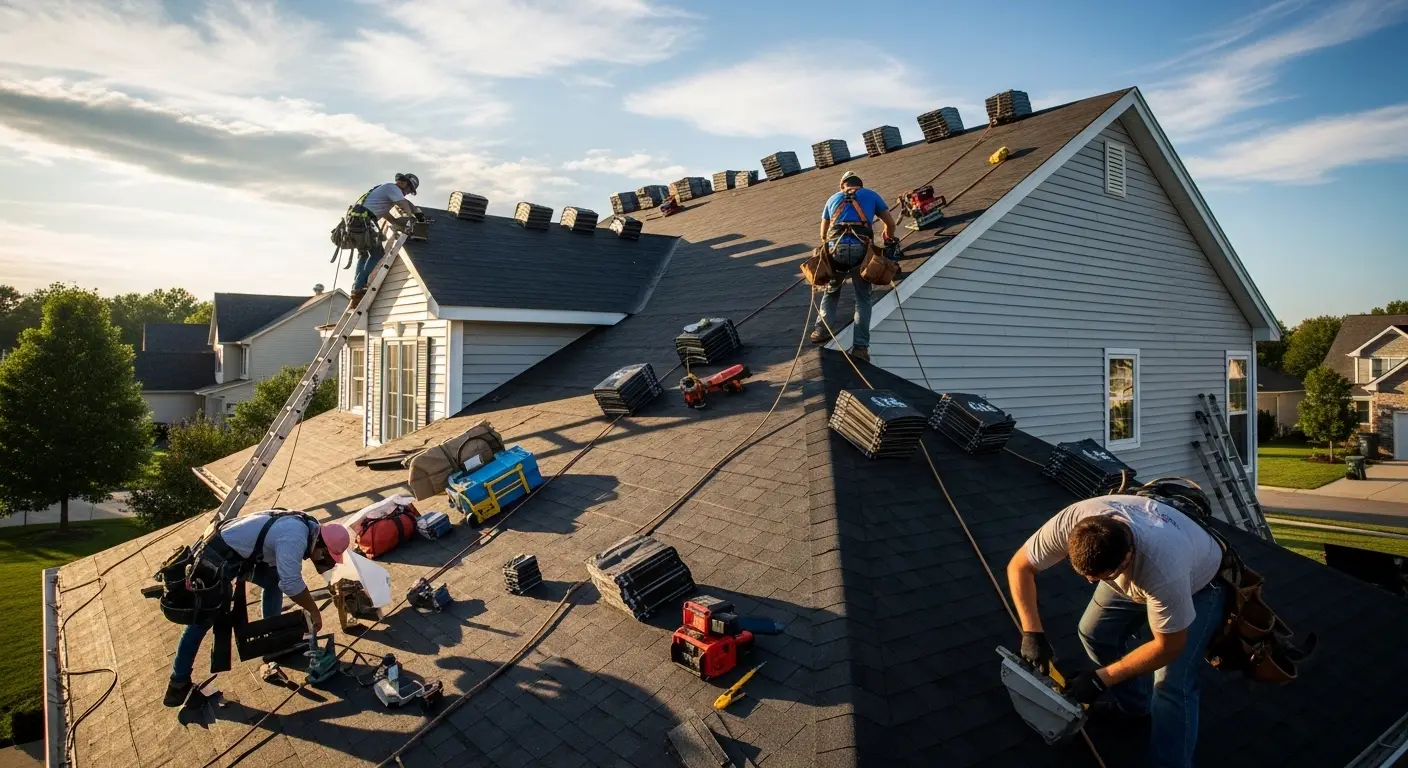
Any payment can be made small by stretching the term far enough. Before you sign anything, with anyone, ask for one number: the total you will have paid when the last payment clears. Then compare that number across offers instead of comparing monthly figures. It is the single fastest way to tell a good deal from a well-presented one.
PACE: collected on your tax bill, attached to your house
PACE stands for Property Assessed Clean Energy. It is authorized under Florida law and it works differently from everything else on this page. Instead of a loan you repay to a lender, you get a non-ad valorem assessment added to your annual property tax bill. Roof work qualifies: the statute specifically lists repairing, replacing or improving a roof, including improvements that strengthen the roof deck attachment, along with wind-resistant shingles. Impact windows and doors and other resilience and efficiency work qualify as well. We are a PACE approved contractor, which means we can perform work under the program. We do not administer it, set its terms, or decide who qualifies.
The appeal is genuine. The Florida PACE Funding Agency states that no minimum credit score is required to apply, that payments are fixed with no balloon payment and no prepayment fee, and that the term cannot exceed the useful life of the improvement, which can put a roof out as far as 30 years where an air conditioner would be capped nearer ten. Under Florida law, consent from your mortgage holder is generally not required unless the amount financed exceeds 20 percent of the just value of the property. And since July 1, 2024, each county has to approve PACE before it can be offered to residents there, so whether it is available to you at all is a county-level question.
Now the part that belongs in the same conversation. The obligation attaches to the property, and Florida law treats a PACE assessment as a senior lien, which puts it ahead of your mortgage. That is exactly why the mortgage industry objects to it. Fannie Mae's selling guide states that it will not purchase mortgage loans secured by properties with an outstanding PACE loan unless the program does not provide for lien priority over first mortgage liens. In practice that means a buyer's lender, or your own lender at refinance, will often require the balance to be paid off at closing, so the assessment you were told would simply travel with the house may not get to. There is also an escrow effect: if your taxes are escrowed, your servicer pays the larger tax bill and recalculates your monthly mortgage payment upward. The federal Consumer Financial Protection Bureau, in the research behind its residential PACE rulemaking, found that PACE origination raised borrowers' property tax bills by roughly $2,700 a year on average, an increase of about 88 percent, and was associated with a measurable rise in mortgage delinquency. None of that makes PACE a bad product. It makes it a product to walk into with your eyes open.
- It is an assessment, not a loan. It is billed and collected with your property taxes, and non-payment gets handled the way delinquent taxes get handled.
- The obligation attaches to the property. Florida treats it as a senior lien, ahead of your mortgage. That is the selling point and the complication in the same sentence.
- Expect it to surface at sale or refinance. Fannie Mae will not buy a loan on a property carrying a PACE obligation with lien priority, so the balance frequently has to be cleared at closing.
- If you escrow, your mortgage payment changes. The servicer pays the higher tax bill and re-spreads it across your monthly payment, usually with no warning that felt like a warning.
- Federal consumer protections now apply. A CFPB rule effective March 1, 2026 treats residential PACE as credit under the Truth in Lending Act, so you should receive PACE-specific Loan Estimate and Closing Disclosure forms and the provider must assess your ability to repay. Read both documents.
- Availability is county by county. Since July 1, 2024, a Florida county has to approve PACE before it can be offered to homeowners there. Confirm yours before you build a plan around it.
My Safe Florida Home, and what to ask before you sign anything
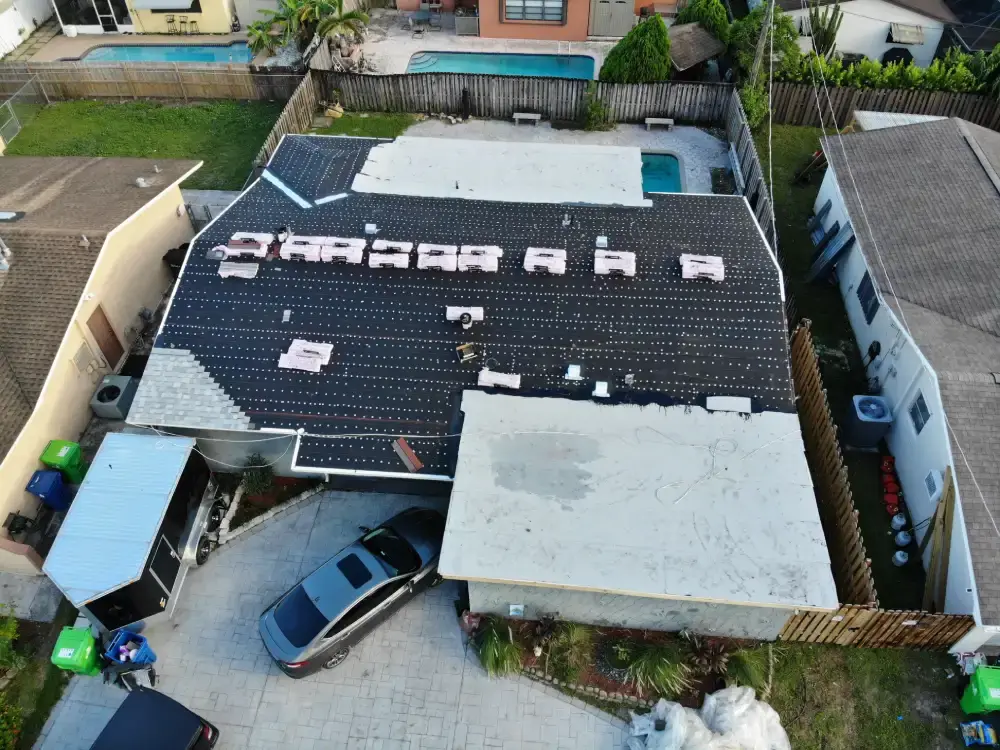
My Safe Florida Home is a state program rather than financing. It pays a grant toward specific wind mitigation improvements identified by a free wind mitigation inspection, and we are an approved contractor for it. The distinction that causes the most disappointment is this: it is aimed at hardening measures, not at buying you a roof covering. On the roof side the program targets items such as strengthening the roof-to-deck attachment, reinforcing roof-to-wall connections and installing secondary water resistance, plus opening protection like impact windows, exterior doors and garage door reinforcement. Those roof items are all done with the covering off, which is why the program pairs naturally with a re-roof without paying for the re-roof.
The structure has run to $10,000 in grant funds with the match tied to income. Households at or below 80 percent of their county median income have been eligible for the full amount without matching; households below 120 percent have been on a matching basis, with the state contributing up to $2 for every $1 the homeowner puts in, so $5,000 of your money reaches the $10,000 cap. Above that income line the program does not serve you. It also runs as a reimbursement, meaning the work gets completed, inspected by the local building department, verified, and then paid back to you, so you still need the money available up front. The legislature has revised the income rules, the funding and the application windows more than once, so confirm the current terms at mysafeflhome.com rather than taking any contractor summary as final, this one included.
Whichever route you end up on, the same short list of questions separates a good offer from an expensive one that was presented well. Ask them out loud, write down the answers, and compare on paper rather than on how the conversation felt.
- What is the total I will have paid at the end? One number, from everyone, in writing.
- Is anything attached to my property, and where does it sit relative to my mortgage? Lien position is not a detail.
- What happens if I sell or refinance in five years? Get that answer from whoever holds the obligation, in writing, not from a brochure.
- Can I pay it off early, and does doing so cost me anything? A pre-payment penalty changes what a long term really means.
- Is the price the same whether I finance or pay cash? Ask every contractor directly and get the two numbers side by side.
- Start from a real price rather than a range. The measurement, the instant roof report and the written estimate are free and carry no obligation, and permits and permit fees are already inside the number you are shown. Call 954-893-2550, look at current pricing on our financing page, or request the visit.
Frequently asked
Can I finance a roof in Florida with bad credit?
Our contractor financing requires no credit check, so approval is not gated on a credit pull, and secured and unsecured options are both available. We cannot promise anyone approval, and we will not pretend otherwise. Other routes work differently: home equity loans, lines of credit and cash-out refinances are all underwritten on credit and equity. PACE states that no minimum credit score is required to apply, though eligibility rules still apply.
Does a PACE assessment have to be paid off when I sell the house?
It is designed to stay with the property, but in practice it often gets cleared at closing. Fannie Mae will not purchase a mortgage on a property carrying a PACE obligation that has lien priority over the first mortgage, so a buyer using conventional financing will frequently need the balance paid off. The same issue can appear when you refinance. Ask the program administrator directly and get the answer in writing before you sign.
What does no credit check actually mean?
It means the decision to proceed is not conditioned on a credit report being pulled. It does not mean the financing is free, that there is no obligation, or that nothing attaches to your property under a secured option. You still owe the balance, the term still determines what you pay in total, and you still need to confirm the payment fits your budget. Ask for the total of payments over the full term before signing.
Will My Safe Florida Home pay for a new roof?
Not for the roof covering itself. The program funds specific wind mitigation improvements identified by a free inspection, which on the roof side means items like roof-to-deck attachment, roof-to-wall connections and secondary water resistance. Those are performed with the covering off, so the grant pairs well with a replacement you are already doing. Grant amounts, income rules and application windows change, so confirm current terms at mysafeflhome.com.
Should I take the 10-year term or the 30-year term?
That is a question about your budget, and we are not the right people to answer it for you. What we can give you is the trade-off: a longer term produces a smaller required payment and a larger total paid over the life of it, while a shorter term does the reverse. Because our financing carries no pre-payment penalty, a longer term still leaves you free to pay it down faster whenever your situation allows.