

The Tile Is Not the Waterproofing. The Underlayment Is.
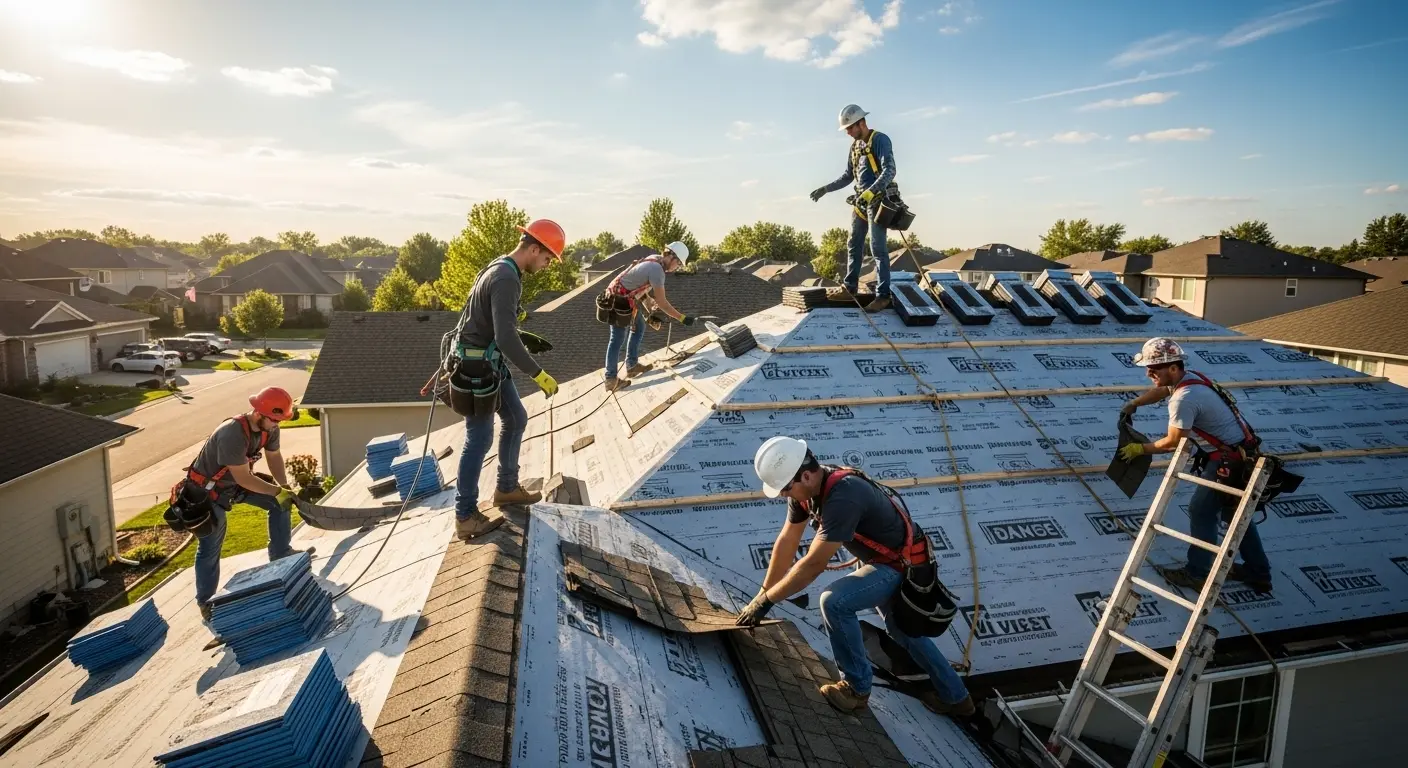
If you take one thing from this cluster, take this. The tile on your roof is not what keeps water out of your house. It is a wear surface and a rain shield, it takes the sun and the impact and the wind, and it is very good at that job for a very long time. The thing actually holding water out is a layer of membrane underneath it that you have never seen, that nobody photographs, and that has a service life measured in decades rather than half-centuries.
That single fact explains almost everything homeowners find confusing about tile roofs. Why a forty-year-old tile roof can leak while the tile looks perfect. Why an insurance carrier treats your roof as old when the tile is clearly fine. Why a roofer looked at your leak and quoted a number that has nothing to do with replacing tile. And why the phrase you need to know is not replacement but re-lay: lifting the tile, replacing everything under it, and setting the same tile back down.
This post is the mechanical detail. What the underlayment is, how long each type lasts here, exactly what happens during a re-lay, how much tile realistically breaks in the process, and the specific conditions that push a roof out of re-lay territory and into a full replacement. It is the least glamorous subject in roofing and the one that decides whether your ceiling stays dry.
The short version
- Water gets under tile in every heavy South Florida rain, by design, and the underlayment carries it back out
- Tile commonly outlasts 40 to 50 years while underlayment service life is measured in decades, not half-centuries
- A re-lay lifts and stacks the existing tile, replaces the underlayment and deck fasteners, then re-sets the same tile
- Breakage on a re-lay commonly runs in the range of 5 to 15 percent on concrete and higher on older or brittle tile
- A re-lay is permitted, inspected work, and that permit date is what an underwriter later reads as the roof age
Water gets under your tile every time it rains hard
This is not a defect and it is not a sign that something is wrong. A tile roof is a water-shedding system rather than a sealed one. Wind-driven rain gets under the head laps, blows up the side laps of an S-tile, and works its way past the trim at hips and rakes. Every heavy afternoon storm in Broward or Miami-Dade puts water on the underlayment. The system is designed for it: the tile takes the volume and the violence out of the rain, and the membrane below carries the remainder down the slope and out at the eave.
Once you understand that, a lot of things make sense. It explains why a single cracked tile does not immediately put water in your living room, because the membrane below is still doing its job. It explains why a roof can pass a visual inspection from the street and still be days away from a stain on the ceiling. And it explains why the most expensive tile in the world sitting on a failed membrane is a leaking roof.
It also explains why tile roofs so often get misdiagnosed. A homeowner sees a stain, assumes a tile is broken, and gets a quote to replace tiles. Sometimes that is right. Frequently the tile is fine and the membrane under a whole slope has given up, and a tile-by-tile roof repair is money spent on the symptom. If the water showed up after a named storm, the sequence to follow is in what to do about a roof leak after a storm, and the diagnosis belongs to somebody who has lifted a tile and looked.
Two clocks, running at completely different speeds
Concrete and clay tile commonly outlast 40 to 50 years and often longer. Underlayment does not come close. What is under your tile depends on when the roof was built, and the difference between the generations is large enough to change your planning.
Older South Florida tile roofs typically have an organic felt system, commonly a 30-pound base sheet fastened with tin caps and a cap sheet mopped in hot asphalt over it. Built well, those systems have served a long time, but organic felt in this heat becomes brittle, the asphalt loses its volatiles, and the assembly ends up cracking along the fastener lines and at the laps. A realistic expectation on that generation of underlayment is on the order of 20 to 30 years in this climate, and it can be less on hot west-facing planes with poor attic ventilation.
Modern systems are meaningfully better. Polymer-modified and synthetic underlayments, particularly fully self-adhered membranes applied directly to the deck, are more heat-stable, seal around fasteners and do not go brittle the way organic felt does. Manufacturers publish long warranties on the good ones. The important point is not the exact number, which depends on the product and the installation, but the shape of it: whatever is under your tile will need replacing at least once, and probably twice, during the life of the tile itself. Planning a tile roof as a one-time purchase is the mistake. Planning it as a long-lived surface over a serviceable membrane is accurate.
- Hot-mopped organic felt. The traditional South Florida assembly. Long-serving when done properly, and brittle at the end of its life. Common on roofs built before the mid-2000s.
- Mechanically attached base sheet with a cap sheet. A two-ply system fastened with tin caps, with the cap sheet mopped, torched or self-adhered over it.
- Self-adhered peel-and-stick membrane. Bonds directly to the deck, seals around the fasteners that pass through it and creates a genuinely sealed deck.
- Synthetic mechanically attached underlayments. Lighter, tougher to tear and more heat-stable than felt, and they must be installed to the fastening pattern in their approval.
- The assembly is approved as a system. In the High Velocity Hurricane Zone the underlayment, the tile and the attachment are approved together, so components cannot be swapped freely.
- A sealed deck earns credit. Self-adhered underlayment is what the secondary water resistance line on a wind mitigation form is looking for, which matters at renewal.
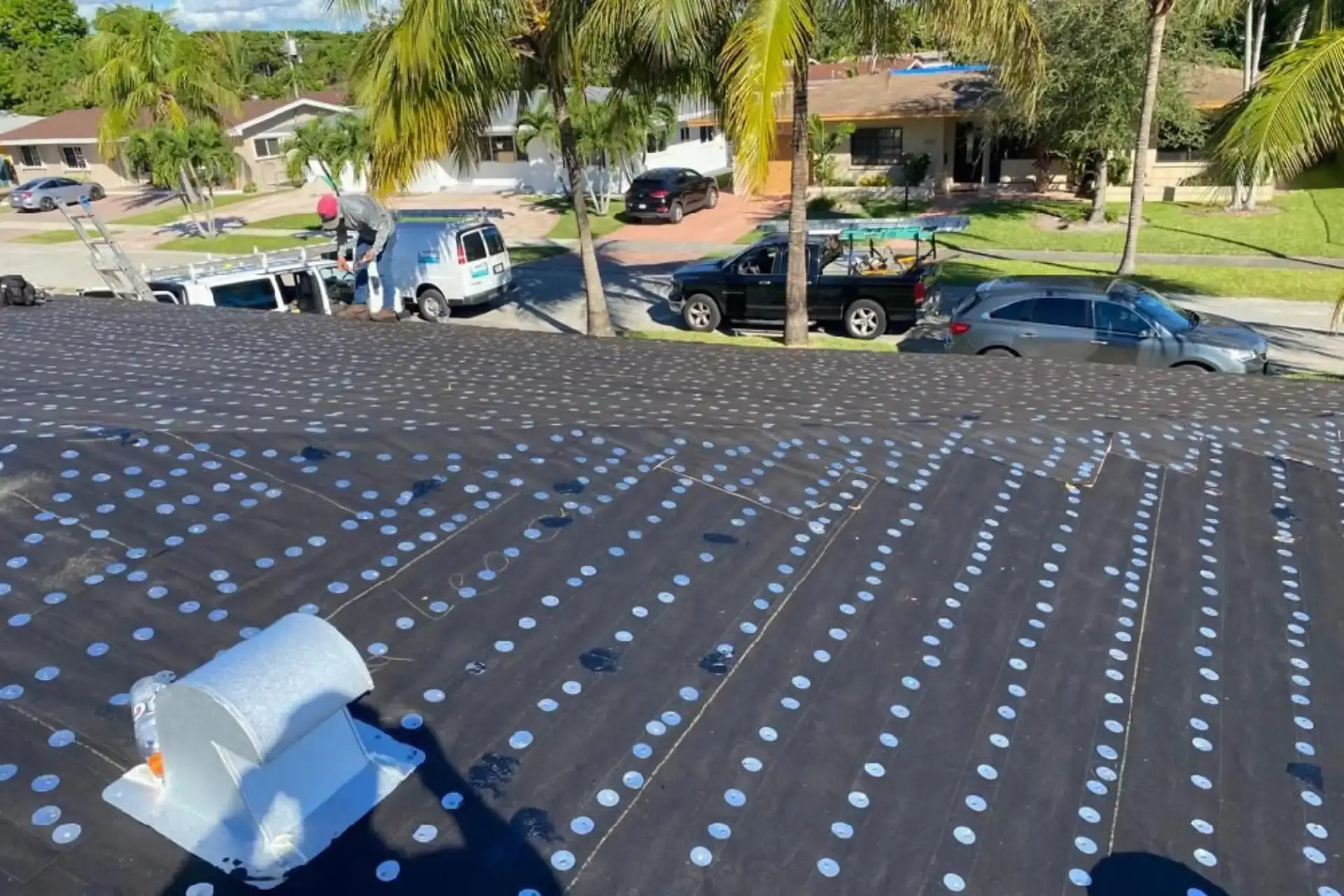
If the tile is intact and the leaks are showing up in more than one place, the odds favor the membrane below rather than the tile above. Anyone who quotes you a full new tile roof without lifting a tile and looking at what is underneath is guessing at your expense.
What a re-lay actually involves, start to finish
A re-lay is a real, permitted, inspected piece of tile roofing work and it takes longer than a shingle replacement on the same house. Nothing about it is a shortcut. The tile comes off by hand, one piece at a time, and gets stacked in bundles either on the roof itself where the structure allows or lowered to staging on the ground. Careless removal is where a job goes wrong: tile thrown into a pile is tile you are buying again.
With the roof stripped to the deck, the part that no one sees becomes visible for the first time in decades. Rotten, delaminated or water-stained sheathing gets cut out and replaced. The deck gets re-nailed to the fastening schedule currently required, which on many older houses is a genuine improvement over what was there and is one of the lines a wind mitigation inspector will later look for. Then the new underlayment goes down as an approved system, the eave metal, valley metal and flashings are replaced rather than reused, and the dry-in inspection happens before any tile goes back.
Only then does the tile return, set to the attachment method in the product approval, with new trim and new hip and ridge detail. Salvaged tile gets sorted as it goes back: sound pieces to the field, chipped-but-usable pieces to cut courses and less visible planes, cracked pieces to the dumpster. New tile makes up the difference. This is the point where the neighborhood matters, because on the older tile roofs across Hollywood and east Broward the original profile may no longer be manufactured, and salvage becomes the sourcing plan rather than a purchase order.
- 1. Permit and dry-in scheduling. The job is permitted before it starts, and it is inspected at dry-in and at final, the same as any other re-roof.
- 2. Lift and stack. Tile comes off by hand and gets bundled and staged. Speed here directly increases your breakage percentage.
- 3. Strip the old underlayment. Everything comes off to bare deck, including old base sheet, tin caps and mortar residue.
- 4. Inspect and repair the deck. Damaged sheathing is replaced at the agreed unit price. This is the only time anyone will see it for another 25 years.
- 5. Re-nail the deck. Sheathing is re-fastened to the current schedule, which is both a code requirement and a wind mitigation line item.
- 6. New underlayment, metal and flashings. The approved system goes down, and drip edge, valley metal and penetration flashings are replaced rather than reused.
- 7. Re-set the tile. Salvaged tile goes back with new attachment, supplemented by new tile to cover breakage, with trim and hip and ridge detail rebuilt.
Breakage: the number that should be written in your contract
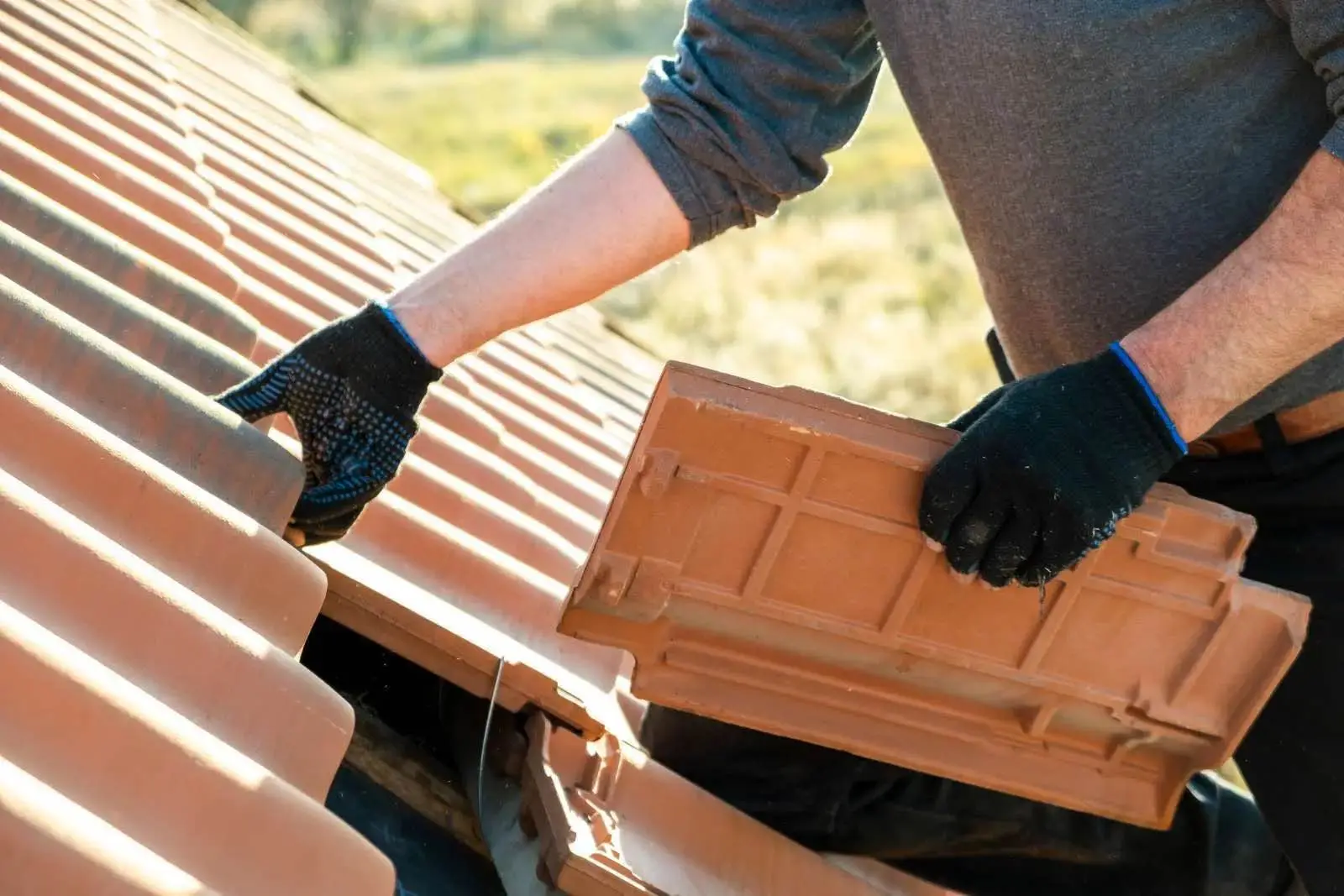
Some of your tile will not survive the round trip, and any contractor who tells you otherwise is managing your feelings rather than your project. On sound concrete field tile handled by a careful crew, breakage commonly lands somewhere in the range of 5 to 15 percent. On clay, on older tile that has already been walked repeatedly, or on any roof where previous trades have left hairline cracks nobody can see from above, it can run considerably higher. Twenty to thirty percent is not unheard of on a brittle roof, and there is no way to know the exact figure until the work begins.
That uncertainty is why the breakage allowance belongs in the contract in writing. A good estimate states an assumed percentage, the cost of replacement tile per piece or per square beyond it, and who carries the risk if the actual rate is higher. Without that language you are relying on goodwill in a conversation that happens after the roof is open. The materials difference matters here too, because clay fractures where concrete chips, which is one of the practical reasons covered in the concrete versus clay comparison.
The other half of the breakage question is availability. If your tile is still in production, replacing 10 percent of it is a purchase. If the profile was discontinued in 2004, the crew is sourcing from salvage yards, from tear-offs on other jobs, and from whatever the distributor has left on a back rack. That search takes time, it costs more per piece than new tile, and it occasionally comes up short. When it comes up short, the job stops being a re-lay. Sourcing is the reason experienced estimators want to identify your exact profile before they price anything, and it is a large part of why tile bids vary as much as they do.
- Assumed breakage percentage. The number the estimate is built on. If it is not stated, ask for it before signing.
- Price per replacement tile beyond the allowance. A unit price agreed in advance, not a figure produced after the fact.
- Profile and color identification. Manufacturer, profile name and color, confirmed before the job, so sourcing starts early rather than mid-project.
- Whether salvaged tile is acceptable to you. Weathered salvage rarely matches new tile exactly. On a visible front elevation that difference is worth discussing beforehand.
- Where the tile will be stacked. On the roof, on the driveway, or on the lawn. It affects your landscaping, your access and the risk of further breakage.
- What happens if sourcing fails. The contract should say what the project becomes if replacement tile cannot be found in the quantity needed.
Re-lay or full replacement: how to tell which one you have
The decision comes down to four things: the condition of the tile, the condition of the deck, whether your profile can be sourced, and how much life you want to buy. A roof with sound tile in a current profile, a deck that is mostly healthy, and twenty years of underlayment behind it is a textbook re-lay candidate, and it is usually the cheaper and more sensible choice. A roof with widely broken or delaminating tile, a discontinued profile with poor salvage availability, or a deck that turns out to be failing across multiple planes has already become a full roof replacement whatever the original plan was.
Age of the tile itself is a legitimate factor even when the tile looks fine. Concrete tile that has been through fifty South Florida summers has less structural margin left than tile at twenty, and putting a new 25-year underlayment under tile that will be at the end of its own life before that membrane is would be spending the labor twice. There is a general point buried here that applies to every roofing decision, and we set it out fully in the repair or replace decision: the question is never only what is broken, it is what you are buying time for.
Insurance is the fourth input and it surprises people. Both a re-lay and a full replacement are permitted work, and the permit date is what an underwriter reads as the age of your roof, which means a re-lay can reset the conversation with your carrier without you buying new tile. What that involves on a tile roof specifically, including product approval documentation and how attachment method is assessed, is in tile roofs and your insurance carrier. And once the new membrane is down, keeping people and pressure washers off it is what protects it, which is the subject of tile roof maintenance.
- Leaks in several separate areas at once. The strongest single indicator that the membrane rather than the tile has reached the end.
- Asphalt granules or black grit washing out at the eave. Old cap sheet material coming apart and leaving the roof.
- Visible cracking in the felt at the eave course. Lift one tile at the eave and the state of the membrane is usually obvious.
- Sagging or soft spots underfoot. A deck question, not an underlayment question, and it moves you toward a full replacement.
- Widespread broken or slipped tile. When enough of the field is already gone, salvage economics stop favoring a re-lay.
- You are planning to stay. A re-lay buys decades of dry ceiling for less than a new tile roof, and both scopes are described on our tile roofing page.
- The timing is wrong for the money. $0 down financing with no credit check exists precisely so a failing membrane is not left another season. We measure, produce an instant roof report and put a written estimate with permits included in your hand at no cost. Call 954-893-2550.
Frequently asked
How long does tile roof underlayment last in Florida?
It depends on the system. Older hot-mopped organic felt assemblies commonly reach something on the order of 20 to 30 years here before they go brittle at the laps and fastener lines. Modern polymer-modified and self-adhered membranes are more heat-stable and generally last longer. Either way the membrane is the component that ends a tile roof, decades before the tile itself is worn out.
Can you replace underlayment without replacing the tile?
Yes, and it is called a re-lay. The tile is lifted and stacked, the old underlayment is stripped to the deck, damaged sheathing is replaced, the deck is re-nailed, a new approved underlayment system goes down, and the same tile is set back with new attachment. New tile is bought only to cover breakage. It is permitted and inspected work like any re-roof.
How much tile breaks during a re-lay?
On sound concrete field tile with a careful crew, commonly in the range of 5 to 15 percent. Clay, older tile, and roofs that have been walked repeatedly run higher, and 20 to 30 percent is possible on a brittle roof. No one can know the exact figure before starting, which is why the contract should state an assumed percentage and a unit price for replacement tile beyond it.
How do I know if my underlayment is failing?
The clearest sign is leaks appearing in several separate places rather than one. Others include black grit or asphalt granules washing out at the eaves, staining that returns after tiles have already been replaced, and visibly cracked, brittle felt when a tile at the eave course is lifted. The last one requires someone who knows how to lift a tile without breaking three around it.
Does a re-lay reset my roof age for insurance?
It generally resets the permit record an underwriter reads, because a re-lay is permitted and inspected work with a final inspection date attached. Carriers vary in how they treat it and some ask specifically what was replaced, so keep the permit, the final inspection and the product approval paperwork. We cannot promise how any individual carrier will respond, and neither can anyone else.