

Concrete or Clay Tile: Which One Belongs on Your Roof
Most South Florida homeowners arrive at this decision having already chosen tile. The material comparison against shingle and metal is settled, the street is tile, the HOA expects tile, and now somebody has asked whether you want concrete or clay and quoted two different prices. If that is where you are, the broad comparison in tile versus metal versus shingle has already done its job and this is the next level down.
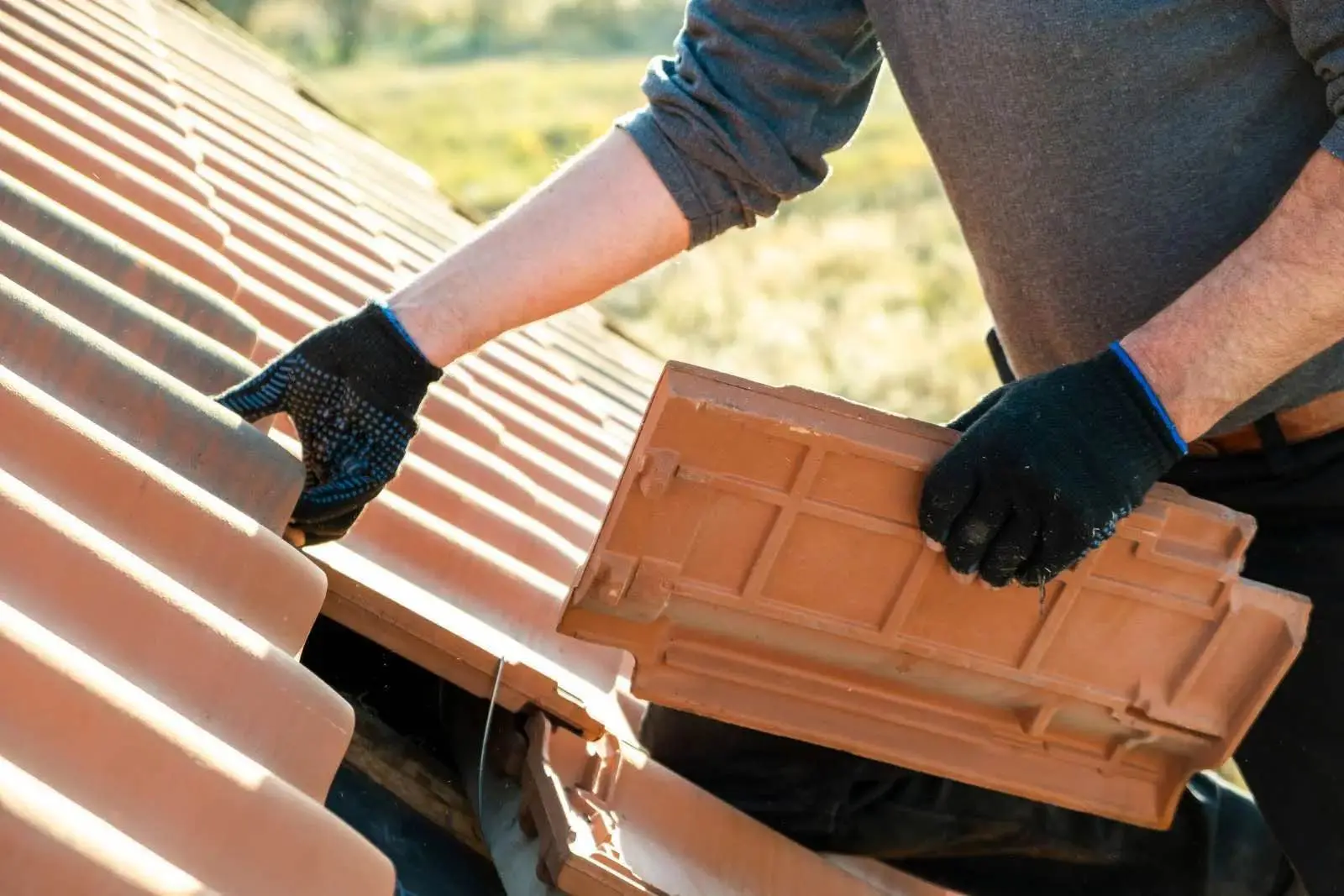
The short version is that these are not two grades of the same product. Concrete tile is cast from sand, cement and pigment and cured. Clay tile is formed from earth and fired in a kiln, and the firing is what turns it into a fundamentally different object. Everything that follows, the color behavior, the weight, the way each one breaks under a boot, the price and how easily you will match it in fifteen years, traces back to that one difference in how the tile is made.
Neither one is the better roof in the abstract. Concrete is the volume product across Broward, Miami-Dade and Palm Beach for good reasons, and clay is worth its premium on a specific kind of house. What follows is the honest version of each trade-off, so the choice comes down to your house, your street and how long you intend to be there rather than to whichever one the salesman has in the yard.
The short version
- Clay is colored through the body by firing, so a chipped clay tile is the same color inside as out
- Concrete carries most of its pigment in a surface layer, which is why a concrete roof softens in tone over time
- Concrete commonly runs 9 to 12 pounds per square foot installed, clay roughly 6 to 10 depending on profile
- Clay is the more brittle of the two underfoot, which raises breakage on any future re-lay
- Matching a discontinued profile fifteen years from now is easier in concrete than in clay
Where the color lives, and why that decides how it ages
A clay tile gets its color from the clay body and the kiln. The terracotta of a traditional barrel tile is the fired earth itself, all the way through. Chip the edge and the exposed break is the same color as the face. There is nothing on the surface to wear off, which is why hundred-year-old clay roofs in the Mediterranean and in old Florida neighborhoods still read as the color they were built in, only weathered and softened rather than faded.
Concrete works differently. The body is a sand-and-cement mix, and the color comes either from pigment mixed through the slurry or, more commonly on the products you see here, from a pigmented surface coat applied before curing. That coat is durable and modern versions are far better than they were thirty years ago, but it is a layer, and layers wear. What you see over time is a gradual softening and lightening of tone, more pronounced on the planes that take direct west and south sun, and the exposed body color showing at any chipped corner.
Neither behavior is a defect and you should not choose on this alone. What matters is expectation. A concrete tile roof in year eighteen looks like an eighteen-year-old concrete tile roof, which is fine and normal and reads as a bit chalkier and paler than the day it went on. If that will bother you, or if the house is one where a crisp saturated terracotta is the entire architectural point, clay is doing something concrete cannot. The same reasoning is why a tile roof is a longer-horizon purchase than a shingle roof: you are choosing a color you will live with for decades, not for a warranty period.
- Clay color is the material. Fired through the body, so chips, cuts and edge breaks all show the same tone as the face.
- Concrete color is usually a surface coat. Modern coatings hold up well, but the tone softens with UV and the body color shows at damaged edges.
- Sun exposure is uneven across a roof. West and south planes age visibly faster than shaded north planes, which is most obvious on darker concrete blends.
- Efflorescence is a concrete phenomenon. A whitish lime bloom can appear on new concrete tile as it cures out. It is cosmetic and generally weathers away over the first year or two.
- Blends age less obviously than solids. A multi-color concrete blend hides the softening better than a single flat color does, which is a practical reason blends are popular here.
- Both benefit from being kept clean. Algae and lichen do more to the look of a ten-year-old tile roof in this humidity than fading does.

Weight per square foot, and whether your framing cares
Installed weight is where the two materials separate in a way an engineer notices. Concrete tile commonly runs in the range of 9 to 12 pounds per square foot installed, clay in the range of roughly 6 to 10 depending on profile, and lightweight concrete products exist that pull the concrete number down closer to clay. Those are ranges, and the number that governs your job comes off the data sheet for the specific tile going on your house, not off an article.
If your house was framed for tile, the trusses were designed with a tile dead load in mind and switching between concrete and clay within those ranges is normally a non-event. If your house currently wears shingle, at roughly 2 to 4 pounds per square foot, then switching to tile is a structural question and it gets answered by a Florida-licensed engineer before anyone can write a real price. That evaluation, and what it does to the budget, is covered in what a tile roof actually costs.
There is one case where the concrete-versus-clay weight gap genuinely decides the outcome, and it is worth knowing about. On an older house where the engineer comes back with a marginal answer, moving from a heavy concrete profile to a lighter clay or a lightweight concrete product occasionally brings the load inside what the framing will carry without reinforcement. That is a conversation to have with the engineer and the estimator together, not a rule of thumb to apply on your own.
Brittleness, foot traffic and the breakage you will pay for later
Clay is the more brittle of the two. Fired clay is harder and more rigid, and rigid materials fracture rather than flex. Concrete has more give and tends to chip and spall where clay cracks clean through. In practice this means a clay roof is less forgiving of anything that puts weight in the wrong place: a careless boot, a dropped tool, a ladder set against the eave, an air conditioning technician taking the direct route to the condenser stand.
That difference has a real cost attached and it shows up years later rather than on install day. When the underlayment reaches the end of its life and the tile has to come off and go back on, the salvage rate is the whole economics of the job. Concrete field tile commonly survives that process better than clay does. If you would like to understand why that matters so much, the sequence and the realistic breakage percentages are in the tile underlayment and re-lay post, which is the piece of this cluster that costs homeowners the most money when they skip it.
The practical response is the same for both materials and it is not complicated: keep people off the roof. Nobody should be walking a tile roof casually, and anybody who does needs to know where the tile is supported. That, plus what to do about the tiles that inevitably break anyway, is covered in tile roof maintenance and in our post on cracked and broken roof tiles. A cracked tile is not an emergency, but it is an opening, and openings in this climate find the underlayment.
- Clay cracks, concrete chips. A struck clay tile tends to fracture through. Concrete more often spalls at the corner and stays in one piece.
- Breakage on a future re-lay is the real cost. Salvage rates are commonly better on concrete than on clay, and that difference lands on a bill fifteen years from now.
- Foot traffic is the main cause of broken tile. Not weather. Trades, cleaners, satellite installers and homeowners with a ladder do most of the damage on both materials.
- Falling fruit and branches break tile. An overhanging mango or ficus limb over a clay roof is a maintenance problem you can solve with a tree service.
- A broken tile is not an immediate leak. The underlayment is still doing its job. It is a countdown, not a flood, and a single cracked tile is a scheduled roof repair rather than an emergency.
- Keep spare tile. A pallet of your actual profile and color in the side yard is the cheapest insurance either material offers.
Profiles get discontinued. Colors get retired. When you need twenty pieces to close out a repair fifteen years from now, the tile that is still in production, or still sitting on a salvage yard rack in South Florida, is the one that keeps a small repair small.
Salt, sun and what twenty years of this climate does to each
Neither material corrodes, which is the first thing to say and the reason tile roofing does so well near the water. A concrete or clay tile does not care about salt air the way a metal panel or a fastener does. Within a mile of the ocean or the Intracoastal, the corrosion conversation on a tile roof is about everything except the tile: the drip edge, the valley metal, the flashings, the vents, the nails or screws holding it all down, and any clips at the perimeter. That is where the metallurgy has to be right and where a coastal roof either lasts or does not.
Ultraviolet light is the exposure that separates them. Clay is essentially indifferent to it; the color is fired in and the sun has nothing to attack. Concrete surface coats are engineered for it and hold up far better than the products of the 1980s, but two decades of South Florida sun is a real test and the tone does move. On the shaded and north-facing planes it moves less, which is why an older concrete roof can look slightly different from one side of the house to the other.
Biological growth is the exposure both share and it is more visible than either of them likes. In this humidity, algae, lichen and moss establish on shaded planes, under tree canopy and anywhere debris holds moisture, and lichen in particular grips the surface hard enough that removing it aggressively takes the surface with it. That is the single biggest reason we tell people never to let a pressure washer at high PSI near their tile. On a concrete roof it strips the color coat directly. Neighborhoods with mature canopy see it earliest, and the shaded rear planes go first.
- Tile does not corrode. Near the water, the corrosion question is about the metal in the assembly, not the tile.
- Clay is UV-indifferent. Twenty years of sun weathers a clay roof rather than fading it.
- Concrete tone softens. Expect a paler, chalkier surface over time, unevenly across sun exposures.
- Lichen is harder on concrete. It bonds into the surface, and aggressive removal takes the color coat with it.
- Both hold heat away from the deck. Profiled tile sits above the deck with an air gap that works as a thermal break, which is a genuine advantage over any deck-mounted covering.
- Neither one waterproofs your house. On both materials the underlayment beneath is the water barrier, and it wears out decades before the tile does.
Price, availability and the neighborhood call
Clay commonly costs meaningfully more per piece than concrete, and the gap widens on specialty profiles and imported product. On top of the material cost sits lead time. A common concrete profile in a stock color is often available quickly from South Florida distribution. A particular clay profile in a particular color can take weeks and occasionally months, and a schedule that depends on a container arriving is a schedule with risk in it. If the roof is already leaking, that risk is not abstract, because a roof replacement waiting eight weeks on a shipment is eight weeks of tarps and buckets.
Availability matters again years later, and this is the argument that persuades most of the homeowners we talk to. Roofs get repaired. Additions get built. Storms take tile off. When that happens you need pieces that match, and concrete profiles common in Coral Springs, Parkland and the western Broward subdivisions are far easier to source than a discontinued imported clay. The difference between a matched repair and a patch of visibly wrong tile on the front elevation is not small, and it is decided by a choice you make today.
So the honest guidance is this. If the house is a Mediterranean or Spanish-revival design where the roof is the defining architectural element, if you plan to be there twenty-five years or more, and the budget is comfortable, clay earns its premium and will still look right long after a concrete roof has softened. On a conventional South Florida subdivision house, in a neighborhood already full of concrete S-tile, where the HOA wants the look and the budget has other jobs to do, concrete is the right call and nobody should feel talked down to for choosing it. Either way the decision that actually determines whether your roof leaks is what goes underneath it, not which of these two sits on top.
- Choose clay when the architecture depends on it, when you are staying long term, and when a longer lead time is acceptable.
- Choose concrete when you want the tile look at the best value, when matching and repairs matter, and when the street is already concrete tile.
- Check the HOA list before either. Many South Florida associations specify profile and color, and architectural approval takes time you should build into the schedule.
- Match the street when you reasonably can. Resale in a deed-restricted community rewards fitting in more than it rewards standing out.
- Ask what the underlayment is on both quotes. Two bids for different tile with different underlayment are not comparable, and the underlayment is what fails first.
- See both on a real roof. We will bring samples and measure at no cost, and what a complete tile job includes is written out on our tile roofing page.
- Get it in writing before you decide. The estimate comes with permits and permit fees included and there is no obligation. Call 954-893-2550 or book the inspection.
Frequently asked
Does clay tile last longer than concrete tile in Florida?
Both commonly outlast 40 to 50 years, and clay generally holds its appearance longer because the color is fired through the body rather than carried in a surface coat. In practice neither one is usually what ends a tile roof. The underlayment beneath fails decades earlier, which is why a re-lay is a normal mid-life event on both materials.
Is clay tile too heavy for my house?
Clay is usually the lighter of the two, commonly around 6 to 10 pounds per square foot installed against 9 to 12 for concrete, though profile changes both numbers. If your house already carries tile, either is normally fine. If it currently wears shingle, at roughly 2 to 4 pounds per square foot, a Florida-licensed engineer needs to evaluate the framing before either material is priced.
Will my concrete tile roof fade?
It will soften in tone rather than fade dramatically, and the change is uneven because west and south planes take more sun than shaded ones. Modern pigmented surface coats hold color far better than products from decades ago. Multi-color blends disguise the change better than flat solid colors. Clay does not have this behavior at all, because there is no surface layer to wear.
Can I mix concrete and clay tile on the same roof?
You can physically install both on one house, on separate planes or on an addition, but it is rarely a good idea. The profiles almost never line up at the hips and ridges, the colors read differently in sunlight, and the two materials weather in opposite ways so the mismatch grows. If matching your existing tile is the problem, sourcing salvaged tile in your profile is usually the better answer.
Which one is cheaper to repair?
Concrete, in most South Florida cases, and the reason is availability rather than the price of a single piece. Common concrete profiles are widely stocked and salvage yards carry them, so a matched repair is straightforward. A discontinued or imported clay profile can turn a twenty-tile repair into a hunt. Keeping a pallet of your own tile on hand removes the problem for either material.