

Tile vs Metal vs Shingle Roof in Florida: How to Actually Choose
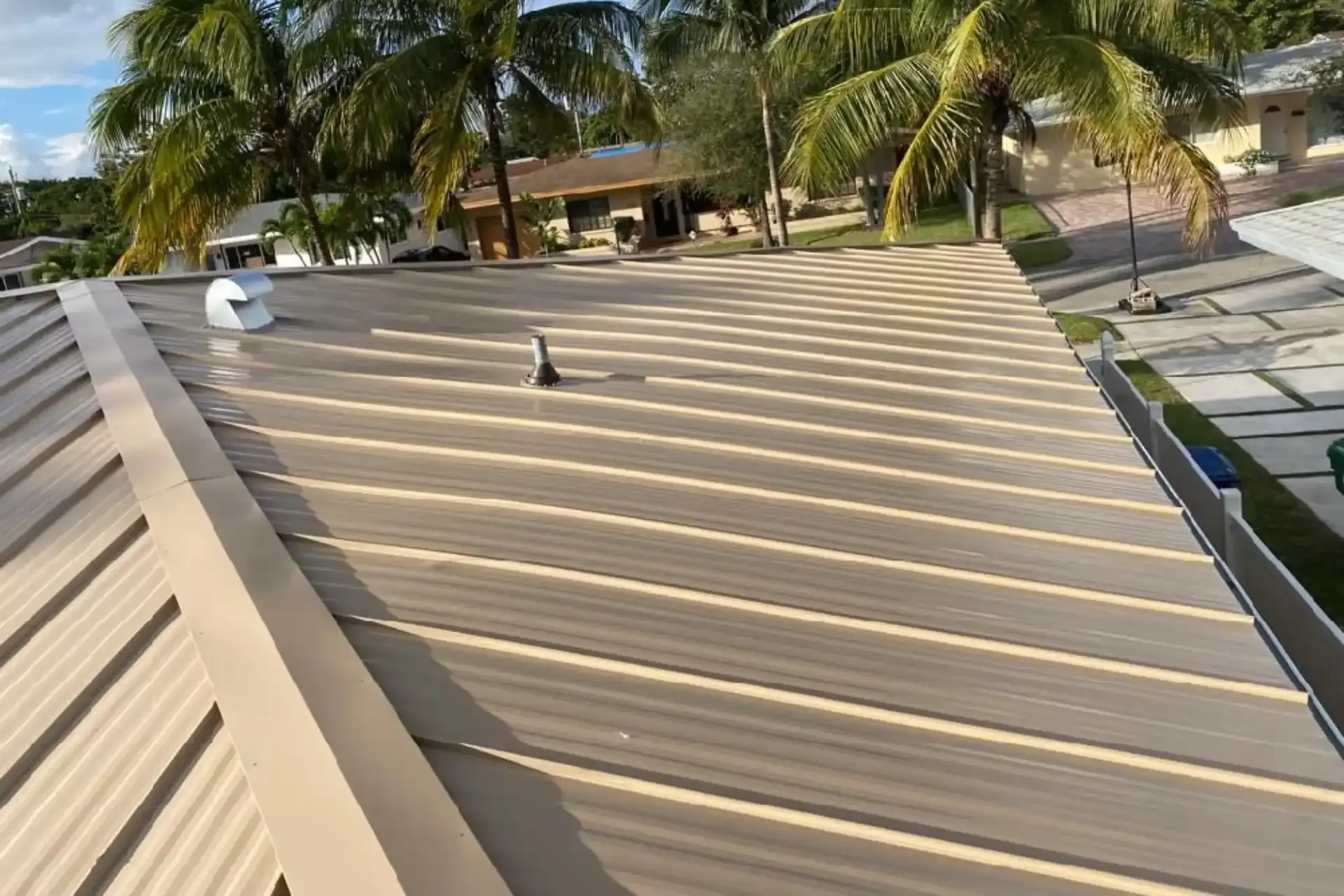
There are really only three answers for a sloped roof in Broward, Miami-Dade or Palm Beach, plus a fourth for the low-slope sections almost every Florida house has somewhere. Shingle, tile, metal, and a membrane over the Florida room. The hard part is not the list. It is that the honest comparison depends on your house, how long you plan to own it and what your street already looks like, and almost nobody presenting the options to you is neutral.
The most common mistake we see is treating this as a quality ranking, with tile and metal at the top and shingle at the bottom. That is not what it is. A properly installed architectural shingle roof, fastened to High Velocity Hurricane Zone requirements, is a good roof. It is the right call on a large share of the houses we work on, and pretending otherwise is how homeowners end up paying 70 to 80 percent more per square foot for a benefit they will never be around to collect.
So here is the comparison the way we would run it at your kitchen table. Price per square foot first, then the things that quietly decide it: realistic service life in this climate, whether your framing can carry the weight, what the sun and the salt do to each one, and what your HOA and your neighborhood already expect.
The short version
- Published pricing: architectural shingle from $6.00 per sq ft, tile from $10.25, metal from $10.75, permits included
- Shingle is the shortest-lived option here and still the correct answer on a lot of South Florida houses
- Concrete tile can weigh three to five times what a shingle roof does, so the framing gets checked first
- The tile is not the waterproofing. The underlayment under it is, and it wears out decades sooner
- Within about a mile of the water, corrosion resistance outranks every other spec on the page
Start with the price per square foot, then find out what moves it
Our published numbers are architectural shingle from $6.00 per square foot, tile from $10.25 and metal from $10.75, with permits and permit fees inside the price rather than added at the end. Those are the starting points for a straightforward roof, and they are the numbers we put in writing on a roof replacement estimate.
The first thing to understand is what those square feet are measured on. It is the surface area of the roof, not the floor area of the house. A steep hip roof over an 1,800 square foot house can easily have well over 2,400 square feet of roof surface once you account for slope, overhangs and the porch. Anyone quoting you off the county property record without measuring the planes is guessing, and the guess is never in your favor.
The second thing is that the material is a starting point, not the whole number. What usually separates two estimates on the same house is everything happening under and around the material.
- Deck condition. Rotten or delaminated sheathing has to be replaced, and nobody knows how much until the old roof is off. Ask how replacement decking is priced per sheet and whether that price is fixed.
- Layers coming off. Two layers of old shingle means twice the tear-off, twice the dumpster and twice the labor before a single new piece goes down.
- Slope and height. A steep two-story roof is slower and needs more staging than a walkable single story. That is labor, and labor is most of what a roof costs.
- Complexity. Valleys, dormers, skylights, chimneys, HVAC curbs and plumbing vents are all hand detail. A simple gable with two penetrations and a cut-up hip roof with fourteen are not the same job at the same rate.
- Where the house sits. Broward and Miami-Dade are inside the High Velocity Hurricane Zone, where products carry zone-specific approvals and fastening schedules are tighter. Palm Beach is outside the HVHZ but still a high wind design area with requirements of its own.
- Access. A tight lot, a pool cage, a screen enclosure or a fence six feet off the eave all change how material gets up and how debris comes down.
What each material realistically gives you in this climate
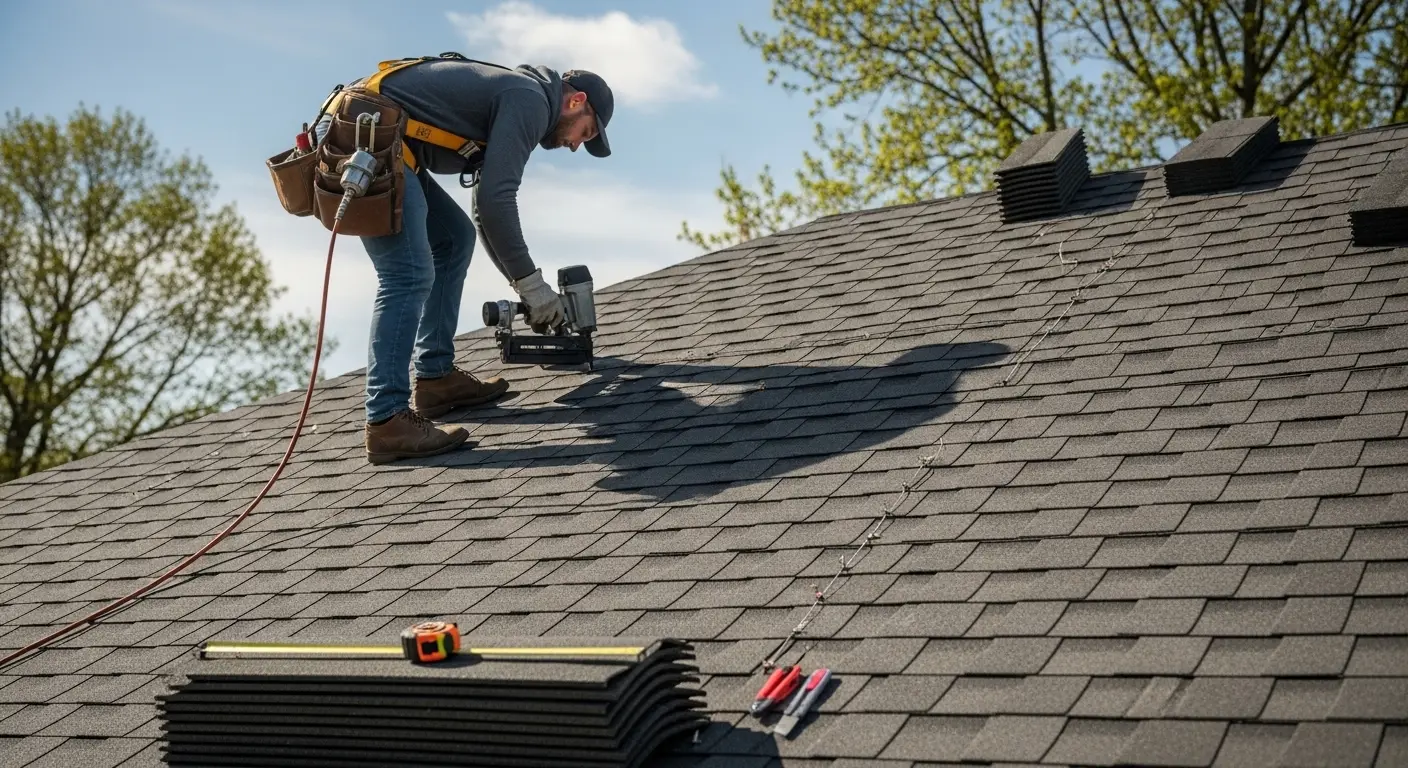
Architectural shingle, meaning the laminated kind rather than 3-tab, is the shortest-lived of the three here. The honest range is roughly 15 to 25 years depending on the product, the color, the attic ventilation and how much direct west and south sun the planes take. Florida is hard on asphalt: ultraviolet light breaks down the binder, daily heat cycling works the seal strips, and a dark roof over a poorly vented attic ages measurably faster than the same product on a shaded slope. Wind ratings on current architectural products are commonly in the 110 to 130 mph range, with higher ratings available on some systems when they are installed using the enhanced nailing pattern the manufacturer specifies. That rating belongs to the installation as much as to the shingle itself.
Tile is two different materials that get discussed as one. Concrete is the volume product across South Florida and the tile itself commonly outlasts 40 or 50 years, though it is pigmented near the surface so the color softens with time. Clay is fired through the body, holds color far longer, costs more and is more brittle underfoot. Both share the caveat that matters most: the tile is not what keeps water out of your house. The underlayment beneath it is, and underlayment has a service life measured in decades rather than half-centuries. That is why a re-lay, meaning lifting the tile, replacing the underlayment and setting the same tile back down, is a normal mid-life event rather than a disaster.
Metal splits by panel type and the difference is bigger than the price gap suggests. Standing seam conceals its fasteners under the seam, which is why it is what we generally recommend for residential work and why it can run 40 to 50 years or more. Exposed-fastener panels and the traditional 5V crimp cost less and are perfectly legitimate roofs, but every screw carries a neoprene washer holding back water, and the washers are what age first. Those roofs need the fasteners inspected and periodically replaced, which is a genuine maintenance obligation on a metal roof, not a footnote.
- Architectural shingle: roughly 15 to 25 years in this sun, at the short end on hot exposures and under-ventilated attics. From $6.00 per sq ft.
- Concrete tile: the tile commonly reaches 40 to 50 years or more; budget for replacing the underlayment beneath it well before that. From $10.25 per sq ft.
- Clay tile: the longest-lived and most color-stable of the group, and the easiest to crack under a careless boot. Tile pricing starts at $10.25 and the profile you pick moves it.
- Standing seam metal: commonly 40 to 50 years or more, with no exposed fastener left out in the weather. From $10.75 per sq ft.
- Exposed-fastener metal and 5V crimp: lower cost, shorter interval before the fastener washers need attention. That is a maintenance decision as much as a price one.
- All of the above depends on the installation. The best material fastened wrong fails before the cheapest material fastened right.
Weight, and the question to ask before you switch to tile
This is the part of the conversation that gets skipped, and it is the one that can stop a project outright. Translated into the same per-square-foot language as the pricing: architectural shingle is roughly 2 to 4 pounds per square foot, clay tile runs somewhere around 6 to 10 depending on profile, concrete tile is commonly 9 to 12, and a standing seam metal panel is usually 1 to 2. Those are ranges. The real number comes off the data sheet for the specific product going on your house.
So a concrete tile roof can put three to five times the dead load on your framing that a shingle roof does. If the house was built with tile, the trusses were designed for it and nothing changes. If it was built with shingle and you want tile, that is a structural question rather than a finish question, and in most of South Florida it means an engineer looking at the framing before anyone writes a number. Sometimes the answer is yes with no work at all. Sometimes it is yes with reinforcement. Occasionally it is no, and it is far better to hear that in June than after the tear-off.
The reverse move raises no such question. Going from tile down to shingle or metal reduces load, and metal is the lightest of the three by a wide margin. That is one of the reasons it keeps coming up on older homes, on additions and on any structure where the framing is marginal or unknown.
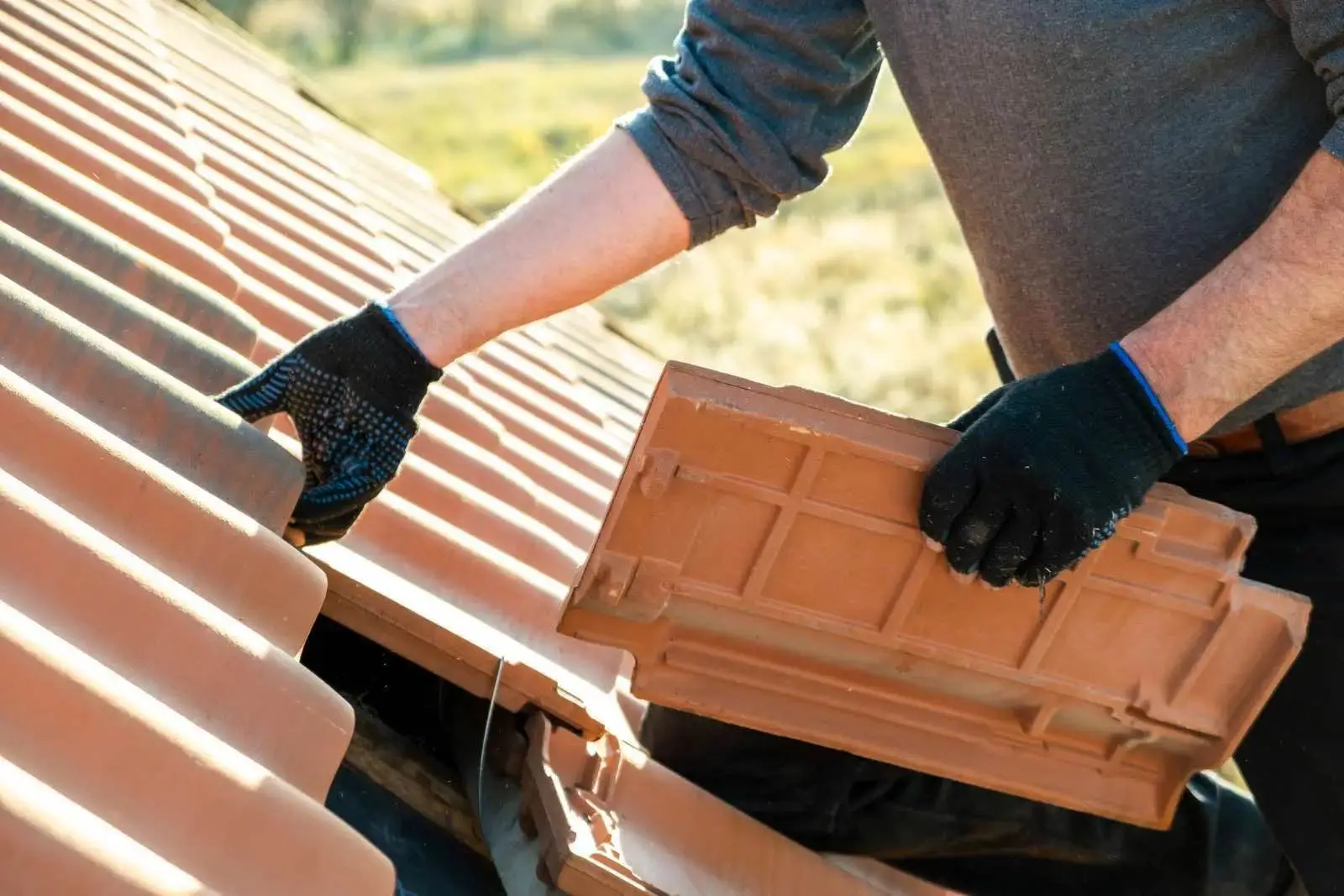
It is heavier, it costs more per square foot, its underlayment has to be replaced mid-life, and it cracks when somebody walks it wrong. On the right house it is excellent and it is what the neighborhood expects. On the wrong house it is an expensive way to buy a structural problem.
Heat, salt air, and the mile closest to the water
A dark asphalt roof in July gets extremely hot, and a meaningful share of that heat ends up in the attic and then in your cooling bill. Lighter colors and reflective finishes help on any material. Metal with a reflective coating is the strongest performer on this measure, and tile has a structural advantage that is easy to overlook: barrel and profiled tile sit above the deck on battens or mortar with an air space underneath, and that gap works as both a thermal break and a vent path. How much of it shows up on your electric bill depends on your attic insulation, your ventilation, whether the ducts run through the attic and how the air handler is sized, so treat cooling savings as a real benefit that is hard to promise a number for.
Salt air is the other environmental variable and it is more decisive than most homeowners expect. Within roughly a mile of the ocean or the Intracoastal, corrosion resistance becomes the governing spec on everything metallic in the assembly, not only on a metal roof. That includes the drip edge, the valley metal, the flashings, the vents and above all the fasteners. Use the metallurgy the specification calls for, and never put two dissimilar metals in contact where they can stay wet, because that is a galvanic cell and it will consume the less noble one on a schedule.
Manufacturers publish coastal exposure limits for their panels, coatings and finishes, and those limits are not decoration. Ask which specific panel, finish and fastener are being proposed for your distance from the water, and ask whether the warranty terms change inside that distance. This is a question with a correct answer. A roofer who cannot give you one is guessing on your behalf.
- Color and finish do real work. A lighter, more reflective surface runs cooler than a dark one on the same house, whichever of the three you choose.
- Profiled tile ventilates itself. The air gap under a barrel tile is a thermal break that a flat, deck-mounted product simply does not have.
- Attic ventilation is half the story. The best roof surface over a hot, poorly vented attic still gives you a hot house. Ridge and soffit ventilation get reviewed during a re-roof for a reason.
- Near the coast, fasteners fail before panels do. Ask what metal is going into your roof, not only what the panel is made of.
- Dissimilar metals in contact will corrode. Aluminum against uncoated steel, copper against aluminum, the wrong screw in the right panel. Within sight of the water these details decide the service life.
HOA rules, resale, and the low-slope roof on the back of the house
Before you fall in love with a material, read your HOA documents and find the approved list. Plenty of South Florida associations specify tile, or specify a profile, or restrict metal outright, and plenty more require architectural review of the color before work starts. Getting that approval in advance is usually straightforward. Getting it after the fact is not. In a deed-restricted community the approved list is a harder constraint than your budget.
On resale, be realistic about what a premium roof gives back. Buyers and appraisers in South Florida price roofs mostly on age and condition rather than on material prestige, and an appraiser is unlikely to hand you dollar-for-dollar credit for going from shingle to tile. What a newer roof does reliably is remove an objection and keep the insurance conversation from killing the deal, which in this market is worth a great deal on its own. Selling within a few years? A sound new shingle roof does that job about as well as an expensive one. Staying twenty-five years? The arithmetic flips, because the alternative is buying two shingle roofs.
Then there is the fourth material almost every Florida house needs somewhere. Florida rooms, carport conversions, additions, porches and rear extensions are frequently low-slope, and low slope is a different trade with different products, meaning modified bitumen and single-ply membranes rather than anything you can nail through and expect to stay dry. Shingles have a code minimum slope and need doubled underlayment at the low end of their range; tile and metal panels carry their own minimums that come from the product approval. Below those numbers you are in flat roofing territory no matter what the front of the house has, and the joint where the low-slope section meets the sloped section is the most common leak point on that kind of house.
- Pull the HOA approved list first. Material, profile and color are all commonly specified, and architectural review takes time you should build into the schedule.
- Match the street when you reasonably can. A metal roof in a barrel tile neighborhood is a legitimate personal choice with an approval process and a resale conversation attached.
- Selling inside five years? Age and condition are what buyers and carriers react to. A sound new shingle roof answers both questions.
- Staying twenty years or more? Tile and standing seam break the replacement cycle and push your next insurance conversation much further out.
- Do not let a low-slope section get shingled. If a bid puts shingles on your Florida room, ask what the measured slope is and what the product approval says about it.
- Get all three priced on your actual roof. We do a free on-site measurement, an instant roof report and a written estimate with permits and permit fees included, at no obligation. Call 954-893-2550 or book the visit.
Frequently asked
Is a tile roof worth the extra cost in South Florida?
It depends almost entirely on how long you plan to own the house. Tile costs about 70 percent more per square foot than architectural shingle and commonly lasts two to three times as long, so over twenty-five years the arithmetic favors it. Over five years it does not, because appraisers price roofs on age and condition rather than material. Structure matters too: a house framed for shingle may need an engineer to sign off before tile goes on.
How long does a shingle roof last in South Florida?
Roughly 15 to 25 years, which is shorter than the same product would last further north. Ultraviolet light and daily heat cycling age the asphalt, so color, attic ventilation and sun exposure all move the number. A dark roof over a poorly vented attic sits at the low end of that range. Insurance is the other clock: Florida carriers start asking questions about shingle roofs well before the material actually fails.
Can I put a tile roof on a house that has shingles now?
Sometimes, and it is a structural question rather than a preference. Concrete tile can weigh three to five times what shingle does, so the framing has to be evaluated for the added dead load, which usually means an engineer looking at the trusses before anyone writes an estimate. The answer may be yes as-is, yes with reinforcement, or no. Find out before the tear-off, not after.
Is a metal roof loud when it rains?
Far less than people expect. The noise reputation comes from bare panels screwed to open purlins on a barn or a shed. A residential metal roof goes over solid decking and underlayment, with attic space and insulation below that, and most homeowners describe it as no louder than any other roof. Standing seam over a solid deck is the quietest configuration of the ones we install.
Which roof material is best for a house near the beach?
Corrosion resistance decides it more than the material category does. Within about a mile of the ocean or the Intracoastal, the drip edge, valley metal, flashings and every fastener need the right metallurgy, and dissimilar metals must not touch where they stay wet. Tile and properly specified coastal-rated metal both do well. Ask for the specific panel, coating and fastener proposed for your distance from the water, and check whether the warranty changes there.