

How to Get 40 Years Out of a Florida Tile Roof
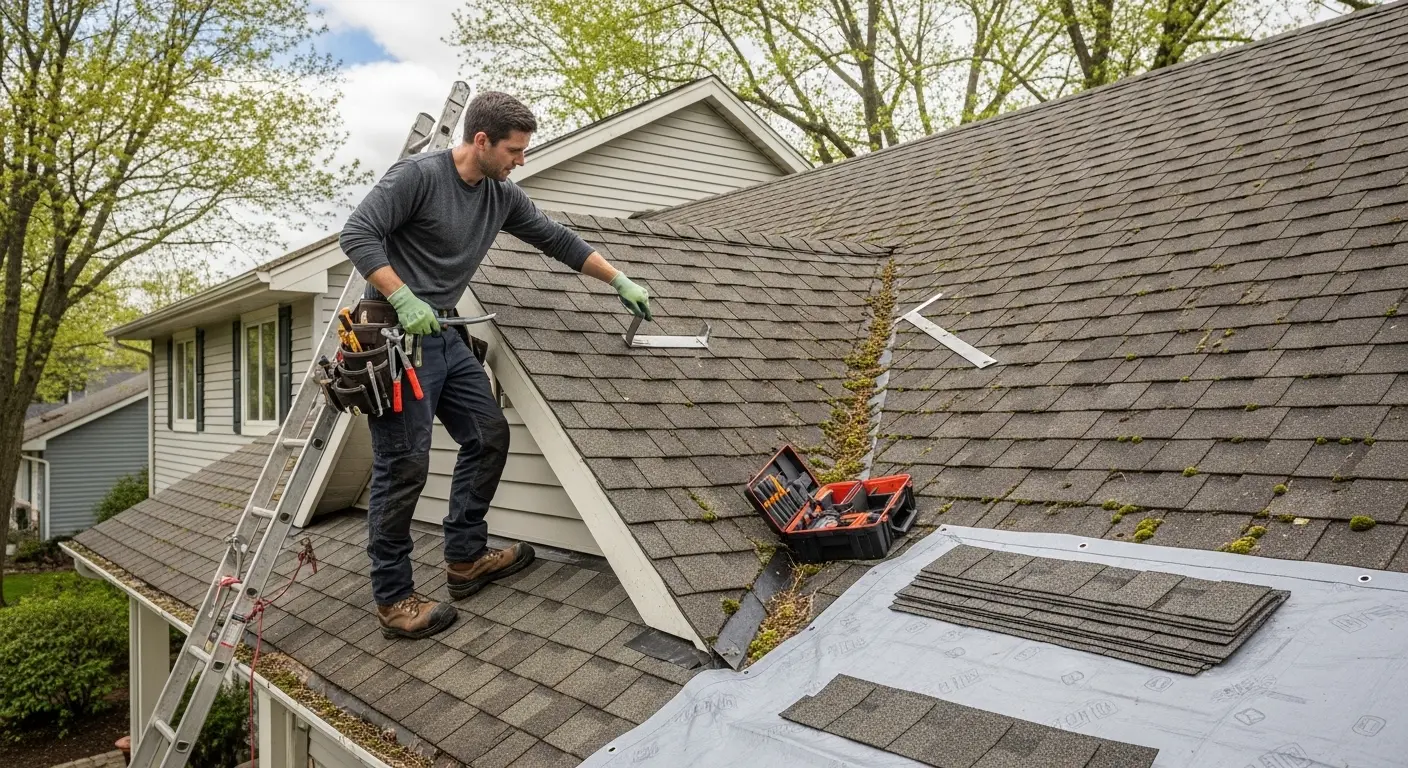
Tile roofs in South Florida rarely die of old age. They get damaged. Somebody walks one in the wrong place, somebody puts 3,000 psi on it because the north slope went green, somebody lets a valley pack with ficus leaves until water backs up under the tile and sits there for three summers. Weather is not usually the enemy. Well-meaning intervention and simple neglect are, in roughly equal measure.
That is good news, because it means most of what determines whether your roof reaches forty years is inside your control and costs very little. The routine is short. It is mostly about keeping water moving, keeping growth off the surface, keeping people off the tile, and looking at the parts that fail first before they fail. None of it requires you to climb anything, and most of it can be done from the ground with a pair of binoculars and a phone camera.
What follows is the honest version of tile roof care, including the parts a pressure washing company will not tell you and the parts a roofer has no financial reason to mention. If you want the broader seasonal picture across every material, our roof maintenance service page covers what a professional visit includes. This post is specifically about tile.
The short version
- Consumer pressure washers commonly run 2,500 to 4,000 psi, which erodes the surface of concrete tile
- Low-pressure soft washing with a cleaning solution removes algae without stripping the tile
- Lichen bonds into the tile surface, so removing it aggressively takes the surface with it
- A packed valley backs water up under the tile and sits on the underlayment for months
- Tile is supported at the head and the tail, and stepping in the wrong place cracks it
Pressure washing is how most tile roofs get damaged
The pressure washer parked in your neighbor's driveway probably runs somewhere between 2,500 and 4,000 psi. That number is appropriate for concrete driveways and it is destructive on a tile roof. On concrete tile it erodes the pigmented surface coat, which is the layer carrying the color and a good deal of the surface durability, and once that is gone the roof both looks older and takes on water more readily. On clay it is less about the finish and more about the impact, because a high-pressure lance concentrates force on a brittle material that does not flex.
The second problem is where the water goes. A tile roof is designed to shed water downward. A pressure wand driven upward under the head laps and side laps pushes water in the exact direction the system is built to resist, straight onto the underlayment, and in volume. That is not a leak you will see that afternoon. It is water sitting where it was never meant to sit, on a membrane that is the only thing between you and the ceiling.
The third problem is the operator. Cleaning a roof means walking it, and most pressure washing crews are not roofers and have never been taught where tile is supported. The broken tiles show up weeks later, sometimes noticed only when a leak follows. If someone is going to be on your tile roof, low pressure is the requirement and knowing where to step is the qualification. What breakage costs you later, when the tile has to come off for a membrane replacement, is laid out in the underlayment and re-lay post.
- Ask for the pressure in psi, not for reassurance. Soft washing on tile is generally done at low pressure, in the range a garden hose produces rather than what strips a driveway.
- Soft wash means chemistry doing the work. A cleaning solution kills the growth and the roof rinses at low pressure. It is slower, it costs a little more, and it does not take your surface with it.
- Never let anyone wash upslope. Water driven under the laps ends up on the underlayment, which is the one component you cannot see and cannot afford to soak.
- Confirm the crew is insured for roof work. A pressure washing license is not roofing insurance, and a fall or a hole in your roof is your problem to argue about afterwards.
- Protect the landscaping. Cleaning solutions run off into beds and onto pavers. A competent crew wets down and rinses the plantings before and after.
- Get a tile count before and after. Photographs of the roof from the ground before the work begins settle any later argument about what was already broken.
Before anyone touches your tile roof, ask what pressure they will use. If the answer is over a few hundred psi, or if the answer is vague, that is the end of the conversation. Nothing that lives on your roof requires more force than that to remove.
Algae, lichen and moss in South Florida humidity
Given our humidity, shade and rainfall, biological growth on a roof is normal rather than a sign of failure. Algae arrives first and shows as dark streaking or a green cast, worst on north-facing planes and anywhere a tree canopy keeps a slope from drying. It is largely cosmetic in its early stages. It holds moisture against the tile, which matters over years, but a green streak is not an emergency and it does not mean the roof is failing.
Lichen is the one to take seriously. It is a slow-growing organism that bonds physically into a porous surface, and on concrete tile it does not sit on top so much as grip into the surface coat. That is why scraping or blasting lichen off takes the finish with it and leaves a permanently lighter patch. Moss is the third and it is less common here than further north, but where it establishes in a shaded valley or against a chimney it holds standing water for days after a storm, which is exactly the condition tile roofs handle worst.
The treatment is chemical and patient rather than mechanical and fast. A soft wash with an appropriate solution kills growth and the residue weathers off over the following weeks. On a roof with established lichen, expect the process to take more than one visit and expect some marking to remain. The habits that keep it from coming back are more useful than any single cleaning: trim overhanging branches so the planes get sun and air, keep debris moving off the roof, and do not let a slope stay permanently damp. Under a heavy canopy, in the older streets of Davie and anywhere ficus or oak hangs over the roof line, that is the whole battle.
- Algae. Dark streaking and green cast, worst on shaded and north-facing planes. Cosmetic early, worth removing before it becomes a moisture habit.
- Lichen. Crusty circular patches bonded into the surface. Chemical treatment only. Aggressive removal permanently marks concrete tile.
- Moss. Less common here than up north, but it holds standing water in valleys and against penetrations, and that is where tile roofs are least tolerant.
- Tree canopy is the root cause. A plane that never gets sun never dries, and a plane that never dries grows things. Trimming back is cheaper than cleaning repeatedly.
- Do not use undiluted bleach yourself. Runoff kills plantings, corrodes flashings and fasteners, and staining on the tile is easy to create and hard to undo.
- Zinc and copper strips help on some roofs. Ask before installing them near dissimilar metals, because a well-meant strip in the wrong place starts a galvanic problem.

Valleys, gutters and keeping the water moving
A tile roof concentrates an enormous volume of water into a small number of paths. Every barrel and every S-tile channel funnels rain toward the valleys, and the valleys deliver it to the gutters. Those paths are the entire drainage design, and they are also exactly where leaves, seed pods, palm fronds and blown roof debris come to rest. A valley packed with organic material is a dam. Water backs up behind it, rises above the tile line, and goes under the tile onto the underlayment, where it stays wet for as long as the debris stays put.
Gutters are the second half of the same system and they matter more on tile than on any other material because of that concentration of flow. A gutter that has separated at a seam, sagged between hangers or filled with debris puts water against the fascia, into the soffit and eventually into the wall. On a tile roof the eave detail is more complex than a shingle eave, with closures and bird stops that can themselves become blocked, and water that cannot exit at the eave sits against the underlayment at the very point where every drop of the roof has come to leave.
Both problems are cheap to prevent and expensive to ignore. Clearing debris does not require walking the roof: a valley can often be cleared with a blower from a ladder at the eave or by a technician on a walk board, and gutters are ground-and-ladder work. Add this to your list before hurricane season along with everything else in our pre-season roof inspection, because a valley that dams during an ordinary August storm will do far worse under a tropical system.
- Clear valleys at least twice a year. More often under heavy canopy, and always after any storm that drops branches.
- Check gutters for separation and sag. Tile puts a lot of water through them, and a failed hanger or seam shows up as a stain on the soffit.
- Look at the bird stops and eave closures. The pieces closing off the tile ends at the eave can pack with debris or nesting material and block the exit path.
- Watch for plants growing on the roof. A seedling in a valley means organic material has been sitting there long enough to hold soil and moisture.
- Trim branches back off the roof line. Overhanging limbs drop debris continuously, abrade tile in wind, and keep planes from drying out.
- Check the downspout discharge. Water dumped at the foundation is a different problem from a roof leak and one you will notice much later.
Walking the roof, and the mortar at the hips and ridges
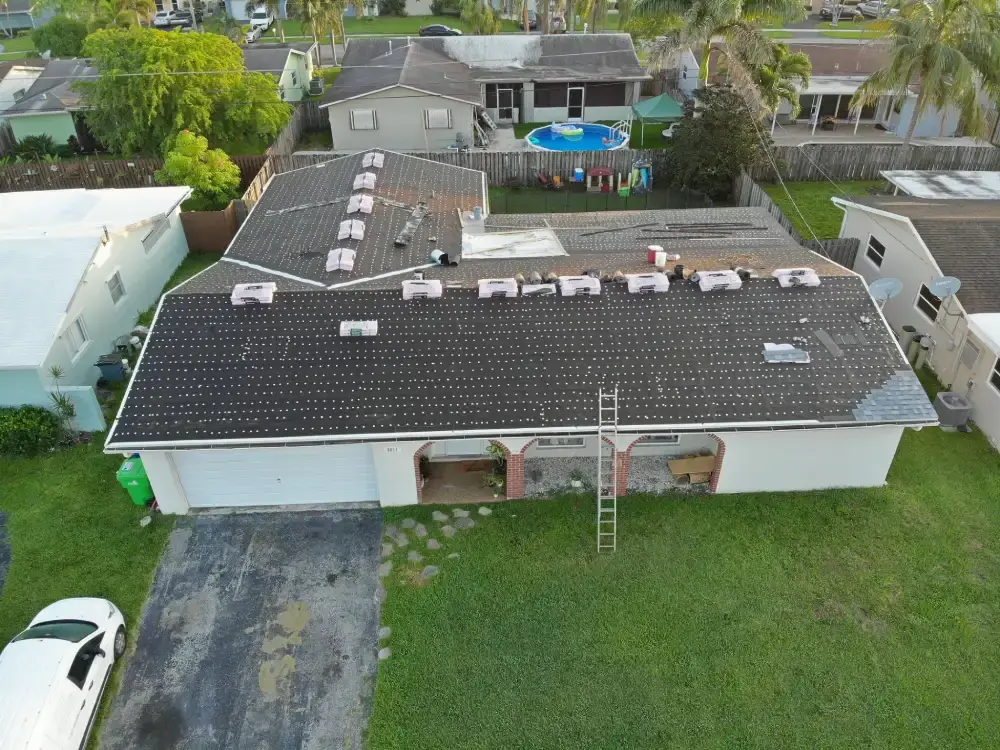
Nobody should be walking your tile roof casually, and that includes you. Tile is supported at the head, where it laps the course above, and at the tail where it rests on the course below. The unsupported middle is where a boot puts a crack, and a hairline crack does not announce itself. It waits, opens under thermal cycling, and eventually admits water to the membrane. This is why air conditioning technicians, satellite installers, painters and gutter crews cause more tile damage in South Florida than storms do.
When someone does have to be up there, the right method is walk boards or foam pads that spread the load, stepping at the lower third of the tile where it is supported, keeping off the hips and ridges entirely, and never stepping on the trim. It is a skill, and it is a reasonable thing to ask about before you hire anyone who will be on the roof for any reason. If tiles do get broken, replacing them is straightforward work, and the sooner it happens the smaller it stays. We covered the specifics in cracked and broken roof tiles, and a handful of pieces is a normal roof repair rather than a project.
The hips and ridges deserve their own look, because on many South Florida tile roofs they are mortar-bedded and mortar is the shortest-lived thing on the roof. Decades of thermal movement, sun and wind crack it, and once cracked it releases in pieces. Loose or missing ridge tile is both a leak path and a wind liability, and it is one of the things an inspector notices immediately. Newer tile roof installations increasingly use dry-set systems with a nailer board and closures instead, which move with the roof and need far less attention. Which system you have also matters to your carrier, for reasons set out in tile roofs and insurance.
- Step at the tail, never the middle. The lower third of the tile is supported by the course below. The center span is not.
- Stay off hips, ridges and rake trim. Trim pieces are set in mortar or on a nailer and they are the easiest thing on the roof to break.
- Use walk boards or pads. Anything that spreads load across several tiles instead of concentrating it under a heel.
- Tell every trade before they go up. The HVAC technician heading for the condenser stand does not know your roof cost $30,000, and will take the direct route unless told otherwise.
- Look at the hip and ridge line from the ground. Cracked or missing mortar, a tile out of alignment, or a gap where trim has lifted are all visible with binoculars.
- Re-point cracked mortar before the season. It is small, cheap work when it is small, and it is a genuine wind and water exposure when it is not.
A routine you will actually follow
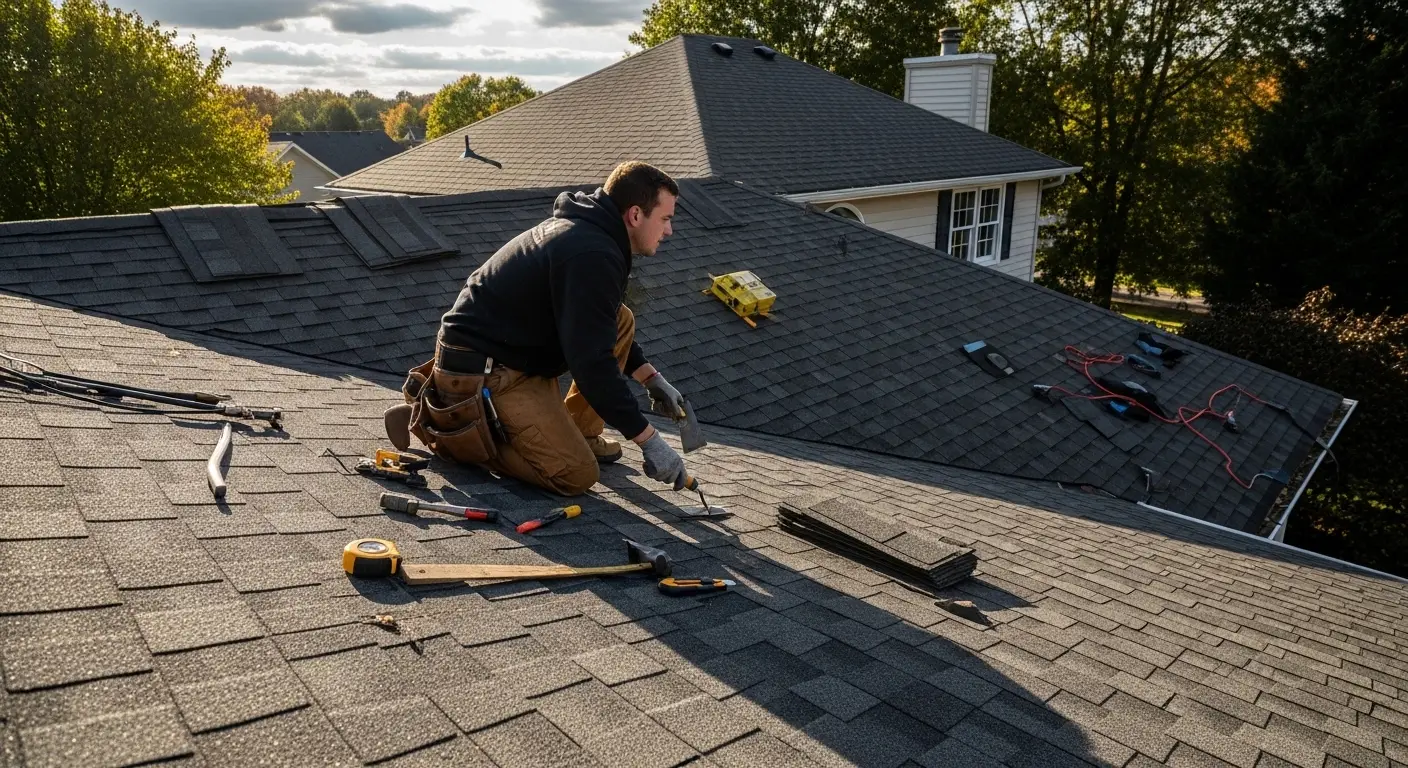
The realistic schedule for a South Florida tile roof is three touchpoints a year and one professional visit. Twice a year, walk the perimeter of the house with binoculars and look at every plane: slipped or broken tile, cracked mortar at the hips and ridges, debris in the valleys, plants growing where they should not be, staining on the soffit. Take photographs each time from the same positions, because the value of the exercise is the comparison, not any single look.
Once a year, and ideally before hurricane season, have someone qualified actually get on the roof or fly it. That visit should cover the valleys, the flashings at every penetration, the condition of the mortar, the state of the eave closures, and a look under a tile or two at the underlayment if there is any reason to wonder about it. Then after any named storm, do the perimeter walk again with fresh eyes, and add a look in the attic with a flashlight for daylight, staining or damp insulation. Documented, dated photographs are also the record that makes an insurance conversation shorter if you ever need one.
None of this stops the underlayment clock, and it is worth being clear about that. Maintenance protects the tile, keeps water moving and buys you the full service life of the membrane you have. It does not make a 25-year-old membrane into a new one. When that time comes the question becomes a re-lay or a replacement, and the way we would price either is in what a tile roof costs. Until then, the annual look is the whole program, and what a professional visit covers is set out on our roof maintenance page alongside the rest of what we include on our tile roofing page. The on-site inspection is free, it comes with an instant roof report and a written estimate if anything needs doing, permits are included in any price we quote and there is no obligation. Call 954-893-2550 or book the visit.
- Twice a year from the ground. Binoculars, same vantage points, dated photographs of every plane and the hip and ridge lines.
- Once a year from the roof. Valleys, flashings, mortar, eave closures and any spot where a previous repair was made.
- Before every hurricane season. Clear the valleys and gutters, trim the branches, re-point any cracked mortar and secure loose trim.
- After every named storm. Perimeter walk, attic check with a flashlight, photograph anything that changed and report it promptly if you intend to claim.
- Keep a small stock of your tile. A pallet of your actual profile and color in the side yard turns a future storm repair into a same-week job.
- Keep the paperwork. Permit numbers, final inspections, product approvals, cleaning invoices and the photographs. It is the file that answers questions later.
Frequently asked
Can I pressure wash my tile roof?
Not at the pressure a normal washer produces. Consumer machines commonly run 2,500 to 4,000 psi, which erodes the pigmented surface coat on concrete tile and drives water up under the laps onto the underlayment. Low-pressure soft washing with a cleaning solution is the correct method for tile. If a cleaning company will not tell you the pressure they use, do not hire them.
How often should a tile roof be cleaned in South Florida?
It depends far more on shade and tree canopy than on time. A sunny roof with no overhanging branches may go many years without needing anything. A plane under an oak or ficus can grow visible algae within a couple of years. Clean when growth is established rather than on a fixed schedule, and treat trimming the canopy as the more durable fix.
Is it safe for me to walk on my own tile roof?
It is a bad idea on two counts. Tile is supported at the head and tail and cracks under weight in the unsupported middle, and hairline cracks you create today become leaks in a year. Tile is also slick with algae or dust and unforgiving to fall from. Use binoculars from the ground for routine checks and have someone qualified go up when the roof needs to be touched.
How long should a tile roof last in Florida?
The tile itself commonly reaches 40 to 50 years or more, and clay often longer. The underlayment beneath it does not, which is why a mid-life re-lay is normal rather than a failure. Good maintenance protects the tile and helps you get the full service life out of the membrane, but it does not extend the membrane beyond what it was built for.
Do broken tiles need replacing straight away?
Not the same day, but do not leave them for a season. The underlayment below is still keeping water out, so a broken tile is an exposure rather than an emergency. Left open it lets UV and rain work directly on the membrane and it becomes a wind entry point. Replacing a handful of tiles is a small scheduled repair, and it is much cheaper than what follows if you wait.