

What a Tile Roof Really Costs in South Florida

Tile starts at $10.25 per square foot on our published pricing, and the permit and the permit fees sit inside that number instead of appearing at the end. That is a real starting point on a straightforward roof, and it is what we will put in writing. It is also the figure that tells you the least about what your particular house will cost, because tile is the material where the gap between the cheapest honest bid and the most expensive honest bid is widest. Two competent contractors can walk the same roof and land several thousand dollars apart without either of them being wrong.
That happens because a tile price is really five prices stacked on top of each other. The measured surface area. The profile and the material. Whatever the deck turns out to need once the old roof comes off. The trim detail at the hips, ridges and rakes, which is slow hand work no machine speeds up. And the single biggest fork in the road, which is whether you are buying a complete new tile roof or a re-lay of the tile you already own.
What follows is each of those in order, with the questions that pull a vague number into a real one. None of it requires you to know roofing. It requires you to ask a contractor to write down what is in the price and what is sitting outside it, and to notice when the answer is a shrug.
The short version
- Tile starts at $10.25 per square foot with permits and permit fees included in the price
- Roofs are priced on measured roof surface, not the floor area printed on the county property record
- Profile moves the labor rate more than brand does: flat, S-tile and two-piece barrel are three different jobs
- A re-lay of your existing tile and a complete new tile roof are different scopes with different numbers
- Deck repair, hip and ridge detail and the breakage allowance are where two tile bids separate
Start at $10.25 a square foot and find out what it is measured on
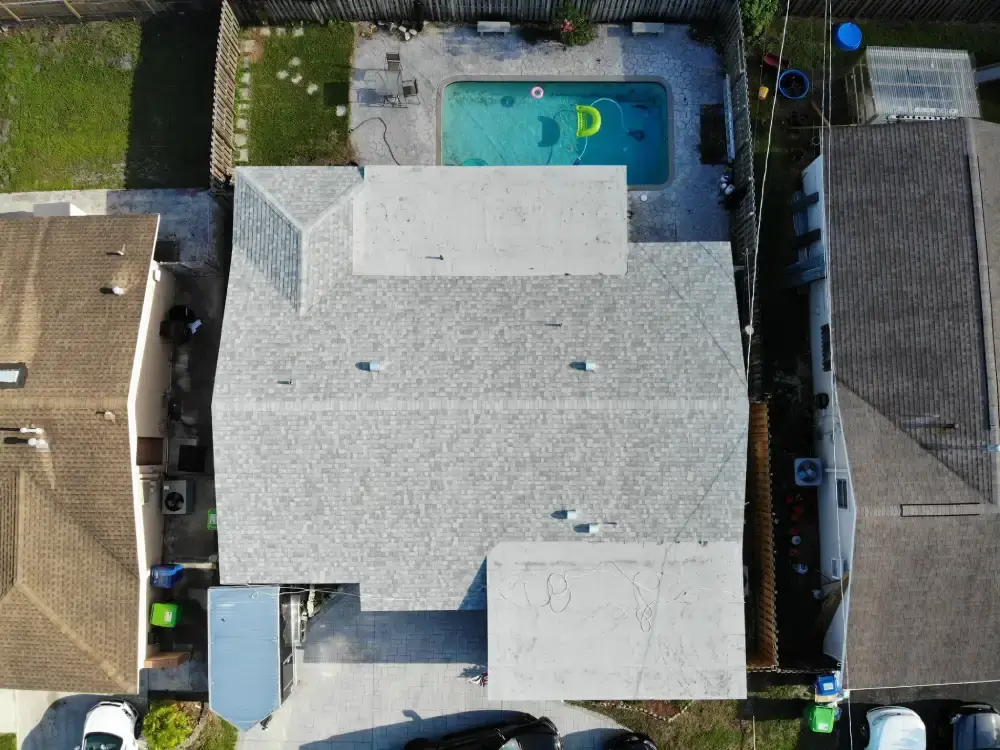
The first thing to settle is the unit. Roofers price on the surface area of the roof planes, not on the air-conditioned floor area of the house, and the two numbers are never the same. Slope, overhangs, the porch, the carport and the Florida room all add surface that never shows up in the county record. On a hip roof over an 1,800 square foot house it is common to end up somewhere north of 2,400 square feet of actual roof. Anyone quoting tile roofing off a property appraiser printout without measuring the planes is estimating, and the estimate has a habit of moving in one direction later.
The second thing to settle is what the base number buys. On our work the published starting price carries the tear-off and disposal of the existing roof, the new underlayment system, the drip edge and eave metal, valley metal, the flashings at every penetration, the tile and its trim pieces, the attachment specified by the product approval, the permit and permit fees, and the inspections through final. It is a complete roof, not a materials delivery, and it is priced the same way a roof replacement in any other material is priced on our estimates.
The third thing is what is honestly outside the number, because that is where surprises live. Nobody can see the roof deck until the tile is off, so decking is normally handled as a unit price rather than a lump sum. Structural work, if the framing needs it, is its own scope. Gutters, skylight replacement, chimney rebuilds, solar removal and reset, satellite dishes and rotten fascia are all separate lines that some bidders quietly leave out to make a total look better.
- Ask for the measured square footage. A written estimate should state the roof area it is priced on and how it was obtained, whether from an on-site measurement or aerial imaging.
- Ask how decking is priced. The answer should be a fixed dollar amount per sheet or per board foot, agreed before the tear-off, not decided after.
- Ask whether the permit is in the number. Ours is, including the permit fees. Plenty of bids show the permit as an allowance and reconcile it later.
- Ask what happens to the gutters. Tile roofs load valleys and gutters hard, and gutter removal and reinstallation is real labor that has to sit somewhere in the price.
- Ask about the low-slope sections. Almost every South Florida house has a porch or an addition below the minimum slope for tile, and that area is a different material at a different rate.
- Ask what the dumpster and the driveway plan are. Tile tear-off is heavy debris. Access, protection and disposal are a bigger part of a tile job than a shingle one.
Profile sets the labor rate more than the brand does
Tile comes in three broad shapes and they are not interchangeable jobs. Flat or low-profile tile, sometimes sold as a slate or shake look, lays fast and clean and is the least expensive of the three to install. S-tile, the single-piece wave that most people picture when they hear Spanish tile, sits in the middle. Two-piece barrel, where a separate pan and a separate cover are set individually, is the most labor-intensive by a wide margin and it is also the profile most South Florida homeowners find the most attractive. You are paying for hands, not for the clay.
On top of the shape sits the material question. Concrete is the volume product across Broward, Miami-Dade and Palm Beach, and clay commonly runs meaningfully more per piece with a longer lead time behind it. The difference is not only price, and it is worth understanding properly before you decide on cost alone. We went through it in detail in concrete versus clay tile, including weight, color behavior and how each one holds up near the water.
The part almost nobody prices in their head is trim. Field tile is the cheap part of a tile roof. Hip and ridge pieces, rake or gable trim, eave closures and bird stops all cost more per piece than field tile and take far longer to set, whether they are mortar-bedded or dry-set over a nailer. A cut-up roof with long hip runs and multiple ridges can carry hundreds of linear feet of trim, and that is why two houses with identical square footage can differ by thousands.
- Flat and low-profile tile. The fastest to install and generally the least expensive tile option. It reads as slate or shake rather than Spanish.
- S-tile. The single-piece wave. A middle labor rate and by far the most common tile you will see on a South Florida street.
- Two-piece barrel or mission. Separate pan and cover, set by hand, twice the pieces. The most expensive profile to install and the one people mean when they say they want a tile roof.
- Trim is where hip roofs get expensive. Every linear foot of hip and ridge is hand-set trim, and a complex roof carries a great deal of it.
- Color blends cost more than solids. Multi-color blends require the installer to mix from several pallets as they go, which is slower and produces more waste.
- Lead time is part of the price. A stock concrete profile can often be on site quickly. A specific clay profile in a specific color can add weeks, and schedule risk has a cost of its own.
The structural check happens before the price is real
Concrete tile commonly runs in the range of 9 to 12 pounds per square foot installed, and clay somewhere around 6 to 10 depending on profile, against roughly 2 to 4 for architectural shingle. That is three to five times the dead load on your framing. If your house was built with tile, the trusses were designed for it and this is a non-issue. If your house was built with shingle and you want tile, this is a structural question rather than a finish question, and in most of South Florida it means a Florida-licensed engineer evaluating the framing before anyone can responsibly write a number.
That evaluation costs money and takes time, and it produces one of three answers. Yes, the framing carries it as-is. Yes, with specified reinforcement, which is its own line item and can be significant. Or no. Every one of those answers is worth having in June rather than after the old roof is in the dumpster. A contractor who quotes you a tile conversion on a shingle-framed house without raising the load question at all is not doing you a favor.
Neighborhood tells you a lot before the engineer does. Much of the newer construction through Pembroke Pines, Miramar and the western subdivisions went up with tile from day one, so a like-for-like tile roof replacement there is routine. Older housing stock closer to the coast is more mixed, and a 1960s block house that has worn shingle for sixty years is exactly the case where the load question decides the project. If the answer comes back unfavorable, the sensible next step is comparing materials honestly rather than forcing it, and the full material comparison lays out what you give up either way.
If you are converting from shingle to tile, the engineer letter is the document that makes the price real. Signing a tile contract before anybody has evaluated the framing means you own whatever the framing turns out to need.
A new tile roof and a re-lay of your existing tile are different numbers
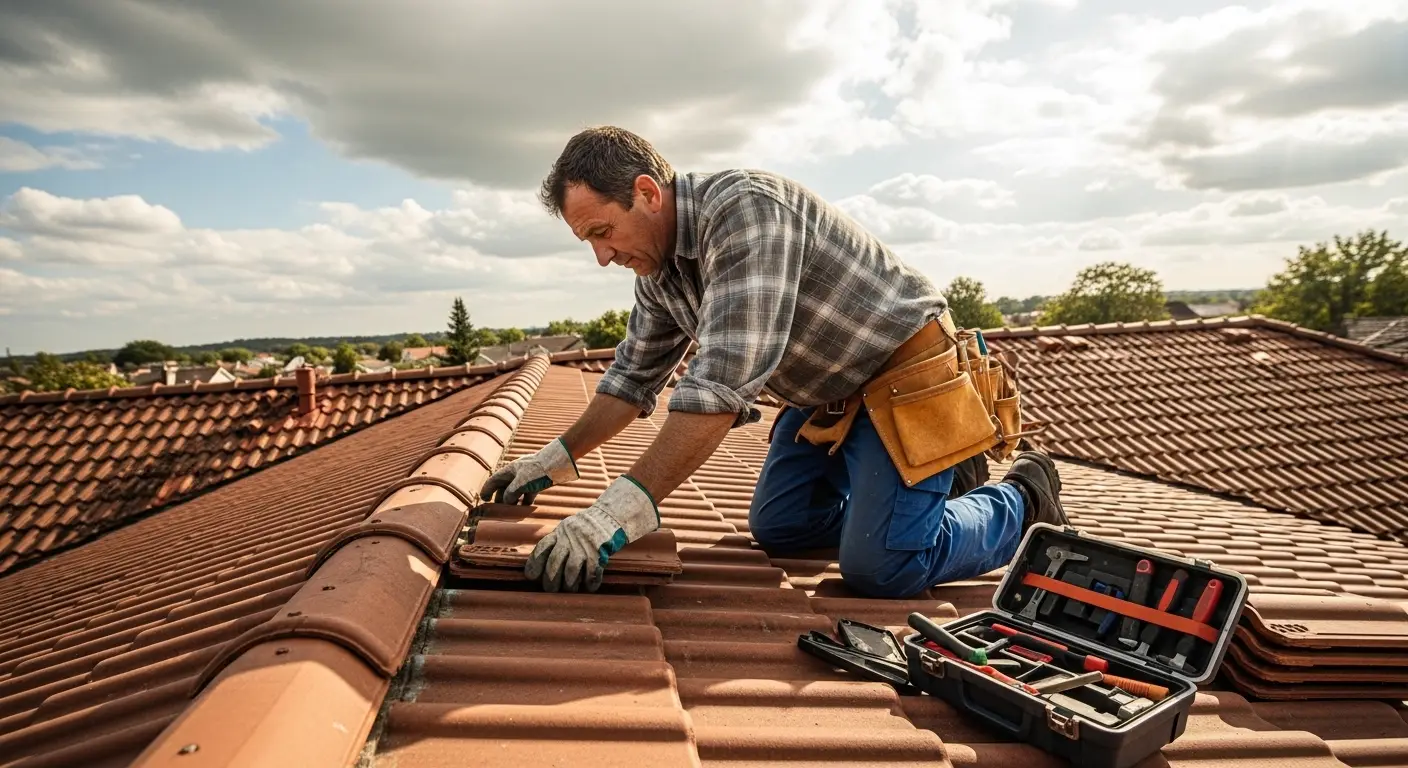
This is the fork that catches most homeowners by surprise. If your tile is sound and your leaks are coming from worn-out underlayment beneath it, you may not need new tile at all. A re-lay lifts the existing tile off, replaces everything underneath it, and sets the same tile back down. It is a legitimate, common, code-compliant piece of tile work and on the right roof it is the correct answer. We walk through the whole sequence in what a tile roof re-lay actually involves, because the detail matters more than the headline.
What surprises people is how much a re-lay costs. Removing the tile does not save you the tear-off, it changes it into a slower operation, because the tile has to come off intact and be stacked without cracking rather than shovelled into a chute. Then it all goes back by hand. You save most of the cost of new field tile, and you spend more on labor than a new install would. The result is commonly a moderate saving against a complete new tile roof rather than the half-price job homeowners tend to imagine.
A re-lay also is not always on the table. If the tile is a profile that has been discontinued, if a previous crew has already walked it into pieces, or if the deck below is failing broadly, the salvage percentage drops until the arithmetic stops working. That is a judgment call an estimator has to make on the roof, not on the phone, and it is the reason a free on-site measurement on a tile roof is worth more than it is on a shingle one.
- New tile roof. New underlayment, new tile, new trim, current attachment throughout. The highest number and the longest reset on the clock.
- Re-lay of existing tile. New underlayment and new attachment under salvaged tile, with new tile bought only to cover breakage. Less money, more labor, same waterproofing benefit.
- Partial re-lay. Some roofs justify doing the failing slopes now and the rest later. It is a compromise, it leaves you with two different ages on one roof, and sometimes it is still the right call.
- The breakage allowance is the line to read. Every re-lay contract should state an expected breakage percentage and who pays for tile beyond it.
- Profile availability decides it. If your tile is discontinued and the salvage rate is poor, the job quietly becomes a full replacement whether you planned one or not.
- The permit is the same either way. A re-lay is permitted and inspected work, and that record is what your insurer will later read as the age of your roof.

Why tile bids spread so far apart, and how to line them up
Once you know the variables, the spread stops looking mysterious. One bid assumes a self-adhered two-ply underlayment system and another assumes the cheapest approved assembly that will pass. One prices mortar-bedded hip and ridge and another prices a dry-set system with a nailer board and closures. One carries a realistic decking allowance and another carries none, which makes it the low bid on paper and rarely the low bid at the end. None of that is visible in a one-page total, which is exactly why the one-page total is the format you should refuse. What we include as standard on every tile job is written out on our tile roofing page, so you have something concrete to hold the other bids against.
Ask every bidder for the same five things in writing and the comparison does itself. The measured roof area. The specific tile, profile and color. The underlayment system by name and the attachment method. The hip and ridge detail. And the decking unit price with the assumed quantity. If two estimates agree on all five and still differ by 20 percent, then you have a genuine price difference to negotiate. If they disagree on the five, you were never comparing the same roof.
The last variable is how you pay for it. A tile roof is a larger cheque than a shingle roof and it is worth knowing that $0 down financing with no credit check exists before you shrink the scope to fit a budget. Our financing terms are published, and the full guide to paying for a roof covers the other routes. When the roof goes on, the thing that protects the money is the maintenance routine described in getting 40 years out of a tile roof. We do the on-site measurement, the instant roof report and the written estimate at no cost and no obligation, and you can call 954-893-2550 or book the visit.
- Refuse the one-line total. A tile estimate that says "tile roof, $X" is not an estimate, it is a number. Ask for the scope behind it.
- Compare underlayment systems by name. Two roofs at the same price with different underlayment are not the same purchase, and the underlayment is the part that leaks first.
- Watch for a missing decking allowance. A bid with no decking line is a bid that intends to have that conversation after the tear-off, when you have no leverage.
- Check that trim detail is specified. Mortar-set versus dry-set hip and ridge is a real cost difference and a real maintenance difference.
- Confirm the license and the permit. We hold CCC1337306 for roofing and CBC1266379 for building, and the permit belongs on the job before material is ordered.
- Bring your other written estimate. Comparing the two scopes line by line is easier to act on than haggling over a number nobody has written down.
Frequently asked
How much does a tile roof cost on a 2,000 square foot house?
Start from $10.25 per square foot of roof surface, then remember the roof is bigger than the house. A 2,000 square foot single-story home with a hip roof and overhangs commonly measures 2,400 to 2,800 square feet of roof, which puts a straightforward tile job in the mid twenty thousands before profile, deck repairs and trim detail move it. The only honest number comes from a measurement.
Is clay tile more expensive than concrete tile?
Generally yes, commonly by a meaningful margin per piece, and clay often carries a longer lead time. Concrete is the volume product in South Florida so it is easier to source, easier to match and cheaper to buy. Price is not the only difference though, and the color behavior and weight matter as much over twenty years. We compare them properly in our concrete versus clay post.
Is a re-lay cheaper than a whole new tile roof?
Usually, but by less than most homeowners expect. You save most of the cost of new field tile and you spend more on labor, because the tile has to come off intact, be stacked, then be re-set by hand. Expect a moderate saving rather than half price, and expect the contract to state a breakage percentage and who pays for tile beyond it.
Why is one tile bid thousands higher than another on the same house?
Almost always because the scopes differ. Different underlayment systems, different attachment methods, mortar-set versus dry-set hip and ridge, and whether a decking allowance is included at all. A bid with no decking line frequently becomes the expensive one after the tear-off. Ask all bidders for the measured area, the underlayment by name, the attachment method, the trim detail and the decking unit price.
Can I finance a tile roof?
Yes. We offer $0 down, 100 percent financing with no credit check, secured and unsecured, in 10, 20 and 30-year terms with no pre-payment penalty and payments starting from $65 a month. Terms are published on our financing page. Financing is worth checking before you cut the scope, because the cheaper roof you can afford today is often the more expensive one over the time you own the house.