

What a Roof Replacement Really Costs in South Florida
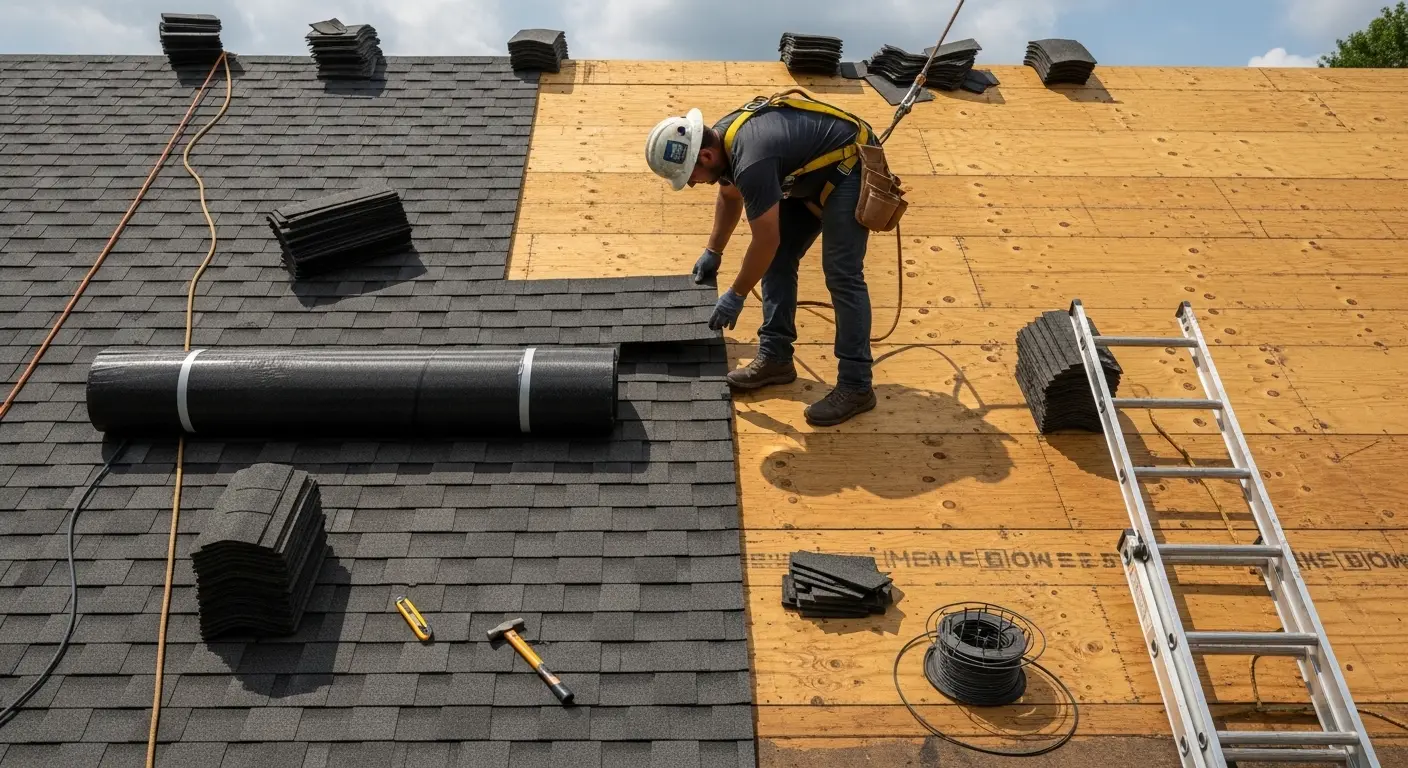
The first question everybody asks is what a new roof costs, and the honest first answer is that nobody can tell you over the phone. Not because we are being cagey, but because the number is built from your specific roof: how many square feet of surface it actually has, how many layers are coming off, what the deck underneath looks like once it is exposed, how steep it is, how many things stick through it, and how hard it is to get material up and debris down. Two houses on the same street with the same floor plan can land more than a few thousand dollars apart, and both numbers can be fair.
What we can give you is the starting point and every lever that moves it. Our published pricing is architectural shingle from $6.00 per square foot, tile from $10.25 and metal from $10.75, with the permit and the permit fees inside those numbers rather than added at the end. Those are real starting points for a straightforward roof, not teaser rates that quietly triple. But the phrase doing the heavy lifting is "per square foot of roof surface," and that is not the same square footage as the one on your property record or your listing.
So this post does the arithmetic in the open. First how a roof gets measured and why the number surprises people. Then what is inside the published price and what genuinely is not. Then the six line items that separate two honest estimates on the same house. Then two worked examples on roofs in the 2,000 to 2,600 square foot range, which covers most of the single-family houses we work on in Broward and Miami-Dade.
The short version
- Published starting points: shingle from $6.00 per sq ft, tile from $10.25, metal from $10.75, permits and permit fees included
- Pricing runs on measured roof surface, commonly 15 to 40 percent larger than the floor area of the house
- A roofing square is 100 square feet of roof surface, so a 2,200 sq ft roof is 22 squares
- Decking is the one line nobody can price honestly until the old covering is off, so it gets priced per sheet
- A 2,200 sq ft shingle roof starts near $13,200 with the permit already inside that number
The number starts with roof surface, not house square footage
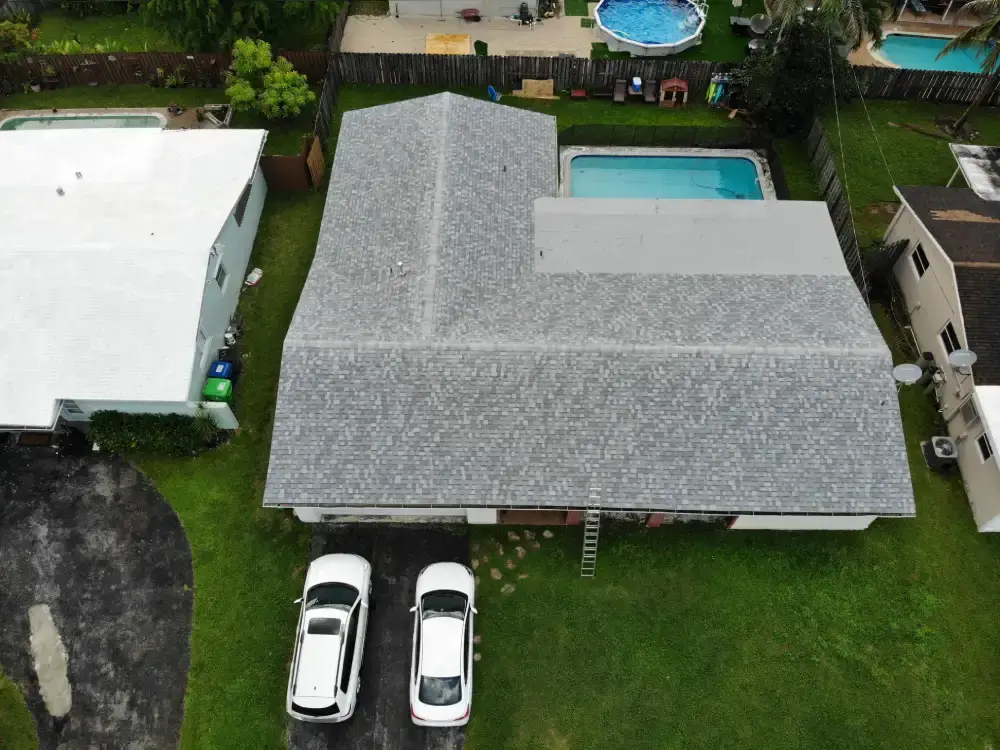
A 1,800 square foot house does not have 1,800 square feet of roof. It has whatever the sloped planes add up to, plus the overhangs, plus the porch or the carport, plus the low-slope section on the back that nobody counts. In practice the roof surface on a South Florida single-family home commonly runs 15 to 40 percent larger than the floor area under air, and on a steep cut-up hip roof it can run further than that. Anyone who quotes you a total from the county property record without measuring the planes is guessing, and the guess is never in your favor.
The trade counts in squares. One roofing square is 100 square feet of roof surface, so a 2,200 square foot roof is 22 squares. Slope converts footprint into surface by a factor you can calculate: a 4:12 pitch multiplies the horizontal area by about 1.05, a 6:12 by about 1.12, and a 12:12 by about 1.41. Add the eave and rake overhangs, which are surface area nobody sees from inside the house, then add a waste allowance for the cuts at every hip and valley, which is why a complicated roof consumes more material than its raw area suggests.
This is why the measurement is the first thing we do and why we do it on site rather than from an aerial estimate alone. A free on-site measurement produces an instant roof report with the plane-by-plane area, and that report is what a written estimate for a roof replacement is built on. If you are still at the stage of working out whether the roof is finished at all, start with the signs that a Florida roof is done and come back to the arithmetic once you know.
- Measured surface, not footprint. The number that gets multiplied by the per-square-foot price is the total area of the sloped planes, not the air-conditioned square footage of the house.
- One square equals 100 square feet. Material comes in squares and crews talk in squares, so a 24-square roof and a 2,400 square foot roof are the same thing.
- Pitch is a multiplier you can check. A 6:12 roof carries roughly 12 percent more surface than its footprint. A 12:12 carries about 41 percent more.
- Overhangs and porches count. Two feet of eave all the way around a house adds real area, and a screened porch roof is roof.
- Hips and valleys waste material. Every diagonal cut leaves an offcut, so a complex roof buys more material per square of finished surface than a plain gable does.
- Low-slope sections get priced separately. A Florida room or a flat rear addition is a different product on a different line. That is flat roofing, not a discount version of the main roof.
What the published per-square-foot numbers do and do not include
Our starting points are shingle from $6.00, tile from $10.25 and metal from $10.75 per square foot of roof surface. Those numbers carry the tear-off of a single existing layer, disposal, the new underlayment system, the perimeter and penetration metal, the covering itself installed to the fastening schedule the product approval requires, the permit, and the permit fees. The permit line matters more than it sounds when you are comparing two pieces of paper, because a competitor who leaves permit fees out looks cheaper by several hundred dollars until the invoice arrives. If you want to know what that permit actually buys you, we wrote a whole post on roof permits and inspections in Broward and Miami-Dade.
The word "from" is doing honest work in those numbers. They are the starting point for a straightforward roof with one layer coming off, sound decking, a walkable slope and normal access. Move any of those and the price per square foot moves with it. Material choice is the other obvious lever, and the gap between the three is large enough to be worth a real conversation before you commit. We compared them on service life, weight, heat and salt air in tile vs metal vs shingle in Florida, and the short version is that the cheapest of the three is the correct answer on a great many South Florida houses.
What is not inside any base per-square-foot price, ours included, is work that only becomes visible after the tear-off or that belongs to a different trade. Replacement decking is the big one and it gets priced per sheet. Structural repair, rotted fascia, skylight replacement, new gutters, chimney masonry and attic ventilation upgrades are all real items that show up as separate lines. A good estimate names them and prices them in advance so that nothing about replacing the roof arrives as a surprise on day three.
- Included: tear-off of one layer, haul-off and disposal, underlayment, drip edge and valley metal, the covering, the fasteners the approval calls for, the permit and the permit fees.
- Priced per sheet: replacement decking. Ask for the per-sheet price in writing before the job starts, not after the plywood is on the truck.
- Commonly separate: fascia and soffit repair, skylight units, chimney work, new gutters, and any structural reinforcement an engineer calls for.
- Depends on the plan: ridge vent, off-ridge vents and soffit intake. Ventilation usually gets corrected during a re-roof because it is the only sensible time to do it.
- Not a price at all: your insurance deductible. No contractor in Florida can legally absorb it, and anyone offering to is telling you something about how they run the rest of the job.
The six line items that actually separate two estimates
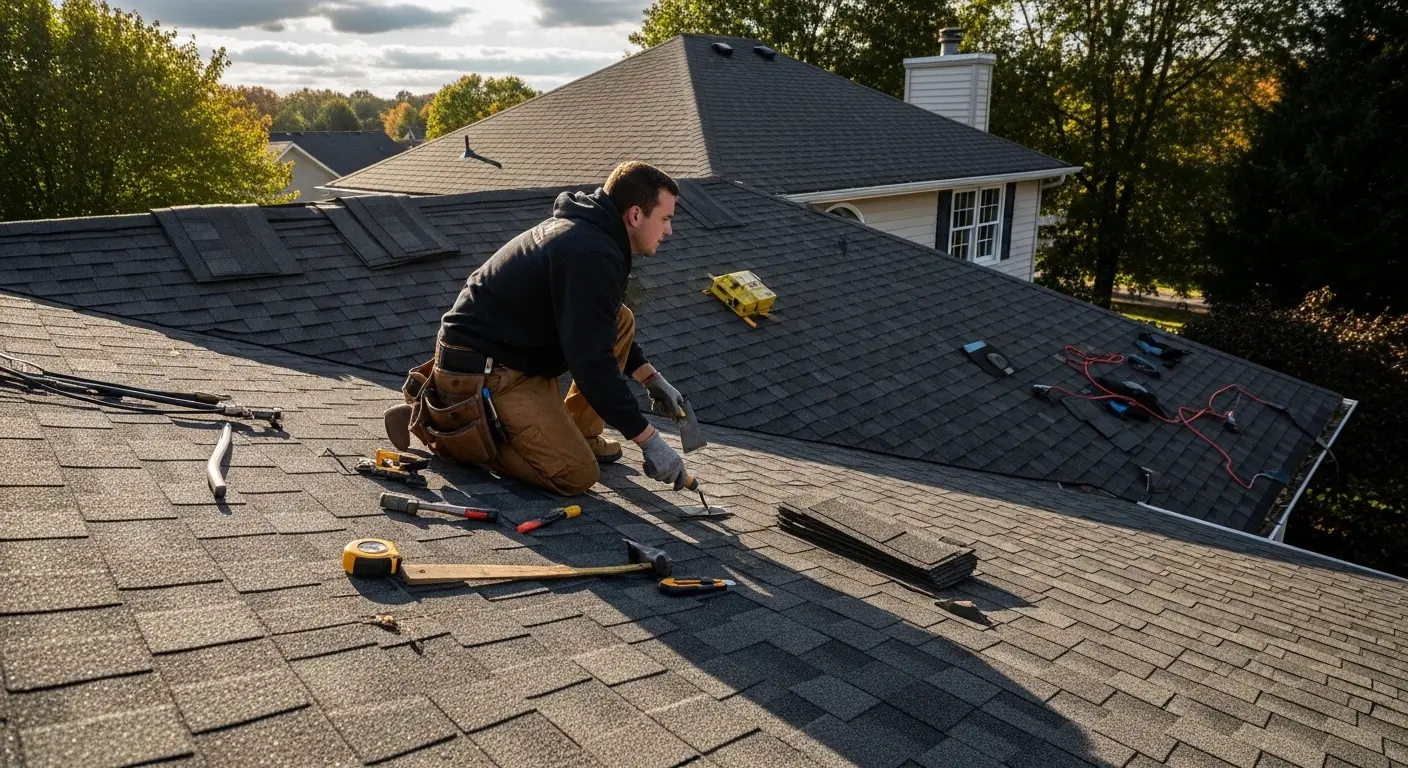
Layers come first. A single layer of architectural shingle comes off fast and fills a predictable amount of dumpster. Two layers doubles the labor and the disposal weight before one new piece goes down. Tile is heavier still, and disposal on a tile tear-off is priced by weight rather than by volume, so the dump ticket on a 2,600 square foot concrete tile roof is a different order of magnitude than the one on a shingle roof of the same size. That is a real cost, it lands on your estimate, and it is one of the reasons the same material costs more to replace than to install new.
Then the deck. Once the old covering is off, every sheet gets walked, sounded and inspected, and anything delaminated, rotted or soft comes out. Nobody knows the count in advance, which is exactly why it has to be a published per-sheet price rather than a vague allowance. A standard sheet covers 32 square feet, so a dozen bad sheets is not a rounding error. While the deck is open it also gets re-nailed to the current fastening schedule, which is a code requirement on a re-roof here and a line on the wind mitigation form later.
The last four are about the shape of the roof and the shape of the lot. Slope and height decide how fast a crew can move and how much staging it takes. Complexity means every valley, dormer, skylight, chimney, HVAC curb and plumbing boot, each of which is hand detail rather than field work. High Velocity Hurricane Zone requirements in Broward and Miami-Dade tighten the fastening schedule and restrict you to products carrying the right approval. And access decides everything else: a pool cage six feet off the eave, a corner lot with no place for a dump trailer, or a gated community with delivery windows all cost time. The day-by-day of how those pieces play out is in what actually happens during a roof replacement.
- Layers coming off. One layer is the baseline. Two means double the tear-off labor and double the disposal, and on tile the dump ticket is weighed rather than estimated.
- Deck replacement, per sheet. A 4x8 sheet covers 32 square feet. Get the installed per-sheet price in the contract, and ask whether it is capped or open.
- Slope and height. A walkable single-story roof and a steep two-story roof are not the same labor, and labor is most of what a roof costs.
- Complexity. Count the penetrations. A plain gable with three and a cut-up hip with fifteen are different jobs at the same price per square foot.
- HVHZ fastening and product approval. Broward and Miami-Dade sit inside the High Velocity Hurricane Zone, so fastener type, spacing and product approval are all prescribed rather than optional.
- Access, staging and disposal. Where the trailer parks, how tile gets loaded onto the roof, and what has to be protected on the way all show up in the number.
Two worked examples on real South Florida roofs
Take a single-story house in Pembroke Pines with about 1,750 square feet under air and a simple hip roof at a 5:12 pitch. Measured plane by plane, the roof surface comes to roughly 2,200 square feet, or 22 squares. Architectural shingle at the $6.00 starting point puts the base at $13,200 with the permit and permit fees already inside it. One layer comes off, the deck turns out to be sound except for six sheets around a plumbing stack that has been weeping for years, and those six sheets are the only line added after the tear-off. There is nothing exotic on this roof: two vents, one boot, no skylights, and a driveway the trailer fits on.
Now take a two-story house with concrete tile, a cut-up roof with three valleys and a chimney, and a measured surface of 2,600 square feet. Tile at $10.25 puts the base at $26,650, again with permits inside. This one carries more of the levers at once: the old tile is heavy and the disposal is weighed, the second story needs staging and a loader to get the new tile up, the valleys and the chimney are hand detail, and the pool cage on the south side has to be protected before anything comes off. If fourteen sheets of decking come out, that is another line on top. Same county, same crew, roughly twice the money, and both numbers are honest.
For reference on the third material, standing seam metal at $10.75 on a 2,400 square foot roof starts at $25,800. What none of these are is a quote for your house. They are the shape of the arithmetic, so that when a written estimate lands in front of you it is legible instead of intimidating. If you already hold a comparable written estimate from someone else for a full roof replacement, bring it — a second set of eyes on the scope is free.
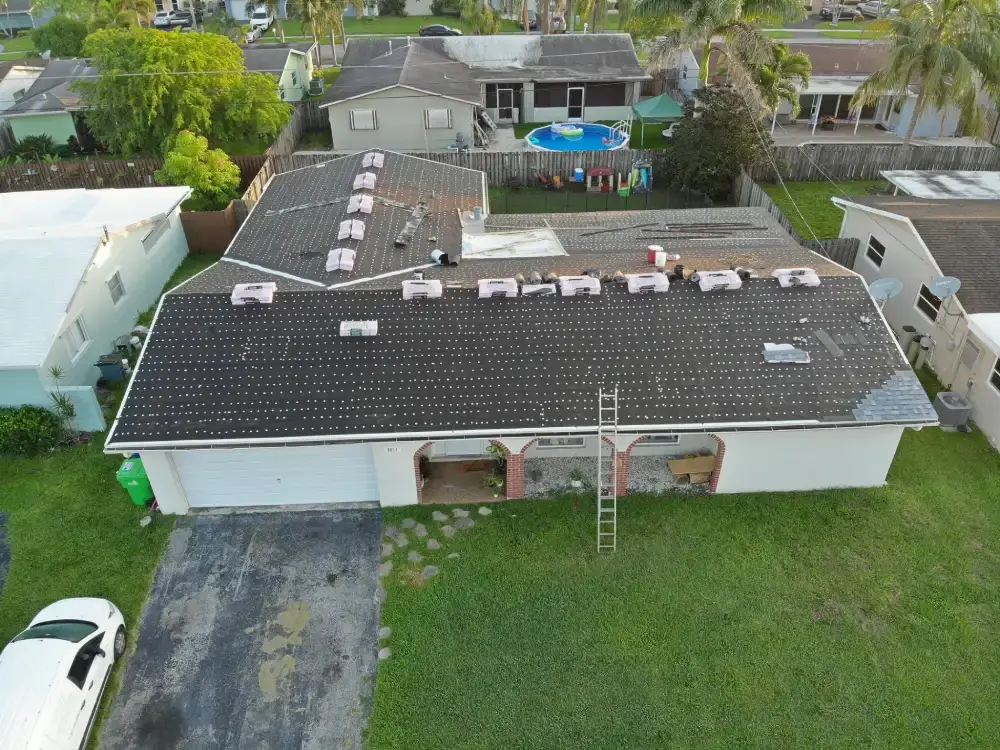
It is the only number on a roofing estimate that genuinely cannot be known in advance, which makes it the easiest one to abuse. Ask for the installed price per sheet, ask whether the count is verified with photographs, and ask to see the bad sheets before they go in the trailer. A contractor who answers all three without hesitating is telling you how the rest of the job will go.
Comparing two estimates without getting fooled
The first move is to make the two pieces of paper comparable. Ask each contractor for the measured roof area they priced, and ask whether the number came from an on-site measurement or an aerial report. If one bid says 21 squares and the other says 26 on the same house, one of them is wrong and the cheaper price per square foot may be attached to the wrong roof entirely. Then read for the things that are missing rather than the things that are listed: permit and permit fees, disposal, the underlayment product by name, and the per-sheet decking price.
Then look at how the money moves. A large deposit before material is delivered is worth a question. Vague allowances are worth a question. So is a change-order clause that lets the price float without your signature. And be careful with any pitch built on what insurance will supposedly pay, especially any offer to make your deductible disappear, which no contractor in Florida can legally do. If the roof is repairable and you are not sure replacing is the right call yet, work through repair or replace before you spend the larger number.
For what it is worth, our estimates are written, itemized and free, the measurement and the roof report cost nothing, and there are no commissioned salespeople in the process. If the total is the obstacle rather than the decision, we do $0 down financing with no credit check and terms you can read on the financing page, and there is a broader survey of every route in how to pay for a new roof in Florida. When you want the real number for your house rather than a range, book the measurement or call 954-893-2550, and you can compare it against anything else on our roof replacement page.
- Ask for the measured area on every bid. Price per square foot is meaningless until you know how many square feet each contractor is counting.
- Confirm the permit is inside the price. Permit and permit fees left off an estimate is the most common reason a cheap bid stops being cheap.
- Get the underlayment named. Product and approval number, not just the word "underlayment." It is the layer that keeps the water out.
- Read the decking language twice. Per-sheet price, how the count is documented, and whether you get to look before it goes in the trailer.
- Check the license and the insurance. Ours are CCC1337306 for roofing and CBC1266379 for building, and any contractor should hand those over without being chased.
- Bring the competing estimate. Comparing scope line by line only works if you actually show us the paper.
Frequently asked
How much does it cost to replace a roof in South Florida?
It depends on measured roof surface and material. Our starting points are $6.00 per square foot for architectural shingle, $10.25 for tile and $10.75 for metal, permits and permit fees included. On a typical 2,200 square foot roof surface that puts shingle near $13,200 to start. Decking replacement, structural work and unusual access are priced on top, which is why the on-site measurement comes before the number.
Why is my roof bigger than my house?
Because slope and overhangs add surface area that the floor plan does not show. A 6:12 pitch carries about 12 percent more surface than the footprint beneath it, a 12:12 about 41 percent more, and the eave and rake overhangs plus any porch or carport roof add more on top. In South Florida the roof surface commonly runs 15 to 40 percent above the air-conditioned square footage.
Does the price include the permit?
Yes. Our published per-square-foot pricing includes the permit and the permit fees, so they are not added at the end. That is worth checking on every estimate you collect, because leaving permit fees out is the easiest way for a bid to look several hundred dollars cheaper than it is. The permit also has to be pulled under the roofing contractor license, not yours.
How much does replacing rotten decking add?
It is priced per sheet, and the count is unknowable until the old covering is off. A standard sheet covers 32 square feet, so replacing six sheets is a modest line and replacing twenty is a real one. Ask for the installed per-sheet price in the contract up front, and ask to see the removed sheets. A roof with long-term leaks around penetrations tends to need more of them.
Is a cheaper estimate ever the right one?
Sometimes, and it is usually cheaper for a reason worth finding. Compare the measured square footage, the named underlayment product, whether permit fees are inside the price, and the per-sheet decking rate. If those four match and one number is lower, take the lower number. If they do not match, you are not comparing the same job, and the gap tends to reappear as a change order.