

The Signs You Need a New Roof in Florida, Checked Honestly
Roofs rarely fail all at once. They spend years telling you what is coming, and the signals are specific enough that a homeowner standing in the driveway with a phone camera can catch most of the early ones. The trouble is that the signals are easy to explain away. Granules in the gutter look like dirt. A cupped shingle looks like a windy week. One brown ring on a ceiling looks like the leak somebody fixed two years ago. Each one on its own is arguable. Three of them together on a roof past a certain age is a conclusion.
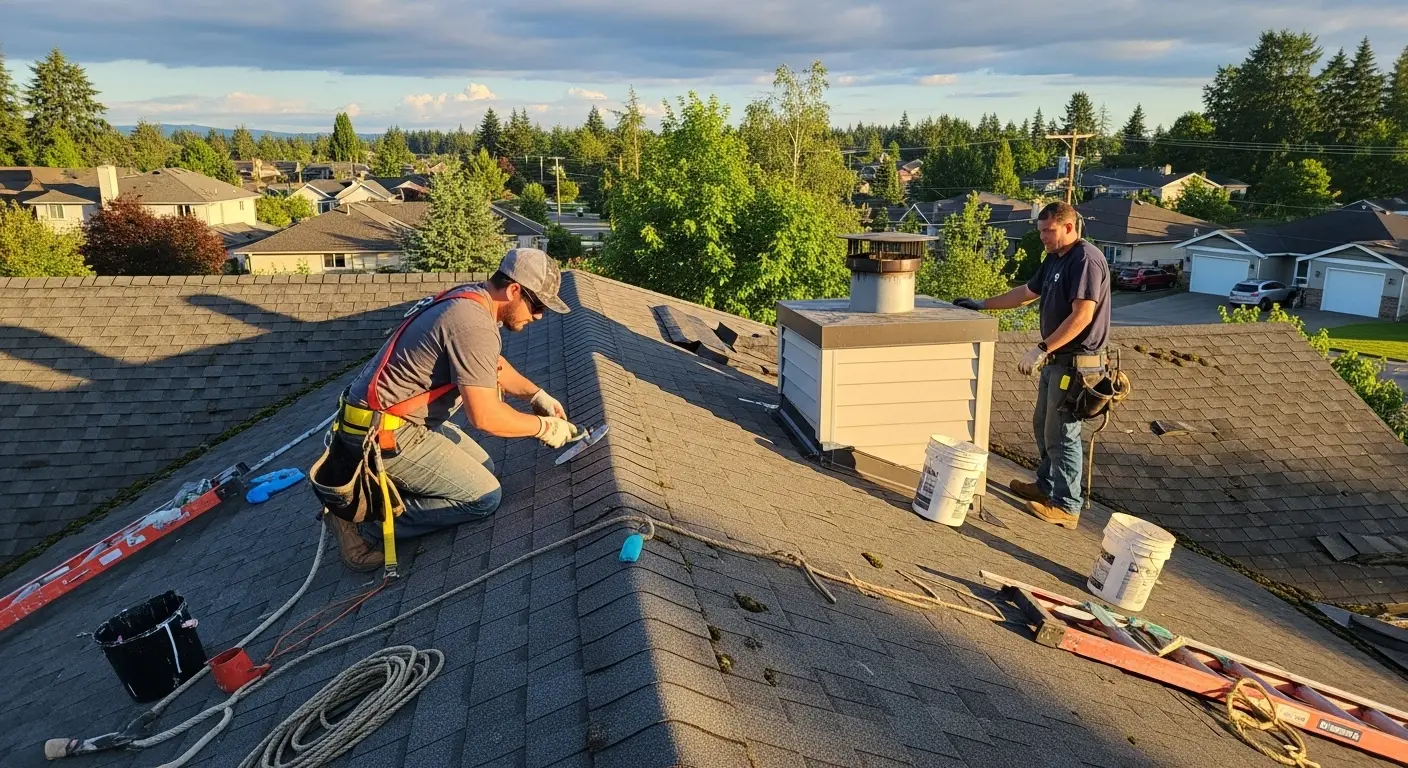
This post is the checklist we actually run, split by where you have to be standing to see it. Some of it you can do yourself this afternoon, safely, without a ladder. Some of it requires walking the planes, lifting a tile, sounding the deck and looking at the flashing details where two materials meet, and that part is genuinely not a homeowner job. Every year somebody in South Florida is seriously hurt going up to look at something a contractor would have looked at for free.
One thing worth saying at the top: finding a sign on this list does not mean you need a new roof tomorrow. Several of these are repairs, and a repair on a roof with real service life left is the right answer more often than the internet suggests. What matters is the pattern. Isolated problem on a young roof, fix it. Multiple signals across multiple slopes on an old roof, and you are looking at the end of a service life rather than a to-do item.
The short version
- Granule loss shows up in the gutters and downspout splash first, and bare asphalt on the surface means the clock is nearly out
- Cupping and clawing at the shingle edges is heat and age, not a windstorm, and it does not reverse
- Slipped tile and cracked field tile usually point at the underlayment beneath, which is the actual waterproofing
- Decking that feels soft underfoot is a structural finding and it ends the repair conversation
- Repeat leaks on different slopes of the same roof are a system signal, not three separate repairs
What you can read from the ground with a phone camera
Start at the downspouts. Asphalt shingles shed their mineral granules slowly for their whole life, and a small amount of grit after a heavy rain is normal. What is not normal is a pile of granules at every splash block, or a gutter you can scoop coarse sand out of by the handful. Those granules are the sun protection for the asphalt underneath, and once they are gone the mat degrades quickly. On the roof itself the same condition reads as dark or shiny patches where the surface looks smooth compared to the rest of the plane, usually on the south and west exposures that take the most direct sun.
Then walk the perimeter of the house and use the zoom on your phone. Along the eaves you are looking for shingle edges that have curled up like a shallow bowl, which is cupping, or corners that have turned down and hardened, which is clawing. Both are heat and age doing the same thing to the asphalt mat and neither one goes back. On a tile roof you are looking for pieces that have slid out of course, cracked field tile, and any gap along the hip or ridge where the mortar or the closure has broken away. On metal, you are looking for rust weeping out of exposed fastener heads and for washers that have hardened and split.
Last, stand at each corner of the house and sight down the ridge line. It should be straight. A dip, a wave or a sag in that line means something under the covering has moved, and that is the one item on this list that gets a phone call today rather than a note in a folder. Photograph everything you find, dated, from the same positions each time. That file is useful to a contractor, and it is useful to a carrier later. If what you find adds up and the conversation turns toward a new roof, the next question is money, and what a roof replacement costs in South Florida lays out how the number gets built.
- Granules at the splash blocks. A handful after a storm is normal. A steady accumulation at every downspout means the surface layer is leaving the roof for good.
- Cupping and clawing along the eaves. Edges bowed up or corners curled down and brittle. This is age and heat, and no product puts it back flat.
- Bald or shiny patches on the sun-facing slopes. Exposed asphalt ages several times faster than granule-covered asphalt next to it.
- Slipped, cracked or missing tile. One cracked tile is a repair. A dozen across the field, plus slipped courses, usually means the fasteners and the underlayment beneath have aged out.
- Rust streaks under fastener heads on metal. On exposed-fastener panels the neoprene washers age long before the panel does, and rust weeping downhill is the tell.
- A ridge line that is not straight. Any dip, wave or sag in the roof line is a structural signal and it gets looked at immediately.

What only shows up with somebody standing on the roof
The single most decisive finding on any roof is how the deck feels underfoot, and there is no way to check it from the ground. Sound sheathing is firm and quiet. Sheathing that has been wet for years goes spongy, gives slightly under a boot, and sometimes announces itself with a soft crack. Soft decking is not a covering problem, it is a structural one, and it ends most repair conversations on the spot, because you cannot fasten a new covering to a substrate that will not hold a nail. This is also why the deck gets walked, sounded and re-nailed during every roof replacement once the old material is off.
Next is whether the covering is still bonded. On shingle, that means checking the seal strips: a properly sealed shingle resists a firm hand lift, and a field of shingles that lift freely has lost its wind resistance whether or not any of them have blown off yet. On tile, it means lifting a piece and looking at what is underneath, because the tile is not the waterproofing. The underlayment is, and it wears out decades before the tile does. Underlayment that has gone brittle, cracked along the laps or torn around the fasteners is the finding that decides the job, and you can only get it by lifting tile carefully enough not to break it.
The rest of the roof-level checklist lives at the details rather than in the field: the flashing where the roof meets a wall or a chimney, the valley metal, the pipe boots, the vent flanges and the counterflashing. These are where the large majority of leaks start, which is why we go through them one at a time in the pre-season roof inspection checklist. Please do not do this part yourself. A free on-site inspection costs you nothing, and the difference between the two approaches is a ladder, a harness and somebody who has walked ten thousand of these.
- Soft or spongy decking. Felt through the boot, not seen from below. It ends the repair conversation because new fasteners need sound wood.
- Shingles that lift by hand. Failed seal strips mean the wind rating is gone even if nothing has blown off yet.
- Brittle or torn underlayment under the tile. The real waterproofing layer, and the one that decides whether a tile roof gets re-laid or replaced.
- Cracked pipe boots and tired flashing. The rubber collar around a plumbing vent is a consumable. It commonly fails long before the covering around it does.
- Nail pops and backed-out fasteners. Each one is a hole in the deck under the covering, and a lot of them at once says the fastening has worked loose across the plane.
- Worn valley metal. Valleys carry the most water on the roof. Corrosion, holes or displaced metal there is a leak with a date on it.
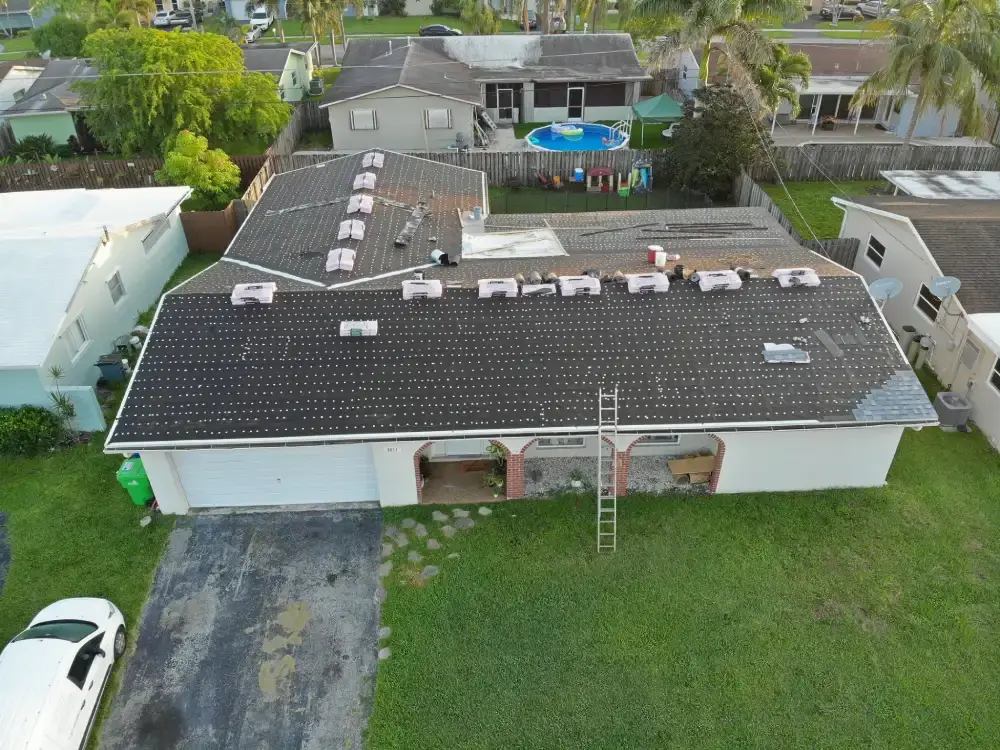
Concrete and clay tile break under a misplaced step, and the pieces you crack while inspecting become the leak you were looking for. Tile also gets slick with the algae film that grows on any shaded South Florida slope. If you want to know what is under the tile, have somebody who does it daily lift one.
The signs that reach you from inside the house
A brown ring on a ceiling is the sign everybody knows, and it is also the most misread. Water does not fall straight down. It enters at a flashing detail or a fastener hole, runs along the top of the deck, drops onto a truss chord, travels along that, and appears through the drywall many feet from where it got in. That is why a stain in the hallway can come from a vent flange over the bedroom, and why patching the ceiling without finding the entry point is a guaranteed repeat performance. Look for the shape too: a defined ring with a hard edge that darkens after rain is an active leak, while a large diffuse discolored area may be condensation off a duct.
The attic tells you more than the ceiling does, and it is the one interior check a homeowner can do safely, in the morning before the heat builds. Go up with a flashlight and turn it off for thirty seconds. Any daylight through the deck is a hole. Then look at the underside of the sheathing for dark staining, rust bleeding around nail points, white or black growth, and delamination where the plies are separating. Press on any stained area. If it gives, that is the same soft-deck finding described above, felt from the other side. Wet or matted insulation under a specific spot marks the drip line, and a persistent musty smell in a Florida attic almost always means moisture that is not leaving.
The other interior signals are quieter. Drywall nail pops or a hairline crack that keeps reappearing along the same ceiling seam can mean movement or repeated wetting. Paint blistering at the top of an exterior wall points at water getting behind the wall flashing. A room that has become noticeably hotter than the rest of the house can mean the attic ventilation stopped working or insulation got wet and compacted. None of these prove the roof is finished on its own, but each one is a reason to have somebody look before the next rainy season rather than after it.
- Ceiling rings that darken after rain. Active. A stain that never changes may be an old leak already repaired, and the difference is worth knowing before you pay for anything.
- Daylight through the deck. Stand in the attic with the flashlight off. Any pinhole of light is a hole in your roof.
- Rust around the nail points overhead. Fasteners rust when the deck stays damp. It is one of the earliest attic-side signals of a slow leak.
- Wet, matted or compacted insulation. It marks where the water lands, and wet insulation stops insulating permanently.
- A musty smell that does not clear. In a South Florida attic that is moisture with nowhere to go, either from a leak or from ventilation that is not working.
- Blistering paint at the top of an exterior wall. Usually the wall-to-roof flashing rather than the roof field, and usually a repair rather than a replacement.

Repeat leaks, and the pattern that says the roof is done
One leak is an event. Three leaks in two years is a diagnosis, and the thing that separates them is not the count but the geography. Water coming back at the same chimney after two repairs usually means the flashing detail was never rebuilt correctly, and that is still a repair, just a proper one this time. Water appearing at a valley one season, a vent the next and a wall junction after that is a different animal. Different failure points on different slopes means the whole assembly reached the same age at the same time, which is exactly what you would expect, because it was all installed on the same day.
The same logic applies to tile. A handful of cracked pieces across a 25-year-old roof is normal wear and gets replaced piece by piece. Cracking that keeps spreading, especially along traffic paths and around penetrations, usually means the pieces have lost their bedding or their fasteners and are moving under load. Once tile is moving, the underlayment beneath it is being abraded at every course, and you are paying for repairs on top of a waterproofing layer that is failing anyway. That is the point where lifting and re-laying, or replacing the roof outright, stops being the expensive option and starts being the cheaper one.
The arithmetic worth running is simple. Add up what you have spent on roof repair in the last three years, add what the next repair is quoted at, and compare it against the remaining service life you are buying. Spending $3,000 to get four more years out of a roof is a reasonable trade. Spending it to get eighteen months is not. That comparison is the entire subject of repair or replace, including the rule of thumb most contractors use and the specific cases where repairing is clearly correct.
- Same spot, twice. A repair that did not hold. Usually a flashing detail that needs rebuilding rather than sealing, and still a repair.
- Different spots, same roof. Multiple unrelated failure points in a short window means the assembly aged out together.
- Sealant showing up everywhere. A roof with a dozen caulk repairs is a roof somebody has been buying time on. Sealant is a bandage with a short shelf life in this sun.
- Spreading tile cracks. Not the count but the trend. Cracking that keeps appearing means the pieces are moving and grinding the underlayment under them.
- Repairs that keep needing decking. If every repair opens up rotten sheathing, the water has been in there a long time and it is not localized.
- Three years of receipts. Total them. Repair spending that approaches a meaningful share of a replacement rarely gets better on its own.
Age, insurance, and what to do with what you found
Age is not a sign in itself, but it is the number that decides how the other signs get read, and in Florida it is also the number your carrier reads. Architectural shingle in this sun commonly gives 15 to 25 years, concrete and clay tile can pass 40 or 50 with the underlayment replaced somewhere in the middle, and standing seam metal commonly reaches 40 to 50 or more. Insurers start asking questions well before the material actually gives out. Around 15 years a shingle roof begins to attract underwriting attention, and the thresholds and inspection rights are laid out in Florida homeowners insurance roof requirements. A roof can be sound and still be uninsurable at the price you want to pay.
Salt air moves the timeline too. Houses within about a mile of the ocean or the Intracoastal, which covers a lot of Pompano Beach and the barrier island communities, lose fasteners, drip edge and flashing metal to corrosion before the covering wears out. If you are in that band, the metal in the assembly is what to check first, not the shingle or tile surface. Inland, heat and ultraviolet exposure are the drivers, and the sun-facing slopes will always show it first.
So here is the practical order. Photograph what you can see from the ground and date the file. Have somebody walk it who is willing to hand you photographs of every plane and every penetration, whether that leads to a repair or not. Get the remaining service life stated plainly, in years, and get the recommendation in writing. Our inspection, measurement and roof report are free and carry no obligation, and if the answer is that you have six good years left we will say so. If the answer is that it is time, we will price the replacement the same day and you can read what the work actually involves before you commit to anything. Call 954-893-2550 or book the inspection.
- Shingle at 15 years and up. Still serviceable, but the insurance conversation starts here and the signs above start carrying more weight.
- Tile at 20 to 25 years. The tile is fine. Ask specifically about the underlayment, because that is what is aging.
- Any roof with an unknown install date. Pull the permit history for the address. Carriers date the roof from the last full replacement, not from the last repair.
- Near the water. Check the metal first. Fasteners, drip edge, valley metal and flashing corrode long before the covering wears out.
- Get remaining service life in writing. A number in years, based on photographs of every plane, is the only inspection output worth having.
Frequently asked
How do I know if my roof needs replacing or just repairing?
Look at the pattern rather than the symptom. A single failure point on a roof with years of life left is a repair, and usually the right call. Multiple leaks on different slopes, decking that feels soft underfoot, widespread granule loss or brittle underlayment under the tile all point at an assembly that aged out together. Age sets the frame: the same leak on a six-year-old roof and a twenty-year-old roof means different things.
Is granule loss serious?
It depends on how much and where. Shingles shed granules slowly for their whole life, and a little grit after heavy rain is normal. Steady accumulation at every downspout, or visible bald patches on the sun-facing slopes, means the asphalt underneath has lost its ultraviolet protection and will degrade quickly from there. That is a late-stage sign rather than an early one, especially on a roof past 15 years.
Can I inspect my own roof safely?
You can do the useful parts from the ground. Walk the perimeter with your phone zoomed in, check the downspout splash blocks for granules, sight down the ridge line for sags, and go into the attic with a flashlight in the morning. What you should not do is climb up. Tile breaks underfoot, wet or algae-filmed slopes are slick, and a free inspection costs nothing but a phone call.
My ceiling stain is small. Can I wait?
A stain that darkens after rain is an active leak, and water has already been in the deck longer than the stain suggests. Waiting turns a flashing repair into decking replacement and then into mold remediation. It also matters for insurance, since carriers distinguish sudden damage from long-term seepage. Get it looked at while it is still small, then decide whether it is a repair or the roof.
Does a leaky roof always mean a full replacement?
No, and anyone who says otherwise before going up there is selling. Most leaks we see start at a detail rather than in the field: a cracked pipe boot, tired wall or chimney flashing, displaced valley metal, or a fastener that backed out. Those are repairs on a roof with real life left. Replacement enters the conversation when the deck is soft, the underlayment is failing, or the leaks keep appearing in new places.