

Where Roof Leaks Actually Come From on a Florida House
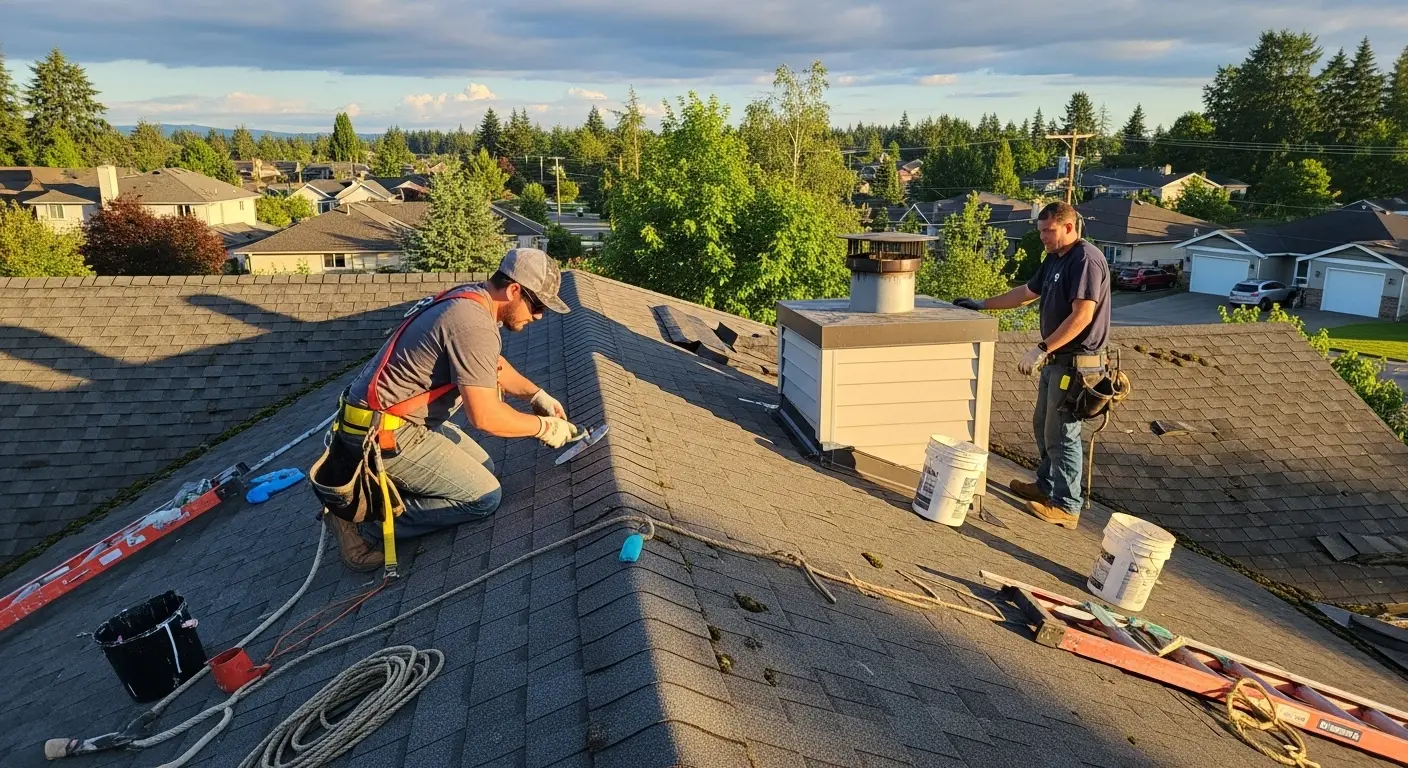
Homeowners describe leaks by where the water lands. "It is coming in over the kitchen." That is useful information and it is almost never where the hole is. A roof is a system of overlapping layers designed so that gravity moves water down and off, and in the open field of that system, where one course simply laps the one below it, failures are rare. What fails is everything that interrupts the field: the pipe somebody cut a hole for, the wall the roof dies into, the valley where two planes collide, the skylight, the edge where the covering stops and hands the water to a gutter.
That is not a coincidence, it is geometry. Every interruption is a place where the water has to be redirected by a piece of metal, a boot, a sealant joint or a lap detail, and every one of those has a service life shorter than the covering around it. In South Florida the clock runs faster than almost anywhere: relentless ultraviolet on anything rubber or plastic, daily thermal cycling that works fasteners loose, and wind-driven rain that arrives horizontally and finds laps that gravity alone would never test.
What follows is the list a technician actually walks, in the order they usually walk it, plus the reason the ceiling stain is so rarely under the problem. If you can point a contractor at the right neighbourhood on your roof, the diagnosis gets shorter and cheaper, and short diagnoses are what keep repair bills small. None of it is a substitute for somebody on a ladder. It is a way to walk your own roof in your head before you call, so you can describe what you are actually seeing and recognise a diagnosis that does not add up.
The short version
- Roof leaks concentrate at three kinds of place: penetrations, transitions and terminations
- Cracked rubber pipe boots are the single most common leak source on South Florida shingle roofs
- Wind-driven rain enters at soffits, laps and edges that ordinary vertical rain never reaches
- A large share of "roof leaks" are actually gutter backup, condensate lines or wall flashing
- Water travels along framing and can surface a full room away from where it entered
The field of the roof is the one place that rarely leaks
Think of your covering as a set of shingles or tiles doing exactly one job: lapping the piece below it so water running downhill never reaches an edge it can get behind. In the middle of a plane, with nothing interrupting it, that arrangement works for decades. When we open a 20-year-old shingle roof, the field is usually intact and the trouble is all around the outside and around the holes.
So the mental model is three categories. Penetrations are the holes somebody deliberately cut: plumbing vents, exhaust vents, HVAC curbs, satellite mounts, solar standoffs. Transitions are where the roof stops being one flat plane: valleys, walls, chimneys, skylight curbs, hips and ridges, and the place a sloped section meets a low-slope one. Terminations are the edges where the covering ends and hands water to something else: eaves and drip edge, rakes, gutters, fascia and soffit.
Nearly every roof repair we do lives in one of those three buckets. That is also why a competent inspection is not a stroll across the middle of the roof. Ahead of storm season, the same list drives our pre-season inspection walk, because the details that leak in a June afternoon downpour are the ones that fail catastrophically in a September band.
- Penetrations. Anything cut through the deck. The hole is sealed by a boot, a curb or a flashing, all of which age faster than the covering around them.
- Transitions. Anywhere the roof changes direction or runs into vertical construction. Water concentrates here and has to be steered by metal.
- Terminations. The perimeter, where the covering stops. Wind gets under edges and drives water uphill against the lap.
- Age of the detail, not the roof. A ten-year-old roof can have a five-year-old boot on it and a thirty-year-old chimney flashing nobody replaced during the re-roof.
- Prior work is a category of its own. The last person up there sealed something with the wrong product, and the fix is now the leak.
Every hole somebody cut in your roof
Rubber pipe boots are the most common leak we are called for in Broward and Miami-Dade, and it is not close. The flexible collar sealing around a plumbing vent stack is exposed neoprene or EPDM sitting in full Florida sun, and ultraviolet light degrades it on a schedule. Ten to fifteen years is a typical life, less on a south or west exposure, and the failure is unmistakable once you know it: a radial split around the top of the collar, or a rubber lip that has shrunk and pulled down the pipe leaving an open gap. Lead boots last far longer and squirrels sometimes chew them, which is a genuine and unfairly comic cause of leaks here.
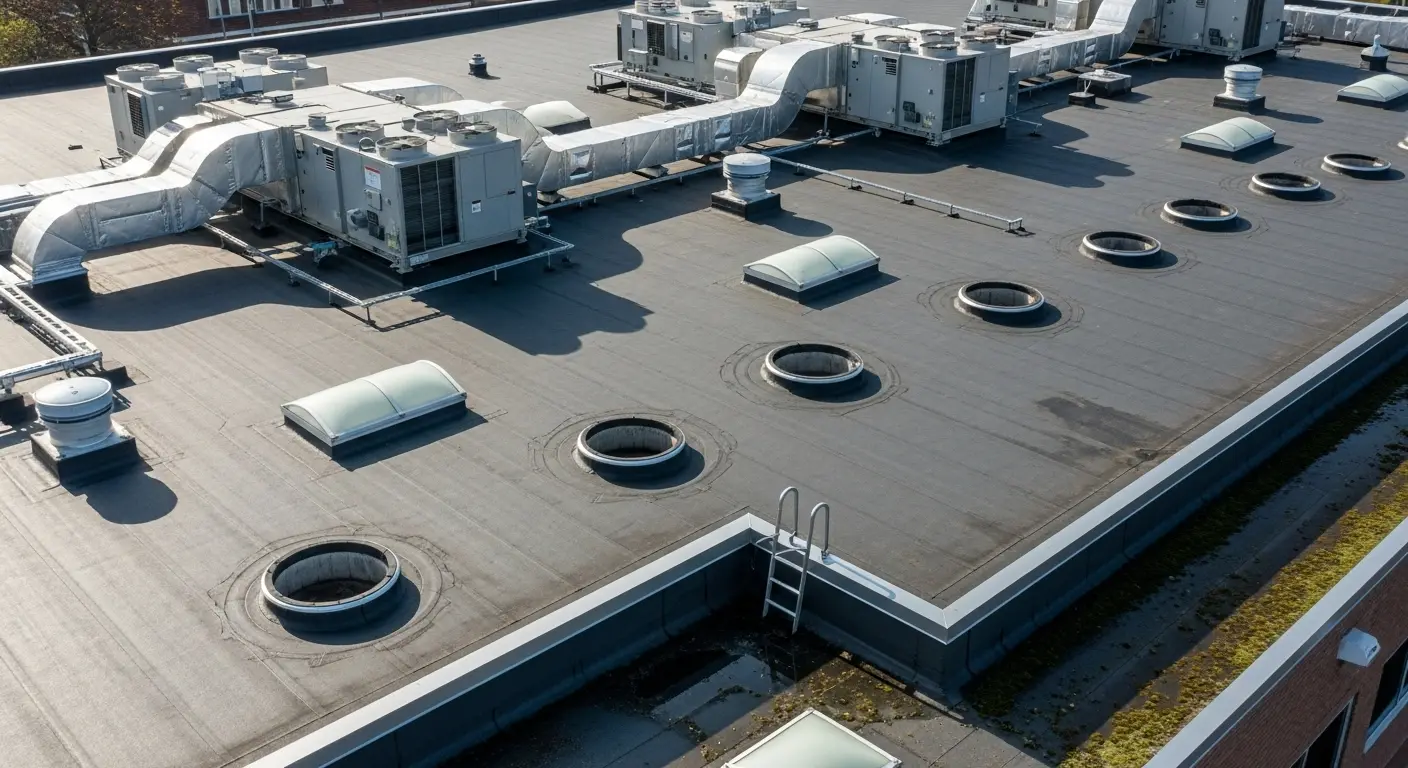
Then there is everything mechanical. Air handler and condenser curbs on a low-slope section, bath and kitchen exhaust vents, ridge and off-ridge vents, and the fasteners holding a satellite dish or a solar array. Anything anchored by screwing through the covering is a leak waiting for the sealant to fail, because the sealant is the only thing keeping water out of that hole. Antennas and dishes are especially bad because they were usually installed by somebody who does not do roofs, in a hurry, with whatever was in the truck.
The last group is fasteners you cannot see. Nail pops, where a deck nail backs out slightly over years of thermal cycling and lifts a small tent in the covering above it, and shiners, nails that missed the framing. Neither leaks much on its own. Both leak steadily in a driving rain, and both are invisible from the ground.
- Plumbing vent boots. Cracked collars, shrunken rubber and boots that were never sized to the pipe. Replaceable on their own, and cheap when several are done in one visit.
- HVAC curbs and equipment stands. Anything sitting on a roof was flashed once and has been vibrating ever since. Check the curb flashing and the sealant at every anchor.
- Satellite and solar mounts. Screws through the covering, usually sealed with something not rated for this exposure. When the equipment is abandoned, get the mounts removed and the holes properly flashed.
- Nail pops and shiners. Small raised bumps in a shingle field, or bright nail points visible from inside the attic where a fastener missed the truss.
- Abandoned penetrations. An old swamp cooler, a removed vent, a pipe that no longer goes anywhere. If nobody properly closed the hole, it is still a hole.

Every place two things meet
Valleys carry more water per foot than anything else on a roof, because two planes are funnelling into one line. Open valleys use a formed metal channel, closed valleys weave the covering across it, and both work fine when installed correctly. What kills them is debris. A valley packed with leaves and palm fibre dams the water, holds it against the laps and eventually pushes it sideways under the covering. On older roofs the metal itself corrodes through at the fold, and near the coast that happens faster than most people expect.
Walls and chimneys are the other classic. Where a roof plane runs into a vertical wall, water has to be lifted up behind the wall cladding and back out onto the roof, which takes two pieces of metal working together: step flashing woven into each course, and counterflashing let into the wall above it. On stucco, the counterflashing belongs in a cut reglet, sealed properly. Countless South Florida houses instead have a bead of caulk smeared along the joint, which lasts a few seasons and then fails. If your leak shows up along an interior wall that backs a second-storey exterior wall, this is where to look first, and rebuilding a wall termination correctly is one of the more involved repairs on this list.
Skylights leak at the curb and at the seal, and it is worth knowing which. Curb flashing is a repairable roofing problem. A failed glazing seal or a cracked dome is a unit replacement. Meanwhile, the single most under-appreciated detail in Florida is the transition where a sloped roof dies into a low-slope section over a Florida room or a carport conversion. Two different systems, two different sets of minimum slope requirements, and one joint where they lap. That joint needs to be detailed as flat roofing work, not shingled over, and it is where an enormous share of addition leaks originate.
- Valley metal. Debris dams, corroded folds and laps that were run the wrong way. Keep valleys clear, and expect to see them on any storm inspection.
- Chimney counterflashing. Should be let into the masonry or the stucco reglet, not caulked to the surface. Cricket required on the uphill side of a wide chimney.
- Step flashing at walls. One piece per course, woven in. A single continuous strip of metal along a wall is wrong and will leak.
- Skylight curbs. Flashing kit, head flashing and the uphill diverter. Ask whether the leak is at the curb or at the unit before anyone quotes.
- Slope transitions. Where sloped meets low-slope, the low-slope membrane should run up under the sloped covering by a real distance, not butt against it.
- Tile hips and ridges. Mortar beds crack as the structure moves and as the mortar ages, and a cracked ridge is a direct path to the underlayment. The tile side of this problem is worth its own read if you own one.
Every one of these details is supposed to be solved by geometry and metal, with sealant as a secondary defence at most. When you see a leak fixed with a tube of caulk and nothing else, you are looking at a repair with a two-year clock on it, and the next repair will cost more because the caulk has to come off first.
Every edge, and the water that never came through the roof
The perimeter is where wind does its work. Ordinary rain falls down, and a roof handles down beautifully. A tropical system delivers rain sideways at 40 or 60 miles an hour, and horizontal water finds every lap that was only ever designed to resist gravity. That is why the drip edge matters, why the starter course matters, why the underlayment has to be properly turned and sealed at the eave, and why the strongest wind mitigation credits are all about how well the perimeter and the deck are secured. Edges are also the first thing a repair crew checks after a windy night, because that is where the evidence is.
Soffits are the entry point homeowners never suspect. When wind pressurises the underside of an overhang, water can be driven up into the soffit and into the attic without touching the roof covering at all. It runs down the top plate, wets the insulation and shows up as a stain along the outside wall of an upstairs room, and the roof is entirely innocent. The tell is that it only ever happens in a storm with real wind and never in an ordinary afternoon downpour.
Then there is the plumbing that pretends to be a roof. A clogged gutter overflows behind the fascia, rots the board and wets the wall. A disconnected or clogged air handler condensate line dumps into an attic pan and then a ceiling, and it is the most common false alarm we get called out for, usually in August when the unit runs hardest. Both are worth ruling out before anyone spends money on the roof. If the gutters themselves are the problem, that is a gutter job rather than a roofing one, and it is a lot cheaper.
- Drip edge and rake edge. Metal at the perimeter directing water into the gutter instead of behind it. Older South Florida homes frequently have none.
- Gutter backup. Overflowing gutters push water behind the fascia. The stain appears inside along the exterior wall, and the roof itself is fine.
- Soffit intrusion. Water driven up under the overhang during high wind. Storm-only leaks along an exterior wall usually point here.
- Condensate lines. A blocked drain from an attic air handler mimics a roof leak precisely, and appears in dry weather, which is the giveaway.
- Window and door head flashing. On a two-storey house, a leak on a first-floor ceiling can be coming through a second-floor window head, not the roof at all.

Why the stain is never under the hole
Water entering a roof lands on the top of the deck or the underlayment, and then it does what water does: it runs to the lowest available path, which is almost never straight down. It tracks along a rafter or a truss chord, follows a run of electrical cable, pools on the top of a ceiling joist, wets a length of duct insulation and finally drips through at the first drywall seam or fixture penetration it reaches. Twenty feet of horizontal travel is common. Crossing a room is common. Coming out at a can light two walls away from the actual hole is entirely ordinary.
That is the whole reason a diagnosis is worth paying for, and why "the leak is over the kitchen" narrows the search less than it feels like it does. The technician works backwards: up into the attic on a dry day, follow the stain trail uphill along the framing, find the highest point of discoloration, then translate that point to the topside of the roof and look for what is there. When the attic is inaccessible or foam-insulated, that path is closed and a controlled water test from the low point upward becomes the method instead.
Two practical consequences. First, do not let anyone patch the roof directly above the ceiling stain without explaining why they think the entry point is there, because that is how you buy a repair that changes nothing. Second, if water is coming in right now, get the interior protected and the roof covered before you worry about diagnosis. That order of operations, including the mitigation your policy expects of you, is laid out in what to do in the first 24 hours and in our post on roof leaks after a storm.
- Work uphill in the attic. The highest stain on the underside of the deck is much closer to the truth than the lowest one on your ceiling.
- Note the weather. Only in wind means edges and soffits. Only in long soaking rain means laps and saturation. Any rain at all means an open hole.
- Insist on photographs of the entry point. Not the stain, the hole. A repair without an identified cause is a guess with an invoice attached, and those photographs are also what a warranty or insurance file rests on years later.
- Ask what it will cost before you commit. The ranges for each of these repairs are in our breakdown of what leak repairs actually cost here.
- Get a second set of eyes on it. We inspect, photograph and write a free estimate anywhere in Pembroke Pines, Hollywood and across Broward and Miami-Dade. Call 954-893-2550 or book a visit and we will show you where the water is getting in before we quote the fix.
Frequently asked
What is the most common cause of roof leaks in Florida?
Cracked rubber pipe boots around plumbing vent stacks, by a wide margin on shingle roofs. The neoprene collar sits in direct sun and ultraviolet light splits it, typically somewhere past the ten-year mark and sooner on a south or west exposure. It is also one of the cheapest repairs there is, especially when several boots on the same roof are replaced in a single visit.
Why is my roof only leaking when it is windy?
Because wind-driven rain travels horizontally and tests laps that were designed only to resist water falling downward. A storm-only leak usually points at the perimeter: soffits, drip edge, rake edges, ridge and hip terminations, or a wall flashing. A leak that appears in any steady rain is more likely an actual hole, such as a failed boot or a corroded valley.
Can a roof leak if there is no visible damage from the ground?
Routinely. Almost nothing on this list is visible from your driveway. Cracked boots, failed sealant at a curb, a corroded valley fold, missing counterflashing behind stucco and nail pops all leak while the roof looks perfectly normal from below. That is why an inspection means someone on the roof and, ideally, someone in the attic, not a photograph taken from the lawn.
How far can water travel before it drips through my ceiling?
Much further than most people expect. Water follows framing, wiring and ducts along the top of the ceiling and exits at the first seam, fixture or penetration it finds. Twenty feet of horizontal travel is ordinary and crossing into a different room is common. Never assume the entry point is directly above the stain, and be wary of any contractor who does.
Is water on my ceiling always a roof problem?
No, and checking the alternatives is free. A clogged air handler condensate line, an overflowing gutter pushing water behind the fascia, a failed second-floor window head flashing and a supply-line drip all produce ceiling stains that look identical to a roof leak. The strongest clue is weather: if it appears when it has not rained, the roof is almost certainly not the cause.