

Your Metal Roof, Your Carrier, and the Myths in Between
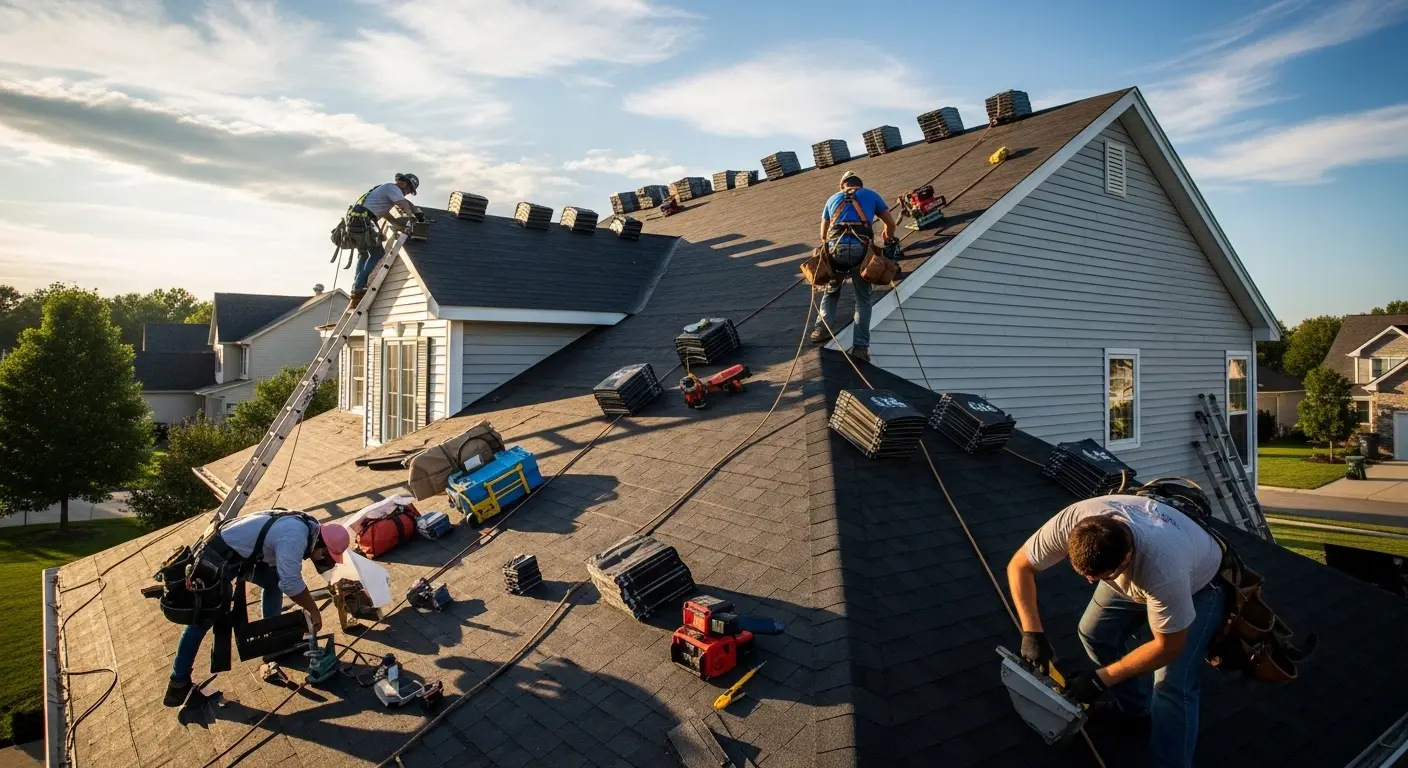
Metal occupies an odd position in the Florida insurance conversation. On paper it is one of the easier roofs to put in front of an underwriter, because carriers price wind performance and a documented, approved metal system performs. In practice homeowners still arrive at the renewal with the wrong expectations in both directions: some have been told a metal roof guarantees a discount, which nobody can promise, and others have been told it is hard to insure, which is generally the reverse of the truth. Both come from the same place, which is that almost nobody explains what the carrier is actually reading.
The second half of this post deals with the folklore, because metal attracts more of it than any other roofing material. It is loud in the rain. It attracts lightning. It makes the house hot. It dents. You cannot walk on it. Every one of those has a real origin, usually in a barn, a carport or somebody selling something, and every one of them is either untrue or true about a different assembly than the one on a house. Untangling them is worth doing before you spend $25,000 or more on a decision.
Two ground rules first. Nobody in this trade can promise you an insurance outcome, a specific credit or a premium, and a contractor who does is selling rather than advising. And nothing here is a substitute for reading your own policy and asking your own agent, because carriers differ from each other more than homeowners expect. What we can tell you is what gets looked at, what documentation to have ready, and where the myths came from.
The short version
- Carriers generally treat metal as a hard covering with a later age threshold than shingle, and read the permit date as the roof age
- A wind mitigation inspection records construction features on a standard form, and no contractor can quote you the credit in dollars
- Rain noise comes from the deck and attic assembly rather than from the metal itself
- Metal does not attract lightning, and it is non-combustible, which is the fact that actually matters in a strike
- Denting and walkability are questions about gauge, profile and where you put your feet, not about metal as a category
What an underwriter is actually reading when the covering is metal
Carrier guidelines generally sort roof coverings into soft and hard categories, with asphalt shingle in the first group and metal, tile, slate and concrete in the second. Hard coverings are commonly allowed a later age before an inspection or a replacement condition is triggered, which is the structural advantage metal carries into the conversation. Citizens publishes thresholds most homeowners eventually encounter, and private carriers set their own appetite, frequently stricter. None of that is a promise about your policy. It is the shape of the rulebook the underwriter is working inside.
The age they use is not the age of the metal. It is the date on the permit record, which is why the permit and the closed final inspection matter more than any photograph of a shiny roof. That record is also what a buyer and a buyer agent will pull during a sale. Alongside it the underwriter is looking at documented condition, at whether the roof was permitted and inspected at all, and increasingly at whether the system carries an approval valid at your address, which is the paperwork covered in what a metal roof wind rating really means. The general Florida rules on roof age, inspections and non-renewal apply to you the same as anyone, and they are set out in Florida homeowners insurance roof requirements.
What is genuinely different about metal roofing is that the covering rarely becomes the problem first. On a shingle roof the carrier is essentially betting on how much life is left in the asphalt. On a metal roof with 40 years of service life, the questions that come up instead are about the fasteners on an exposed-fastener system, about corrosion in a coastal exposure, and about whether the installation was documented. Those are answerable with records and an inspection, which puts you in a much stronger position than a homeowner arguing about the remaining life of a twenty-year-old shingle roof.
- Hard covering treatment. Metal generally sits with tile and slate in the longer-lived category, with a later age threshold than asphalt shingle.
- The permit date is the roof age. Not the manufacture date, not the appearance. Get the permit closed and keep proof that it was.
- Product approval documentation. The approval or NOA number for the installed assembly, which answers the question no photograph can.
- Condition evidence. Dated photographs of every plane at completion and annually afterward. They establish condition before any storm, which is what claim conversations turn on.
- Look up your own permit history. County building department records are public, and homeowners regularly discover a previous owner permitted work that changes the age in the file.
- Carriers differ more than you expect. Two companies can read the same roof and the same form very differently. That is why nobody can promise you an outcome.
The wind mitigation inspection, and why nobody can promise you a number
A wind mitigation inspection is a licensed inspector documenting specific construction features on a standardized state form, which your agent then submits. It is not a grade and it is not an opinion about your roof. It records what exists. Most of the lines on that form have nothing to do with your covering at all: how the sheathing is nailed to the trusses, whether the roof structure is strapped or clipped to the walls, the geometry of the roof, and whether every opening in the house including the garage door is protected. Those items commonly carry more weight than the covering line does, and impact windows and doors frequently move the number further than anything on the roof.
Where metal specifically shows up is in two places. The roof covering line asks whether the covering was permitted and meets current product approval standards, which is a documentation question rather than a condition question, and it is where a missing approval number quietly costs you. The secondary water resistance line asks whether there is a sealed deck beneath the covering that would keep water out if the panels came off. Because an approved metal roof is normally installed over a high-temperature self-adhered underlayment across the full deck, that line is frequently a yes on a modern metal installation where it would be a no on an older roof, and the inspector records what the documentation supports.
Here is the part that gets oversold. Credits are applied by each carrier to the wind portion of the premium according to that company filed rating plan, and they vary between carriers, between policy forms and between houses. A roofer who tells you a metal roof will save you a specific percentage is inventing it. What is fair to say is that the features documented on that form are the mechanism by which good construction is recognized, that a properly documented metal roof tends to document well, and that the only way to learn your number is to have the inspection done and let your agent apply it.
- Order it after the work, never before. The credits only exist once the features do. An inspection done the week before a re-roof documents the old roof.
- Roof covering line. Permit date plus product approval or NOA for the installed system. A documentation question, and the one most commonly failed on paperwork alone.
- Secondary water resistance. A sealed deck under the covering. Full-deck self-adhered underlayment is what satisfies it, and it is standard practice under metal panels.
- The lines metal does not touch. Deck nailing, roof-to-wall connection, geometry and opening protection are about the structure and the openings, not the covering.
- Send the form to your agent yourself. Do not assume it filters through, and ask for written confirmation that it was received and applied.
- No number can be promised. Not by us, not by anyone. Ask your agent to run it both ways on your actual policy if you want a real comparison.
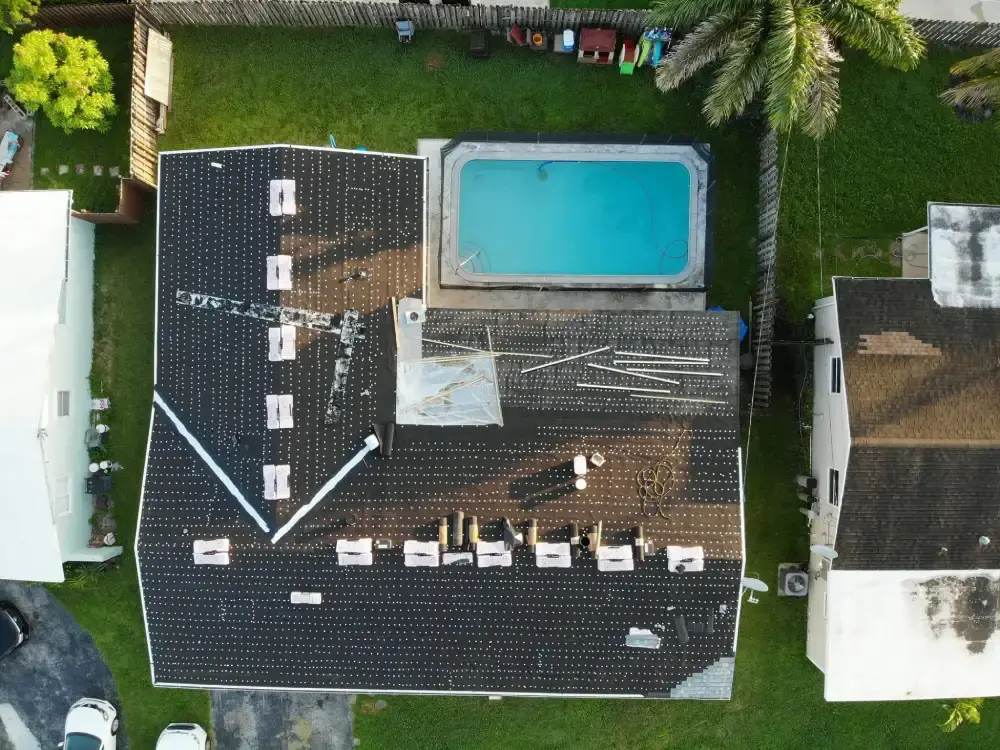
Credits are set by each carrier in its own filed rating plan and depend on the whole set of documented features, the policy form and the house. A contractor cannot see any of that. Get the inspection, hand the form to your agent, and let the actual policy answer the question.
Rain noise comes from the assembly, not from the metal
The loud metal roof everybody remembers is real, and it is a barn. Bare panels screwed to open purlins with nothing but air behind them turn the whole roof into a drum head, and every drop is amplified into the space below. That is an accurate memory of a completely different assembly from the one that goes on a house. A residential metal roof sits on a solid plywood or OSB deck, over a self-adhered underlayment bonded to that deck, with attic space, insulation and a ceiling beneath. Each of those layers absorbs and damps energy, and the result is a roof most owners describe as no louder in rain than the shingle roof it replaced.
If you want the physics without the jargon: sound needs something to vibrate and somewhere for the vibration to go. Bond the panel to a heavy, stiff deck and the panel cannot ring. Fill the cavity below with insulation and what little energy gets through is absorbed before it reaches the room. That is why the quietest configuration is a standing seam panel over a fully adhered underlayment on a solid deck above an insulated attic, and why the noisiest residential case is the opposite: an exposed-fastener panel over battens or purlins on a carport, a patio cover or a screened enclosure with no ceiling under it.
The one honest exception is a room with a cathedral ceiling and no attic, where the roof assembly is only a few inches thick and there is no buffer between the panels and the room. In that case rain is more audible, though far less than folklore suggests, and the answer is in the assembly rather than in the panel: a solid deck, fully adhered underlayment and adequate insulation in the rafter space. If the difference between panel systems is what you are weighing, that comparison is in standing seam versus exposed fastener, and the sound question tends to follow the same logic as the water question.
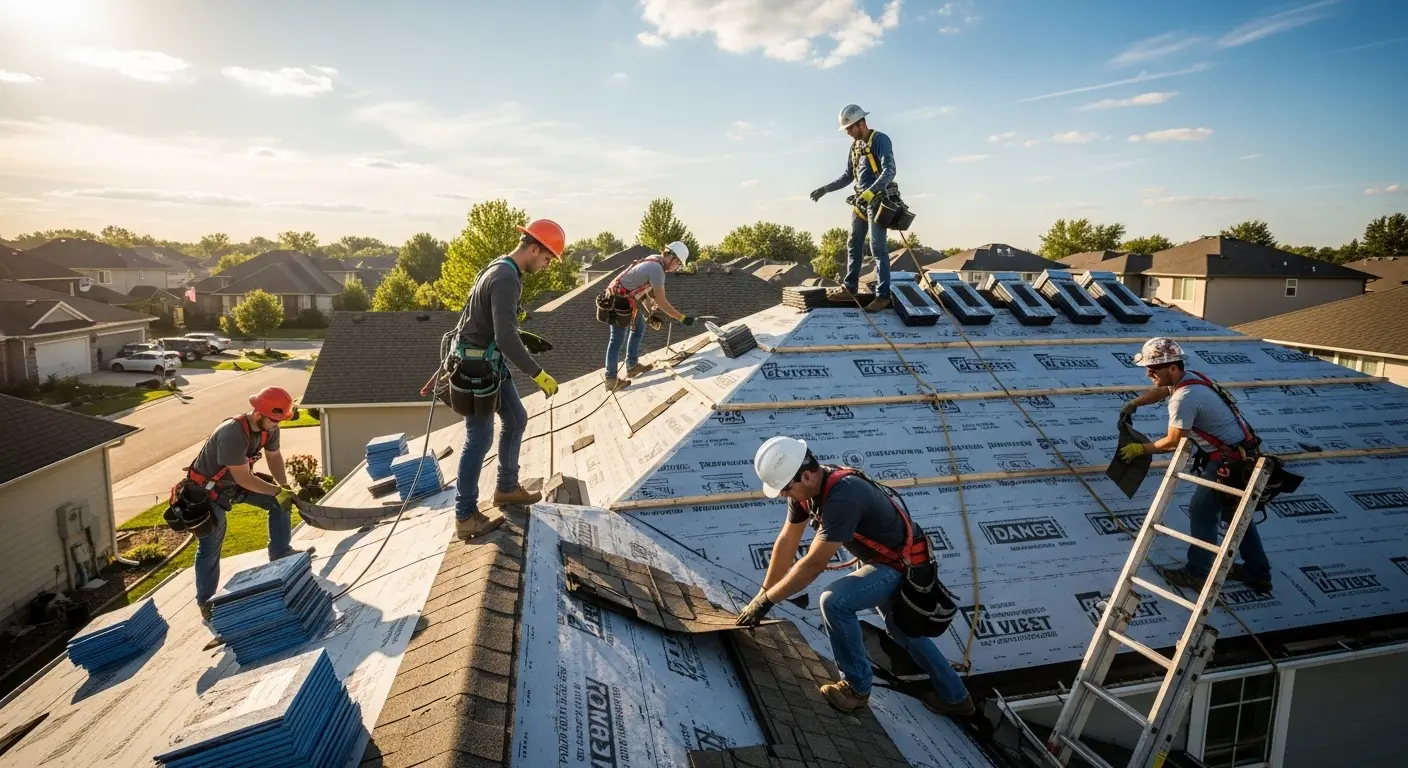
Lightning, heat, dents and whether you can walk on it
Lightning first, because it is the myth that frightens people most and it is simply untrue. Lightning selects a strike point based on height, geometry and the local field conditions, not on what the surface is made of, and a metal roof does not increase the likelihood of a strike on your house. What metal does change is the outcome. It is non-combustible, so it will not ignite the way a wood shake or an asphalt surface can, and it conducts the energy of a strike over a large area rather than concentrating it. Insurers do not treat metal as a lightning risk, and fire ratings on metal roof assemblies are generally excellent.
Heat is a more interesting question because there is something real underneath it. Bare, unpainted metal in direct sun does get hot, which is where the reputation comes from. Modern panels are finished with coatings engineered to reflect solar energy and re-radiate what they absorb, and a light, cool-rated finish is measurably cooler at the deck than a dark asphalt surface. The honest caveat is that the attic assembly matters more than the roof surface does. Insulation depth, ventilation, whether your air handler and ducts live in the attic, and how well the ceiling is sealed decide most of your cooling bill. A reflective roof helps, and it will not rescue an under-insulated attic.
Denting and walkability are the same question asked twice, and both come down to gauge, profile and technique. Hail is not the South Florida threat it is in Texas; the realistic hazards are a falling branch and a careless boot. A heavier gauge or thickness resists both, and striations and profiled ribs disguise the small marks that do occur. As for walking, every metal roof has places you may step and places you may not, and on a properly installed metal roof that is a matter of learning where the support is rather than a prohibition. The safe answer for a homeowner is to stay off it and call somebody, which is the same answer we give tile owners.
- Lightning. Metal does not attract strikes. It is non-combustible and disperses energy, which is why a struck metal roof is generally the safer outcome.
- Cool-rated finishes. Reflectivity is a specification within the coating, not a separate product, and lighter colors do more of the work than the metal does.
- The attic decides more than the roof. Insulation, ventilation and duct location move a cooling bill further than any covering. Have both looked at during a re-roof.
- Denting is mostly cosmetic. A dent from a branch or a knee rarely compromises the panel. Heavier gauge and textured profiles reduce how much you see.
- Where to step. In the flat of a panel next to a rib or seam, never on the seam itself, with soft clean soles. On exposed-fastener panels, step at the fastener line.
- Salt is the real coastal wear item. Not dents and not noise. What the water does to metal and fasteners is covered in salt air corrosion.
Between them those two myths have talked more Florida homeowners out of a metal roof than price has. Neither survives contact with how a residential system is actually built. Judge metal on cost per year of service, wind performance and corrosion exposure, which are the three things that genuinely decide it.
The file to keep, and the next step worth taking
Build one folder when the work is finished and keep it as long as you own the house. The permit number and the closed permit. The final inspection record. The product approval or NOA documentation for the installed assembly. The contract and invoice showing exactly what was done. The panel substrate, gauge and finish specification with warranty documents and proof of registration. The current wind mitigation form. Dated photographs of every plane. That folder answers an underwriter, an adjuster, a mitigation inspector and eventually a buyer, and reconstructing it years later after a contractor has moved on ranges from painful to impossible.
Timing matters as much as content. Order the mitigation inspection after the roof is complete and the permit is closed, send the form to your agent yourself, and confirm in writing that it was applied. If a non-renewal or condition letter has already landed, read the dates on it before anything else, because getting estimates, pulling a permit and getting onto a crew schedule during hurricane season takes longer than those letters assume. Homeowners across Hollywood and the rest of Broward run into that timeline every summer, and the ones who move first have options that the ones who wait do not.
If the honest answer is that the roof needs replacing and metal is on the table, then the decision is a long-hold decision and the arithmetic is laid out in what a metal roof costs in South Florida. We are family-owned and state-certified under licenses CCC1337306 and CBC1266379, with no commissioned salespeople. The measurement, the instant roof report and the written estimate with permits and permit fees inside the price are free, and we offer $0 down financing with no credit check. Call 954-893-2550 or book the inspection, and what a complete roof replacement in metal includes is written out on our metal roofing page.
- Permit and closed final inspection. The date an underwriter reads as your roof age, and the first thing to verify is that the permit was actually closed.
- Approval documentation. The number identifying the tested assembly on your house, kept with everything else rather than in a truck that drove away.
- Panel specification and warranties. Substrate, gauge, finish, both warranty documents and proof that any required registration was filed.
- Wind mitigation form. Ordered after the work, delivered to your agent by you, and confirmed in writing as received and applied.
- Annual photographs. One pass around the house each year before hurricane season. It costs nothing and it establishes condition before a storm rather than after.
- Do not let coverage lapse while you sort it out. With a mortgage, a lapse triggers force-placed insurance, which costs more and covers you for less.
Frequently asked
Does a metal roof lower my homeowners insurance in Florida?
It can help, and no one can promise a number. Carriers apply credits to the wind portion of a premium based on features documented on a wind mitigation form, according to each company filed rating plan, so the same roof produces different results at different carriers. A documented, approved metal roof over a sealed deck tends to document well. The way to find out is to have the inspection done and let your agent apply it.
Is a metal roof harder to insure than shingle?
Generally the opposite. Carrier guidelines usually treat metal as a hard covering alongside tile and slate, with a later age threshold than asphalt shingle, and Florida carriers price wind performance. What matters is documentation: a closed permit, the product approval for the installed assembly, and a current wind mitigation form. Where metal draws questions is corrosion in coastal exposure and fastener condition on exposed-fastener systems.
Are metal roofs loud in the rain?
Not in a residential installation. Panels sit on a solid deck over a fully adhered underlayment, with attic space, insulation and a ceiling below, and the assembly damps the sound to roughly what you hear under shingle. The loud roof people remember is bare panels screwed to open purlins on a barn or carport. A cathedral ceiling with no attic is the one case where you notice more.
Does a metal roof attract lightning?
No. Strike points are determined by height, geometry and local field conditions, not by the material of the surface, and a metal roof does not make a strike more likely. What metal does change is the outcome, since it is non-combustible and disperses the energy of a strike over a large area rather than concentrating it. Insurers do not treat a metal roof as a lightning risk.
Can you walk on a metal roof?
Yes, with the right technique, and homeowners should not be the ones doing it. Step in the flat of a panel next to a rib or seam, never on a seam or a rib, with clean soft soles, and on exposed-fastener panels step at the fastener line where the deck support is. Marks and dents from careless foot traffic are the most common cosmetic damage we see, and they are entirely avoidable.