

Metal Starts at $10.75 a Square Foot. Here Is What Moves It.
Metal starts at $10.75 per square foot on our published pricing, and the permit and the permit fees sit inside that number instead of arriving at the end. That is a real starting point on a straightforward roof and it is what we will put in writing. It is also the number that tells you the least about your own house, because metal carries the widest honest spread of the three materials we install. The same 2,300 square feet of roof surface can be a fair $10.75 job or a fair $16 job, and the difference between them is not which contractor is trying harder to get your signature.
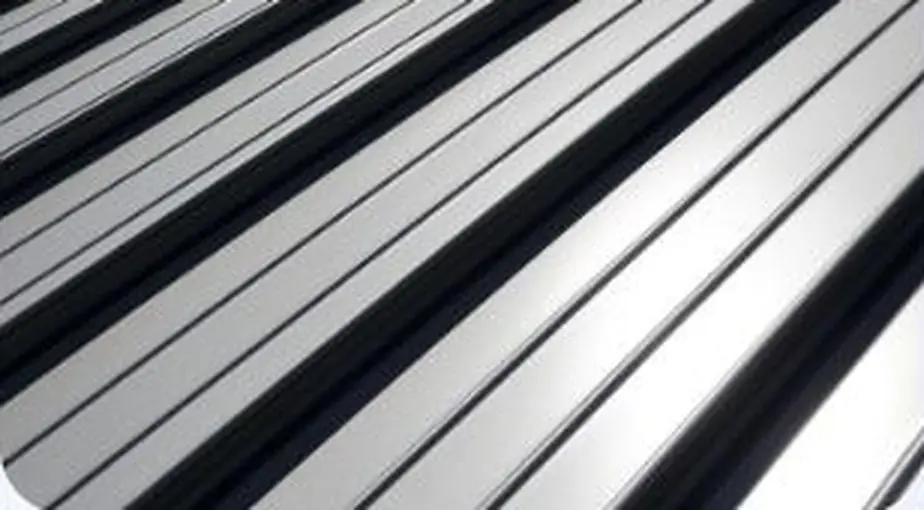
That happens because a metal roof is not one product. It is a panel profile, a substrate, a gauge, a coating and several hundred linear feet of trim and flashing that somebody forms and fits by hand. Move the panel from an exposed-fastener profile to a mechanically seamed standing seam and you have changed the material and the labor hours at the same time. Move the substrate from Galvalume steel to aluminum and the material moves again. None of those forks are upsells invented to pad a total. They are real decisions with real consequences, and which one is right depends on your roof and your address.
So this post stays on the money. What the $10.75 covers, which specifications move it and roughly how far, why labor is a bigger share of a metal roof than of a shingle roof, and what the arithmetic looks like on a roof surface in the 2,000 to 2,600 square foot range. It ends with the payback question answered honestly, including the case where metal does not pay and the cheaper roof is the right call. How the panels themselves actually work is the next post in this series, which keeps this one from turning into a materials lecture.
The short version
- Metal starts at $10.75 per square foot of measured roof surface, with permits and permit fees included
- Panel type is the largest single lever: 5V crimp, exposed fastener and standing seam are three different prices
- Gauge, substrate and coating each move the per-square-foot number before anyone sets foot on the roof
- Labor is a bigger share of a metal roof than a shingle roof because trim and flashing are formed and fitted by hand
- A 22-square roof in metal starts near $23,650, and a complex aluminum standing seam roof lands well above it
What the $10.75 covers, and what it is measured on
The unit first, because it is where most confusion starts. Roofers price on the measured surface area of the roof planes, not the air-conditioned floor area of the house, and on a South Florida single-family home the roof surface commonly runs well above the number on your property record. We worked that arithmetic through in detail in what a roof replacement really costs here, and it applies to every material identically, so there is no point repeating it. What matters for this post is that $10.75 gets multiplied by a measured number somebody obtained on your roof, and any total produced without that measurement is a guess.
What the starting price carries on a metal roofing job is a complete roof rather than a delivery of panels. Tear-off of one existing layer and disposal. A high-temperature self-adhered underlayment, which is not the same product as the underlayment under a shingle roof and does not cost the same. Formed eave, rake, valley, hip, ridge and sidewall flashings. Closures at the panel ribs. Panels cut to your run lengths, with the clip or fastener schedule the product approval and its wind rating require. The permit, the permit fees and the inspections through final. Panels for most residential roofs are cut and formed to length rather than bought in stock sizes.
What sits honestly outside any base per-square-foot price is the work nobody can see yet or that belongs to another trade. Replacement decking is the big one and it gets priced per sheet, because the count is unknowable until the old covering is off. Structural repair, rotten fascia, skylight units, chimney masonry, solar detach and reset, and new gutters are separate lines on a legible estimate. So is any low-slope section: if your Florida room sits below the minimum slope for the panel proposed, that area is flat roofing at a different rate, not a discounted version of the main roof.
- Measured roof surface. The area of the planes including overhangs, porch and carport, obtained on site rather than from the county record.
- High-temperature underlayment. Metal drives deck temperatures higher than any other covering, so the peel-and-stick under it carries a higher temperature rating and a higher price.
- Formed trim and closures. Eave, rake, valley, hip, ridge, sidewall and headwall metal, plus the closures that keep wind-driven rain and nesting birds out of the ribs.
- Permit and permit fees. Inside our number. Worth confirming on every estimate you collect, because leaving them out is the easiest way for a bid to look cheaper than it is.
- Decking, per sheet. A standard sheet covers 32 square feet. Ask for the installed per-sheet price in writing before the tear-off, not after the plywood is on the truck.
- Not included anywhere: your insurance deductible. No contractor in Florida can legally absorb it, and an offer to do so tells you how the rest of the job will be run.
Panel type is the largest single lever on the estimate
There are three price positions in residential metal and they are far enough apart to reorganize your whole budget. Exposed-fastener profiles, meaning R-panel, corrugated and the traditional Florida 5V crimp, sit at the bottom. They use less material per square of coverage, they go down faster, and they need no clips. Snap-lock standing seam sits in the middle: concealed clips, a seam that locks by hand pressure, no screw heads on the panel face. Mechanically seamed standing seam sits at the top, because a crew makes an additional pass over every seam with a seaming machine and the panels and clips themselves cost more.
The gap is mostly labor rather than metal. A standing seam roof carries a clip at every specified interval along every panel, each one fastened individually, and the panel count on a 12 or 16 inch wide profile is far higher than on a 36 inch exposed-fastener sheet. Add the eave cleat, the hemmed panel ends, the offset cleats at the ridge and the machine pass, and the hours climb. In practice the spread between a straightforward exposed-fastener roof and a comparable standing seam roof on the same house commonly runs somewhere in the range of 25 to 45 percent, which on a 22-square roof is thousands of dollars rather than a rounding difference.
Which one belongs on your house is a genuine question and not a question about your budget alone. The two systems handle thermal movement differently, they age differently and they carry different maintenance obligations, and that comparison is the whole subject of standing seam versus exposed fastener. Read it before you let price alone decide. What is worth saying here is that a 5V crimp roof, correctly installed and correctly detailed, is a legitimate metal roof and not a compromise, and on a cottage, a porch, an addition or a period house it is frequently the more appropriate choice as well as the cheaper one.
- 5V crimp. The traditional Florida panel, exposed fastener, simple, proven, and the least expensive way onto a metal roof.
- R-panel and corrugated. Wide coverage per sheet and fast installation. Common on additions, carports, barns and outbuildings, and priced accordingly.
- Snap-lock standing seam. Concealed clips and no exposed fasteners on the panel face, seamed by hand pressure as the panels go on.
- Mechanically seamed standing seam. The same concealed clip system with a machine-folded seam. The highest labor content of the four and the highest price.
- Panel width changes the count. A narrower panel means more panels, more clips and more seams per square, and it usually looks better while costing more.
- Curved, tapered or radius work. Bay windows, turrets and radius eaves are shop work and hand fitting, and they are priced as their own scope.
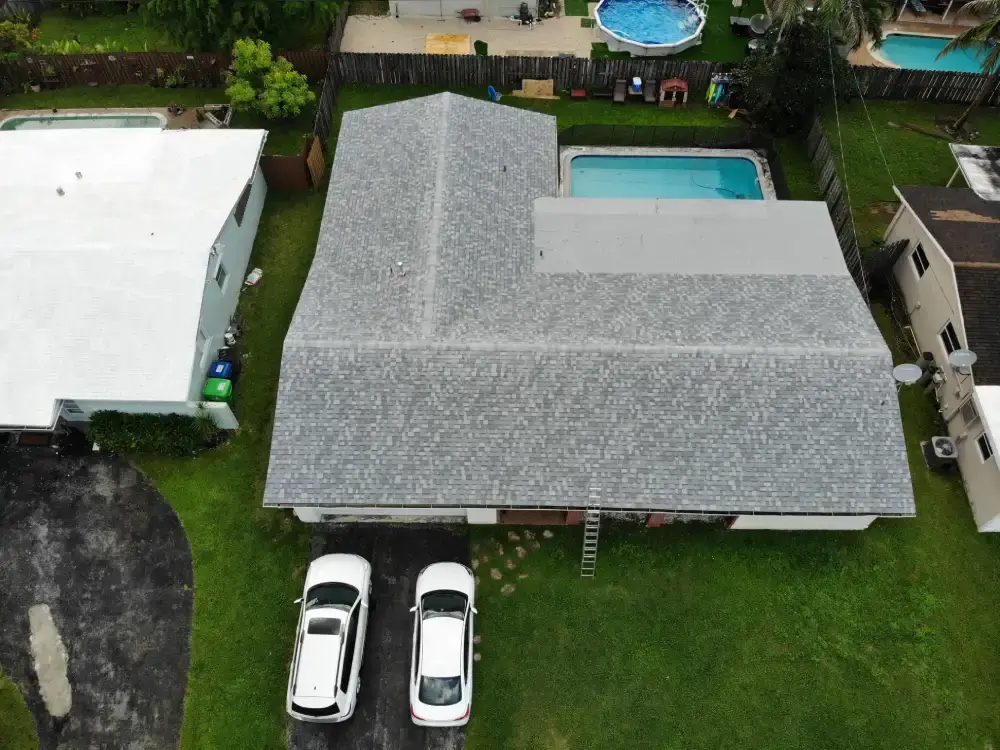
An exposed-fastener or 5V crimp roof over a properly prepared deck, detailed correctly and installed to its approval, will outlast an asphalt roof by a wide margin. It asks for fastener maintenance that standing seam does not, and that is a trade you can make with your eyes open rather than a corner anyone cut.
Gauge, substrate and coating: three specs that move the number quietly
Gauge is the thickness of the metal and on steel the scale runs backward, so 24 gauge is thicker and more expensive than 26 gauge. Aluminum is measured in decimal inches instead, commonly .032 or .040 for residential panels, and the thicker one costs more. The premium buys stiffness: a heavier panel resists denting from a dropped tool or a falling branch, holds its shape better across a long run and shows less oil canning, which is the slight waviness visible in the flat of a panel under raking light. On a large, highly visible plane the upgrade earns its money. On a small porch roof it frequently does not.
Substrate is the metal itself and the two you will be offered here are Galvalume steel, an aluminum-zinc coated steel typically specified as AZ50 or the heavier AZ55, and aluminum. Aluminum commonly carries a material premium in the range of 20 to 40 percent over comparable Galvalume, and near salt water it is worth every dollar of it, while a few miles inland Galvalume is an excellent and cheaper panel. That decision has nothing to do with taste and everything to do with your distance from open water, which is why it gets its own post in salt air and metal roof corrosion rather than a paragraph here.
Coating is the paint system on the panel and there are two tiers in ordinary use. Silicone-modified polyester, sold as SMP, is the value finish. A PVDF-class finish, which most people know by the Kynar 500 trade name, holds color and gloss dramatically better in this ultraviolet load and carries longer finish warranties. The upcharge is real but modest against the total, commonly a small single-digit percentage of the job, and it is the upgrade we argue hardest for because a faded roof is a roof you will look at for thirty more years. Cool-rated pigments, which reflect more solar energy, are a specification within the coating rather than a separate product.
- 26 gauge versus 24 gauge steel. Thicker metal, higher price, better dent resistance and a flatter appearance on long runs.
- Aluminum .032 versus .040. The same trade in aluminum. Coastal exposure and panel length both push toward the heavier thickness.
- Galvalume AZ50 or AZ55. The heavier coating weight costs slightly more and buys more corrosion allowance. Ask which one is quoted rather than assuming.
- SMP finish. The value paint system. Perfectly serviceable, and it chalks and fades sooner in South Florida sun than the alternative.
- PVDF or Kynar-class finish. A small percentage of the job for the finish that decides how the roof looks in year twenty-five. The upgrade we recommend most often.
- Striations and stiffening ribs. Minor pencil lines rolled into the panel flat to control oil canning. Usually free on the profiles that offer them, and worth asking for.
Trim, flashing and the deck: why a cut-up roof costs more in metal
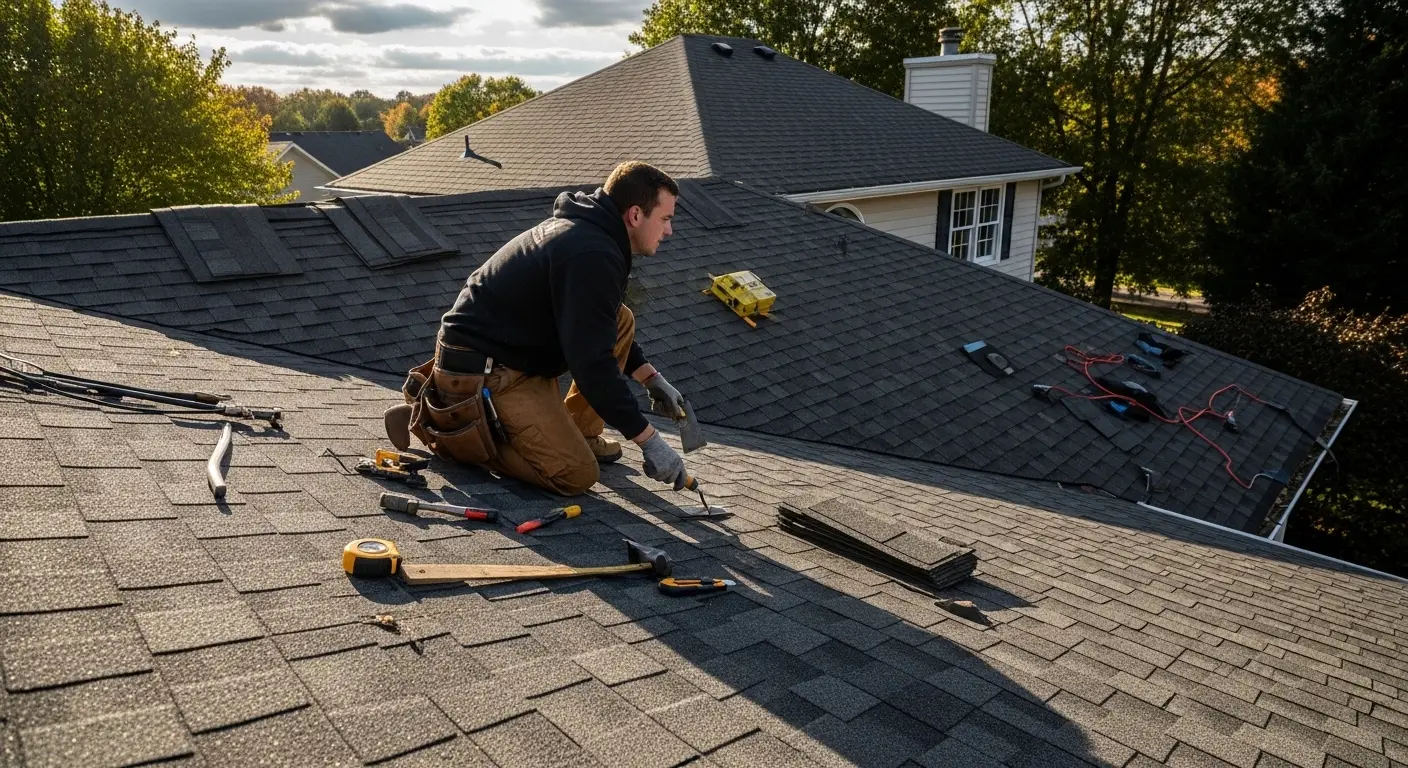
On a shingle roof, complexity costs you waste and hand time. On a metal roof it costs you fabricated parts. Every valley needs formed valley metal with a hemmed edge. Every sidewall and headwall needs its own flashing with a counterflashing over it. Every skylight, chimney and HVAC curb needs a pan and a diverter built to fit. Every hip and ridge needs a cap with closures under it. A plain gable with two penetrations may need a dozen fabricated pieces. A cut-up hip roof with three valleys, two dormers and a chimney can need well over a hundred, each one measured, formed and fitted individually.
That is why the labor share on metal roof installation runs higher than on shingle for the same house. A shingle roof is mostly a repeated action with a nail gun; a metal roof is a sheet metal job with a roofing schedule attached to it. It also explains a pattern homeowners find strange when they collect bids: metal quotes vary more between contractors than shingle quotes do on the same roof, because the estimators are pricing different amounts of fabrication and different levels of detail. A cheaper metal number sometimes means a cheaper panel, and sometimes it means fewer formed pieces and more caulk.
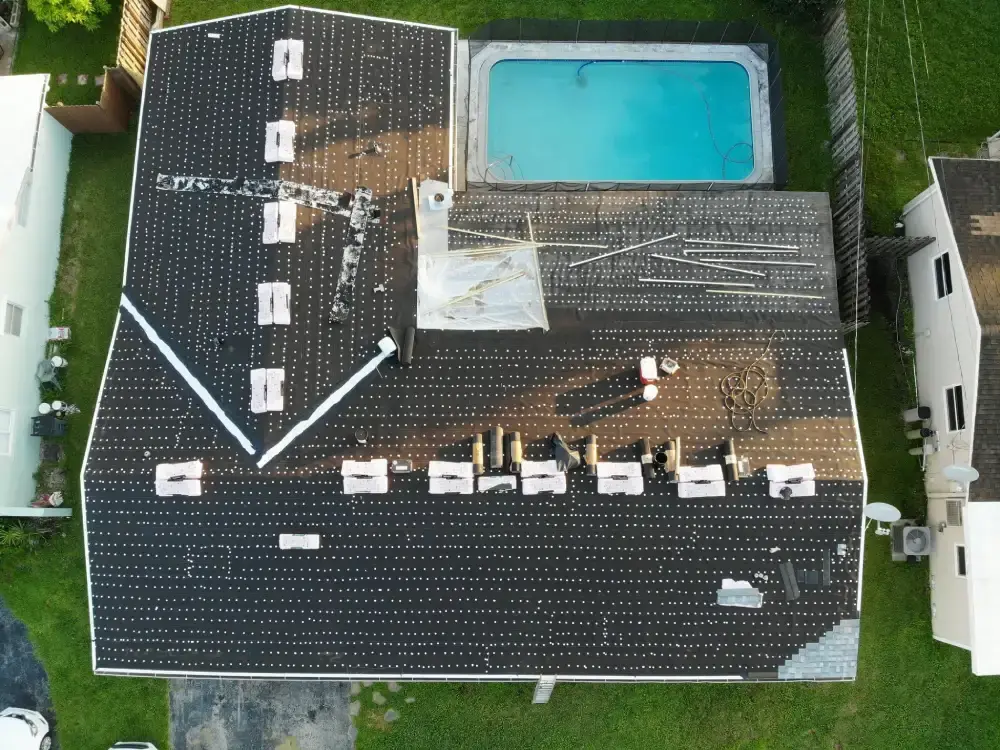
The deck is the other half of the preparation. Metal goes over a full strip to bare sheathing, with damaged sheets replaced and the deck re-nailed to the fastening schedule currently required, and then a high-temperature self-adhered underlayment over all of it. We do not install panels over existing shingles, because it hides the deck at the one moment it can be inspected and it traps heat against the back of the panels. If you want the day-by-day of what that week looks like on your driveway, it is written out in what actually happens during a roof replacement.
- Count the penetrations before you compare bids. Each one is a fabricated flashing on a metal roof, not a rubber boot pushed over a pipe.
- Valleys are fabricated, not woven. Formed valley metal with hemmed edges and a proper water diverter, sized for the roof area draining into it.
- Long panel runs need staging. A 30 foot panel is awkward, sharp and easy to damage, and getting it onto a two-story roof takes people and time.
- Full strip to the deck. Panels over old shingles is a shortcut we decline. The deck has to be seen, repaired and re-nailed while it is open.
- High-temperature underlayment. A standard peel-and-stick can soften under metal in South Florida heat. The temperature rating on the product is a line item, not a detail.
- Ask what the trim is made of. Trim and flashing should match the panel substrate and finish. Mixed metals at a flashing is a corrosion problem you pay for later.
A worked example, and the payback math without the flattery
Take a single-story house in Davie with a simple 5:12 hip roof measuring 2,200 square feet of surface, or 22 squares. In 5V crimp or an exposed-fastener profile at the $10.75 starting point, the base is $23,650 with the permit and permit fees already inside it. One layer comes off, four sheets of decking turn out to be soft around an old plumbing stack, and there is nothing else exotic: two vents, one boot, no skylights, a driveway the trailer fits on. Now change one decision. The same roof in snap-lock standing seam, 24 gauge Galvalume with a PVDF finish, commonly lands somewhere in the $13 to $15 per square foot range, which is $28,600 to $33,000.
Now take a two-story house with 2,600 square feet of measured surface, three valleys, two dormers, a chimney and a screened pool enclosure six feet off the eave, specified in .040 aluminum with a mechanically seamed profile because it sits four blocks from the Intracoastal. That roof commonly prices in the $15 to $18 per square foot range once the fabricated trim, the staging and the substrate upgrade are counted, which puts it between $39,000 and $46,800. Same county, same crew, roughly twice the money as the first example, and both numbers are honest. Neither is a quote for your house. They are the shape of the arithmetic so that a written estimate is legible when it arrives.
Then the payback question, answered straight. Architectural shingle at $6.00 on that 22-square roof is $13,200 and commonly gives you 15 to 25 years here. Metal at $23,650 to $33,000 commonly gives you 40 years or more on a standing seam system. Divide and metal usually wins on cost per year of service, and it wins by more once you count the cooling benefit of a reflective finish and the fact that you are not living through a second tear-off. What it does not do is pay you back inside five or eight years, because appraisers price roofs on age and condition rather than material, a point we made in the three-material comparison. If you are selling soon, buy the shingle roof.
- Ask for the measured area on every bid. A price per square foot means nothing until you know how many square feet each contractor counted.
- Ask which panel, substrate, gauge and finish are quoted. Four specifications, four different prices. A bid that only says metal is not a bid you can compare.
- Ask how long you plan to stay before you choose. Ten years or more and the arithmetic favors metal. Three years and it does not, whatever anyone tells you.
- Ask what it does at renewal. Carriers read wind performance and permit dates rather than sales copy, and what that means for a metal roof is set out in metal roofs and your insurance carrier.
- Do not let the total decide it alone. We do $0 down financing with no credit check, terms out to 30 years and payments from $65 a month on the financing page, and every route is surveyed in how to pay for a new roof.
- Bring your other estimate. Comparing it against ours is easier once both are broken out the same way. The measurement, the instant roof report and the written price are free, so book the visit or call 954-893-2550 and compare it against everything on our metal roofing page.
The arithmetic works because you stop buying roofs, not because a buyer pays extra for panels. If there is any chance the house sells inside five years, the honest recommendation is a sound new shingle roof and the difference left in your pocket.
Frequently asked
How much does a metal roof cost in South Florida?
Our published starting point is $10.75 per square foot of measured roof surface with permits and permit fees included, which puts a 2,200 square foot roof near $23,650 in an exposed-fastener profile. Standing seam in a heavier gauge with a premium finish commonly runs $13 to $18 per square foot depending on complexity and substrate. The on-site measurement comes before any real number.
Why are metal roof quotes so much further apart than shingle quotes?
Because estimators are pricing different products. Panel profile, gauge, substrate and coating are four independent choices, and the amount of fabricated trim on a complex roof varies with how thoroughly each contractor intends to detail it. A cheaper metal number can mean a lighter panel, a value finish, or fewer formed flashings and more sealant. Ask each bidder to name all four specifications.
Is a metal roof worth double the price of shingle?
It depends almost entirely on how long you are staying. Shingle at $6.00 per square foot commonly gives 15 to 25 years here; standing seam metal commonly gives 40 or more. On cost per year of service metal usually wins, and it wins by more if you count the cooling benefit and the second tear-off you avoid. Over a five-year hold it does not win, because appraisers price age and condition rather than material.
Can metal panels be installed over my existing shingles?
It is sometimes done and we decline it. Covering the old roof hides the deck at the only moment anyone can inspect it, repair it and re-nail it to the current fastening schedule, and it traps heat and moisture against the underside of the new panels. Our metal pricing is written around a full tear-off with disposal, the deck work and the permit already inside the number.
What is the cheapest way to get a metal roof?
A 5V crimp or exposed-fastener profile in Galvalume with an SMP finish, on a simple roof with few penetrations. That is a legitimate roof, not a compromise, and it is what sits on a great many older South Florida houses. The trade is fastener maintenance later, since the neoprene washers under exposed screws are a wear item with a service interval attached.